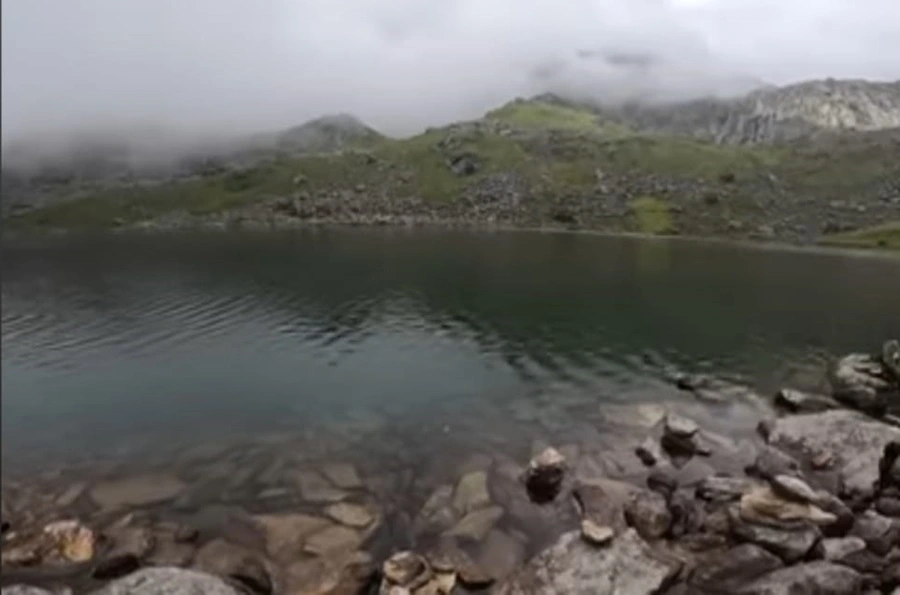
About Vasuki Tal
Vasuki Tal Lake is one of the most divine lakes located near Kedarnath Temple , Uttarakhand. Located at an altitude of 14200 feet above sea level, it is famous for its marvellous location and closeness to the Kedarnath temple. Most people prefer to cover this lake while coming on the Kedarnath trip .
Some of the rare plants, like Brahmakamal and other Himalayan herbs and flowers, bloom in this location. This lake got its name from the name of the Vasuki snake found around the neck of lord shiva. The structure of the lake is of a snake, so it got its name from the name of lord Shiva’s most favourite snake, and hence most popularly known as Vasuki Tal Kedarnath.
As per the holy scriptures, it is believed that lord vishnu takes a bath in this pristine lake every year on the occasion of Raksha Bandhan. It’s also believed that the Vasuki snake can be seen in this lake on the occasion of Nag Panchami and Shivratri.
In addition to pilgrimage, this lake is also famous among young trekkers as it provides a wide and close view of Chaukhambha and other peaks of the Himalayan range, making it even more beautiful and worth visiting at least once in a lifetime. Trekking to Vasuki Tal Kedarnath can be done both from Gaurikund and Gangotri. If you are a regular trekker and wish to have a close look at the Himalayan beauty, then you can start from Gangotri. The trekking route will go from Gangotri to Bhojwasa to Chirwasa to Gaumukh to Tapovan to Nandanvan to Vasuki Tal to Kedarnath and trek down to Gaurikund .
Else if you just want to visit Vasuki Tal, then you can also start from Gaurikund, take a halt at Kedarnath temple and then visit the Vasuki Tal trek. You can get your Kedarnath Yatra Package customised to add a visit to Vasuki Tal in your itinerary. For the group tour Kedarnath Yatra package costs 9500+ 5% GST, including your transportation, meals, guide, registration, premium stay, and river rafting. But if you wish to get your package customised, then you can talk to our customer care executive for more details.
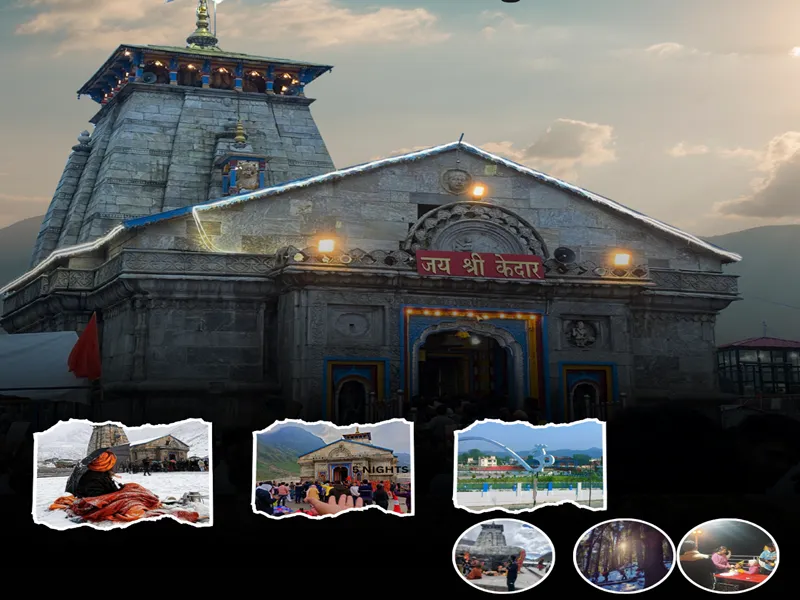
Popular Packages
|

|

|
Vasuki Tal History:-
Vasuki Tal has a great History, which is a blend of myths and pilgrimage and is deeply rooted in Hindu Mythology. According to the Hindu belief, the place got its name from the serpent king “Vasuki” (devotee of lord Shiva and lord Vishnu), who served as a rope for the Gods and demons during the Samudra Manthan period.
Some other legend states that in ancient times, lord vishnu bathed at this glacial lake on the auspicious occasion of Raksha Bandhan, which enriched its spiritual significance.
For many years, this lake, with its serene environment, has served as a sacred meditation spot for Sages and Pilgrims on their journey to the Himalayas. Another belief is that this place was a resting spot for the Pandavas during the great war of the Mahabharata, and King Nahusha (who was cursed by sages) attained salvation at this sacred lake.
Today, Vasuki Tal has gained popularity as a perfect destination for spiritual seekers and adventure enthusiasts who travel to the nearby Kedarnath Temple.
Vasuki Tal Height
Vasuki Tal Kedarnath is located at an altitude of approximately 4,978 metres (16,335 feet) above sea level. This high altitude also contributes to the beauty of the lake, making it an unforgettable adventure. This also ensures that the altitude of Vasuki Tal keeps it off the busy stream of tourists that visit other lakes and various treks around the area. At this height, the thin air and cooler temperature give the chance to witness the natural beauty of the wilderness Himalayas.
Vasuki Tal Distance
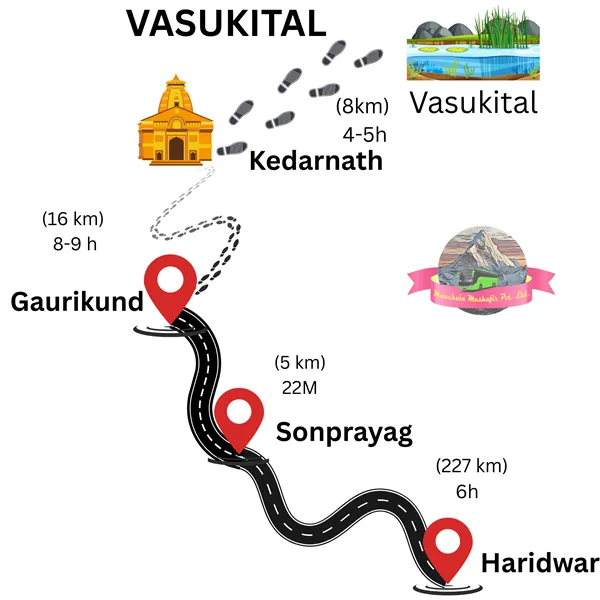
From Gaurikund to Vasuki Tal : Gaurikund is the last motorable point for Kedarnath and Vasuki Tal. From here, Vasuki is located at a distance of 24km (including the leg to Kedarnath).
From Kedarnath to Vasuki Tal : The Kedarnath to Vasuki Tal distance is approximately 8 km.
Vasuki Tal Kedarnath Trek
The Vasuki Tal trek is a high-altitude Himalayan trek, which starts from Kedarnath and leads to the sacred glacial lake called “Vasuki Tal.” Located at a distance of about 8 km from the temple. The trek is considered moderately challenging due to its continuous steep ascents and rocky terrain, which demands good physical health and takes 4-5 hours to complete. The trek passes through the alpine meadows, deep valleys, and thrilling terrain that offer panoramic views of natural beauty, such as Mt. Shivlinga and Chaukhamba peaks. The trek also offers the opportunity for travellers to explore the rich biodiversity, including the rare flora and fauna of this region.
Vasuki Tal Trek Route Map
The Trek to Vasuki Tal has two primary routes: one from Gangotri, which is a long and challenging journey of about 65km round trip, and another from Kedarnath, which is shorter and easier compared to the Gangotri route. The trek, which leads to the alpine glacial lake called “Vasuki,” is moderately challenging, as it involves glacial walks and continuous steep ascents. Let’s discuss both routes one by one.
Vasuki Tal Trek from Gangotri
The trek distance from Gangotri to Vasuki Tal is approximately 32 km one way. The trek starts from the Gangotri glacier, and it passes through Gangotri National Park, Bhojwasa, Tapovan, and Nandanvan meadows, and finally to Vasuki Tal Kedarnath. It is a multi-day journey (around 8-9 days), which offers the stunning views of the peaks like Mt. Shivlinga and the Bhagirathi ranges.
Vasuki Tal Trek From Kedarnath
The Vasuki Tal trek from Kedarnath is shorter and the most popular way to reach the lake. The Trek distance is about 24 km from Gaurikund (base camp of the Kedarnath and Vasuki tal trek), and it becomes shorter (about 8 km) and more challenging at the shrine due to high altitude and continuous steep ascents. The trek passes through deep valleys, like Kedar Valley, and frozen glaciers, like Chaturangi glacier, near the lake.
Route map of the Trek
- From Gauikund to Kedarnath (Stage one) : Gauikund is the last motorable point of the trek. It takes 6-8 hours to trek from Gaurikund to the Kedarnath temple, and it passes through the deep valleys and lush greenery, which offer breathtaking views of the Himalayas. Jungle Chatti, Rambara, and Kedarnath base camp are the main stop points of the trek, and the route is well-settled with services like food, accommodation, and medical services.
-
Kedarnath to Vasuki Tal (final stage) : From the Kedarnath Shrine to Vasuki Tal, you need to cover an 8 km trek distance, which takes 4-5 hours to complete. This route passes through steep ascents and rocky paths, which make the trek challenging. At the top of the Vasuki Tal, you see a clear view of the lake. You may also spot the rare Brahma Kamal in this area.
Many trekkers use the Kedarnath route for the Vasuki Tal Trek, as it is located 8 km from the Kedarnath temple, and it is well-maintained with the facilities of Food and camps. Another reason for choosing this route is the trekking paths for Vasuki Tal from Kedarnath Temple are clearly mentioned by the official website of Uttarakhand tourism and many other trekking websites.
Vasuki Tal Lake View
The scenic beauty of Vasuki Tal or Vasuki taal is breathtaking. One cannot have enough of the view. Indeed, the water of the lake is clear and still. It looks like a mirror. Here in Vasuki Tal Lake water is pure and even at the peak of summer is still freezing. This Lake gives the perfect view of the surrounding mountains and snow-capped peaks. Also easily moderated by all level trekkers. Glaciers, along with snow-capped peaks, give the beauty of Vasuki Tal Kedarnath that will surely be remembered by every trekker.
How to Reach Vasuki Tal:-
Vasuki tal is located at an altitude of 4,978 meters (16,330 feet) above sea level in the Rudraprayag district of Uttarakhand. The last motorable road to this lake is still Gaurikund or Gangotri. So if you are planning to visit this lake, then you need to visit any of these locations first and then trek to the lake. In this blog, we are going to discuss the methods to reach Vasuki Tal through Gaurikund so that you can visit this lake during your trip to the Kedarnath temple.
In addition to this, Vasuki Tal is also one of the most famous trekking destinations and can be done from Gangotri. Total trekking distance of 63 kms, and is generally covered in a trek duration of 9 days and 8 nights with a good difficulty level. To do this trek from the Gangotri side, you need to have prior trekking experience of a trek not less than 12000 feet in the Himalayan region. Here we will discuss the ways to reach Vasuki Tal from the Gaurikund side, as this is the most convenient route to reach this lake, and most of the pilgrims who visit this trek prefer to combine Vasuki Tal in their package. So without wasting time, let's begin.
By Air:-
Like Kedarnath, Vasuki Tal also doesn't have its own airport and the nearest airport to this lake is Jolly Grant airport , which is also known as the Dehradun airport. It is located at a distance of about 248 km, with 224 km of road journey and 24 kms of trekking route.
So if you are planning to visit here by air, then you have to book your flight to Dehradun first. Almost all the major aviation companies have their regular flight to this airport. But as this is a small airport, there are high chances that you may not get a direct flight to this airport. In that case, you can take a break journey at Delhi. Or you can take a flight to Delhi and then continue the rest of the journey by bus. This is going to be very economical and also save a considerable amount of time.
By Train:-
Nearest railway station. If you love travelling by train or planning for a budget trip, then you can book your train till the nearest railway station to Vasuki tal, i.e. Rishikesh railway station . But there are very few direct trains for this railway station, in that case, you can also book your ticket till Haridwar, or Dehradun, as these stations are in the close vicinity to Rishikesh.
If you don't get a direct train for any of these stations, then you can take a brake journey at New Delhi railway station . Some of the most trusted trains from Delhi to Haridwar are Satabdi and Jansatabdi Express.
By Road:-
You can get luxury bus service from New Delhi or nearby cities to Haridwar / Rishikesh or Dehradun. After reaching Dehradun, you have three options: first is to book your personal cab, which will take you to Sonprayag and bring you back. As this cab will always stay with you so it would be a bit costly. The next option is to take a shared cab that will only drop you off at Sonprayag. This will be convenient as well as economical. The third option is to take a bus from Haridwar to Sonprayag or Guptkashi directly. This will not be so comfortable, but it would be in your budget.
The total road journey will be about 224 kms from Haridwar to Sonprayag. The road will wind through the Himalayan mountain ranges with a mesmerising view of high mountains, deep valleys, lush green forests and snow-capped mountain peaks. The giggling sound of crystal clear water in the meandering river all along the road to Sonprayag. En route, we are also going to cover some of the most beautiful locations of Uttarakhand, like Devprayag, Rudraprayag, Guptkashi and Dhari Devi temple.
Nearby Attractions to Explore
Kedarnath Temple
Kedarnath Temple is one of the 12 Jyotirlingas dedicated to Lord Shiva, and the temple is situated at a distance of about 8 Kms from Vasuki Taal. This is the oldest temple situated in the background of the trail in the Himalayas. It is one of the holiest places and attracts thousands of pilgrims every year. Highly recommended for tourists visiting the Vasuki Tal, a pilgrimage to the sacred Kedarnath Temple is for devotees and lovers of architecture.
Bhairav Temple
Bhairav temple is there near Kedarnath temple, which is dedicated to Bhairava. A fierce form of lord Shiva. This temple attracts millions of devotees who believe that the Bhairava is the safeguard of the Kedarnath temple in winter when the door of the temple is closed. This is the place you can visit before visiting Vasuki Taal to get blessings. Also, enjoy the beautiful environment of the Bhairava temple.
Triyuginarayan Temple
A little away from the Kedarnath temple is the Triyuginarayan Temple, which has excellent architecture and supports the eternal flame of antiquity. It is said that Lord Shiva and Goddess Parvati are married in the Triyuginarayan temple. And in the journey of Vasuki, Tal must visit this temple. It is mostly famous for the story of love and faith.
Basant Kunj Valley
Basant Kunj Valley is situated on the way to the Vasuki Tal trek. It is a beautiful meadow area. The value is rich and populated by wildflowers during spring and summer. The valley is also a convenient and picturesque area to take a break if one is engaged in the trekking activity. Take photographs and even enjoy the gifts of Mother Nature.
Best Time to Visit Vasuki Tal
The ideal season to visit Vasuki Taal is from May to October, which is the summer season. This season is easier to manage as weather conditions are best for trekking, and the tracks are suitable for trekking because this time the trek is not covered by snow and thus safer for tourists. However, as it is located in a high region, this may be a challenge on very cold nights. Travellers should avoid visiting the park during the monsoon season as the trails become slippery and dangerous.
Weather of Vasuki Tal
- Summer season (Mar-June) : Summer months experience pleasant weather with clear skies, making it an ideal time to visit, and it also provides clear views of the surroundings.
- Monsoon season (July-August) : The monsoon is marked by heavy rainfall and high humidity. Heavy rain leads to landslides, road blockage, and thunderstorms, which make the trail slippery, and it is risky to trek during this period.
- Autumn Season (Sep-Oct) : The rain starts retreating, and the weather of Vasuki Taal stabilises at this time; it experiences pleasant weather with clear skies, making it another ideal time for trekking and sightseeing.
- Winter Season (Nov-Feb) : In the winter season, the weather becomes extremely harsh with heavy snowfall. The trails also become inaccessible as they are covered with snow, and trekking is not possible due to low and cool temperatures.
Monthly Temperature Overview of Vasuki Tal
.| Month / Season | Day Temperature (°C) | Night Temperature (°C) | Conditions / Highlights |
|---|---|---|---|
| January (Winter) | -6 to 0 | -8 to -12 | Extremely harsh, frozen lake, snowstorms |
| February (Early Spring) | 0 to 6 | -10 to -12 | Similar to January, frozen trails, cold winds |
| March-April (Spring) | 3 to 7 | -8 to -15 | Snow starts melting, still chilly |
| May (Peak Summer) | 5 to 10 | 0 to 5 | Mild temperatures, trails partially clear |
| June (Pre-Monsoon) | 8 to 15 | 2 to 5 | Snow cleared, pleasant weather, clear skies |
| July-August (Monsoon) | 10 to 14 | 4 to 10 | Heavy rainfall, risk of landslides, slippery trails |
| September (Post-Monsoon) | 6 to 12 | 0 to 6 | Lush greenery, clear skies, ideal for sightseeing |
| October (Autumn) | 4 to 8 | -2 to 4 | Excellent Himalayan views, possibility of early snow |
| November-December (Peak Winter) | 2 to 6 | -8 to -4 | Extreme cold, frozen lake, snow-covered trails |
Vasuki Tak Temperature and Condition
January (winter season)
- Temperature : -6°C to 0°C in a day and -8°C to -12°C at night.
- Conditions : This is the most chilling weather, with the temperature falling even to -12 degrees Celsius, covering the entire valley in a thick sheet of snow. This is not the ideal time to visit, and even the general public is not allowed to visit this region due to the extreme weather conditions. But if you are a hardcore trekker, then this is the ideal time to visit Vasuki Tal, as you can experience the beauty of this valley in its most raw form.
February (early spring month)
- Temperature : Ranges from 6 to 0°C in the daytime, and it drops at night from -10°C to -12°C.
-
Conditions
:
If you are a nature lover and want to experience the beauty of this valley, then early spring is the most ideal time for trekking in this region. The temperature during the daytime will range between 0 to 6 degrees Celsius. Night could be chilling, and the temperature may fall to sub-zero degrees Celsius, to -8 to -15 degrees Celsius.
But if you are a hardcore trekker and willing to see nature in its raw form, then it could be your life-changing experience you with the beautiful view all around the valley.
March-April (spring season)
- Temperature : 3°C to 7°C in the day and -8°C to -15°C at night.
- Conditions : If you don't want to experience the harsh weather, but are willing to feel the grandeur of nature and especially the Chaukhambha peaks, from the frozen lake of Vasuki taal, then visiting this place during the time is the best option. Snow will start to melt, and the wild flowers will start to bloom all along the valley.
May (peak summer season)
- Temperature : The daytime temperature ranges from 5°C to 10°C, and it drops at night from 0°C to 5°C.
- Conditions : The peak summer season with an average temperature of 12 degrees Celsius. It is an ideal time to visit Vasuki Tal, and the Kedarnath temple opens up for the general public. If you are not a hardcore trekker, then you can also visit the Vasuki taal as the snow melts from the valley and turns into a green heaven.
June (pre-monsoon)
- Temperature : 8°C to 15°C during the day and 2°C to 5°C at night.
- Conditions : Till this time, snow will be cleared, and even around Vasuki tal, you are only going to get the snow patches. This is the ideal time to visit Kedarnath and this beautiful lake, as the skies get clear with temperatures ranging from 8 to 15 degrees Celsius, and the night temperature will be 2 to 5 degrees Celsius with a soothing environment. At this time, you will get a clear view of Chaukhambha and other Himalayan peaks..
July-August (monsoon season)
- Temperature : Ranges from 10°C to 14°C in the daytime and 10°C to 4°C at night.
- Conditions : Although in these months, the temperature will be very soothing with pleasant weather conditions, it is the most unfavourable time to visit here, as during this time, this region experiences heavy rainfall, causing an impending danger of landslide, flood, heavy rainfall and other problems caused due to the heavy rainfall. But if you love trekking and exploring the Himalayan region during minimum crowds, then certainly you can visit here at this time. In fact valley turns to be a wonderland during this time, full of greenery and beautifully decorated by colourful wild flowers all along the valley.
September (post-monsoon)
- Temperature : Daytime ranges from 6 to 12°C and 6°C to 0°C at night.
- Conditions :Yes, you can certainly plan for this lake post-monsoon. By September, the rainy season will have almost come to an end, and the skies will be clear with a soothing environment all around. The climate will also be pleasant with day temperatures reaching 12 degrees Celsius, but the temperature may fall to 0 degrees Celsius.
October (Autumn season)
- Temperature : 4°C to 8°C in a day and 4°C to -2°C at night
- Conditions : If you love snowfall, then trekking to Vasuki Taal during the month is the best option. The temperature will range between 4 and 8 degrees Celsius during the daytime and fall to -2 degrees Celsius at nighttime. The pond will start to freeze, and a thin layer of snow will start appearing on the mountain. A perfect time for trekkers and backpacking travellers, but not good for someone looking for a trip with family or Kids.
Nov-Dec (peak winter season)
- Temperature : As the peak winter season starts, the temperature drops with a range from 2°C to 6°C in a day and -4°C to -8°C at night.
- Conditions : Chilling wind, thick layer of snow, and fresh snowfall will welcome you on the trekking route to Vasuki tal if you visit here in November or December. On the day, the temperature may go up to 6 degrees Celsius, but the temperature at night will dip to -8 degrees Celsius, creating a perfect setting for adventure lovers.
Conclusion
Actually, Vasuki Taal is the best-kept secret of the State of Uttarakhand, as tourists get to view the real beauty of the Himalayan regions. The challenging trek, spiritual significance, and surrounding mountains make it a popular place to visit. Besides Kedarnath Temple and Triyuginarayan Temple, the trip to Vasuki Tal is an exciting adventure and spiritual tour that reveals the extraordinary charm of the mountains.
Vasuki Tal FAQ
What Is The Distance From Kedarnath To Vasuki Tal?
The distance from Vasuki Tal Trek to Kedarnath is approximately 8 km. It is a high-altitude trek that requires physical fitness but gives a memorable experience.
What Is The Vasuki Tal Temperature In The Summer And Winter seasons?
The Vasuki Tal temperature can be cold because of the high altitude. During the summer months, the temperature ranges from 5 degrees to 15 degrees Celsius. In the winter months, the temperature gets very cold. It is below freezing, and the lake seems frozen.
What is the Vasuki Tal History, and why is the Lake so famous?
Vasuki Tal is most famous in Uttarakhand because of its natural beauty and peaceful surroundings. The Vasuki Tal history is very old and mysterious. The lake is considered sacred in Hindu metrology. It is named after Vasuki, the serpent of lord Shiva. It is believed that lord Shiva bathes in the lake every year at the festival of Raksha Bandhan. Additionally, the lake gives a beautiful view of the nearby mountains, and it is a popular place to take photos and pictures.
Where is the Vasuki Tal Located?
Vasuki Tal is located in the Kedarnath Wildlife Sanctuary, Uttarakhand. It is situated around 8 km from the Kedarnath temple.
Top 7 Trekking Destinations of Uttarakhand
Explore the Beauty of Gopeshwar, Uttarakhand
Most Popular Temples in Uttarakhand
Top 10 Weekend Treks in Uttarakhand
Top 12 Places to visit during Char Dham Yatra | Uttarakhand
Top Nine Places to Visit in Uttarakhand
Kalimath- A Holy Shaktipeeth, Uttarakhand
Madhyamaheshwar Temple Uttarakhand
Bhairav Nath Temple, Uttarakhand
Chopt, a Uttarakhan: Unveiling The Serene Paradise of The Himalayas
Best Solo Treks in Uttarakhand
Uttarakhand Hill Stations: Explore The Majestic Beauty
Top 12 Tourist Destinations in Uttarakhand
Lohajung Village, Uttarakhand: Gateway to Himalayan Treks
Is 5000 Enough For Kedarnath? Budget Guide 2026
Lakhamandal Temple, Uttarakhand: An Ancient Shiva Temple
Vyas Gufa And Ganesh Gufa In Mana Near Badrinath
Rudraprayag Sangam - Uttarakhand
Vishnuprayag: The Sacred Sangam of Alaknanda and Dhauliganga
Vridh Badri Temple, Uttarakhand – Legends, How to Reach & Best Time
Best Hotels In Rishikesh, Uttarakhand 2026 Guide
Hotels In Haridwar: Best Places To Stay In Haridwar 2026
Charan Paduka, Badrinath—Sacred Footprints of Lord Vishnu
Bheem Pul Story and Significance
Top 10 Best Places To Visit Near Badrinath Temple
Top Places to Visit in and Around Triyuginarayan Temple 2026
Best Travel Agency In Haridwar
9 Best trekking destinations of India
Winter seats of Panch Kedar Temples
Top 7 Places to visit around Kedarnath and Badrinath Temple
Haridwar, Uttarakhand: A Place of Spiritual Healing
Agastya Muni: A Sacred Place of Peace and Devotion
Pandukeshwar: Gateway to Badrinath
Hemkund Sahib -The Highest Gurudwara In The World
Tapt Kund: The Healing Hot Spring Near Badrinath Temple
Why You Should Visit Surya Kund Yamunotri Natural Hot Spring
Joshimath: The Gateway to Badrinath and Auli
Barkot Uttarkashi: Best Places to Visit & Things to Do
Gartang Gali: The Wooden Bridge Trek Route
Vasudhara Falls: Witness the Mysterious Waterfall
Harsil Valley: The Hidden Gem of the Himalayas
Most Famous Temples in Uttarakhand
Chopta Trek: A Himalayan Adventure Awaits
Kalimath Temple Rudraprayag Uttarakhand Guide 2026
Rudranath Temple – Toughest among Panch Kedar
Mana Village: The First Village of India
Triyuginarayan Temple: A Sacred Place
Unveiling The Hidden Wonders Of Makkumath
All about Ukhimath and Places to visit around- Travel Guide
All about Panch Kedar- Legend and Mythology
Tungnath Temple: Twelve Fascinating Facts