Panch Prayag in Uttarakhand: 5 Sacred River Confluences
Category: Travel | Updated On: August 8, 2026 | Published: July 29, 2024
What Are the 5 Panch Prayag Names?
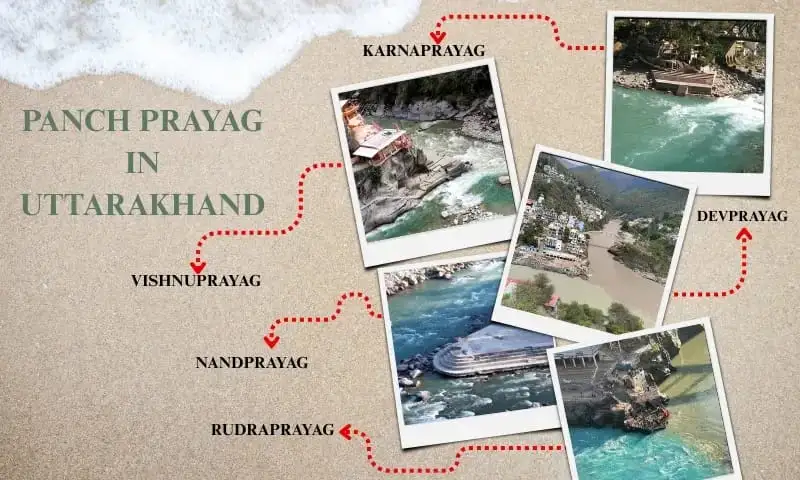
Panch Prayag in Uttarakhand refers to the five sacred river confluences of the Alaknanda River in the Garhwal Himalayas. These five Prayags are Vishnuprayag, Nandaprayag, Karnaprayag, Rudraprayag, and Devprayag. At Devprayag Sangam, the Alaknanda meets the Bhagirathi River to form the holy River Ganga.
- What Are the 5 Panch Prayag Names?
- Panch Prayag Map & Locations
- What Are the Panch Prayag and Their Rivers?
- Panch Prayag Order, Rivers & Distance Chart
- About 5 Prayag in Uttarakhand
- How to reach Panch Prayag
- Best Time To Visit Panch Prayag
- Safety & Travel Tips for Panch Prayag
- How to Plan Panch Prayag Yatra (4-5 Days Itinerary)
- Panch Prayag Yatra: Quick Summary
- FAQs About Panch Prayag of Uttarakhand
Panch Prayag Map & Locations
The Panch Prayag are located in the Garhwal Himalayan region of Uttarakhand:
- Vishnuprayag Sangam: Chamoli District, Uttarakhand
- Nandaprayag Sangam: Chamoli District, Uttarakhand
- Karnaprayag Sangam: Chamoli District, Uttarakhand
- Rudraprayag Sangam: Rudraprayag District, Uttarakhand
- Devprayag Sangam: Tehri Garhwal District, Uttarakhand
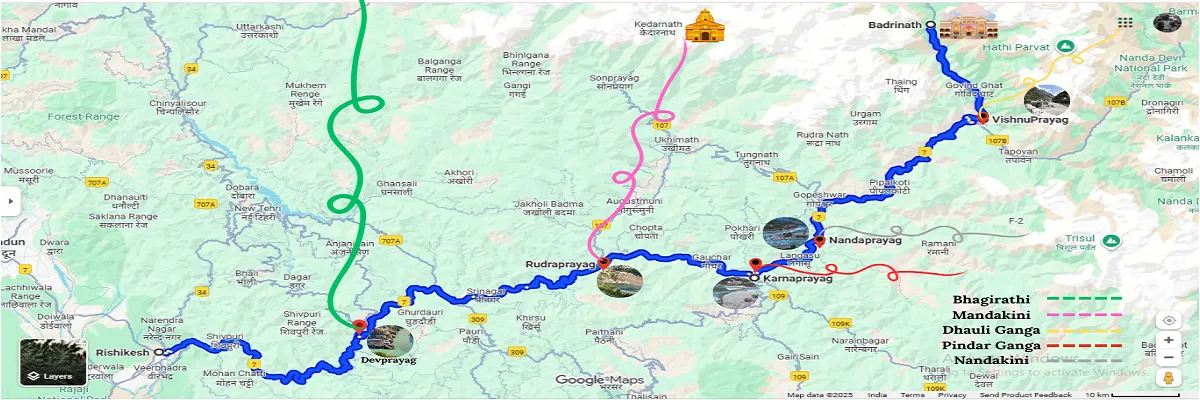
All the prayags in Panch Prayag circuit is located in the Garhwal Himalayas of Uttarakhand, on the route to Char Dham Yatra, which serves as the primary stop point for pilgrims.
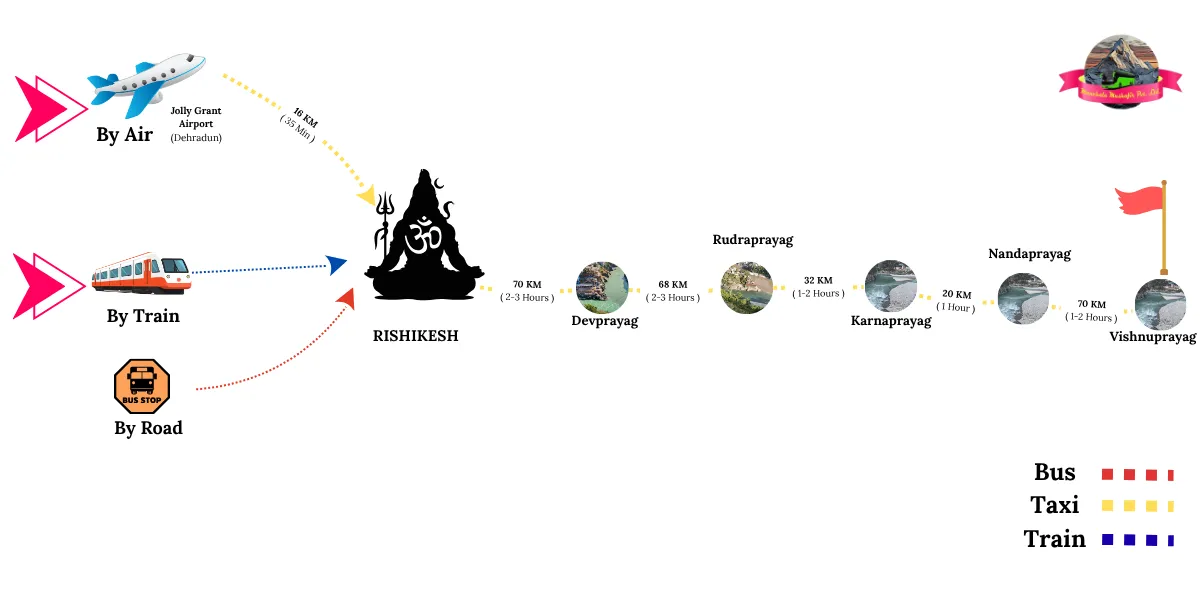
The possible route to traveling starts from Rishikesh,
heading towards Devprayag (74 km away from Rishikesh), then proceeds to
Rudraprayag (67 km from Devprayag), then continues to Karnaprayag, then
Nandaprayag, and then finally to Vishnuprayag near Joshimath, on the route to
Badrinath.
What Are the Panch Prayag and Their Rivers?
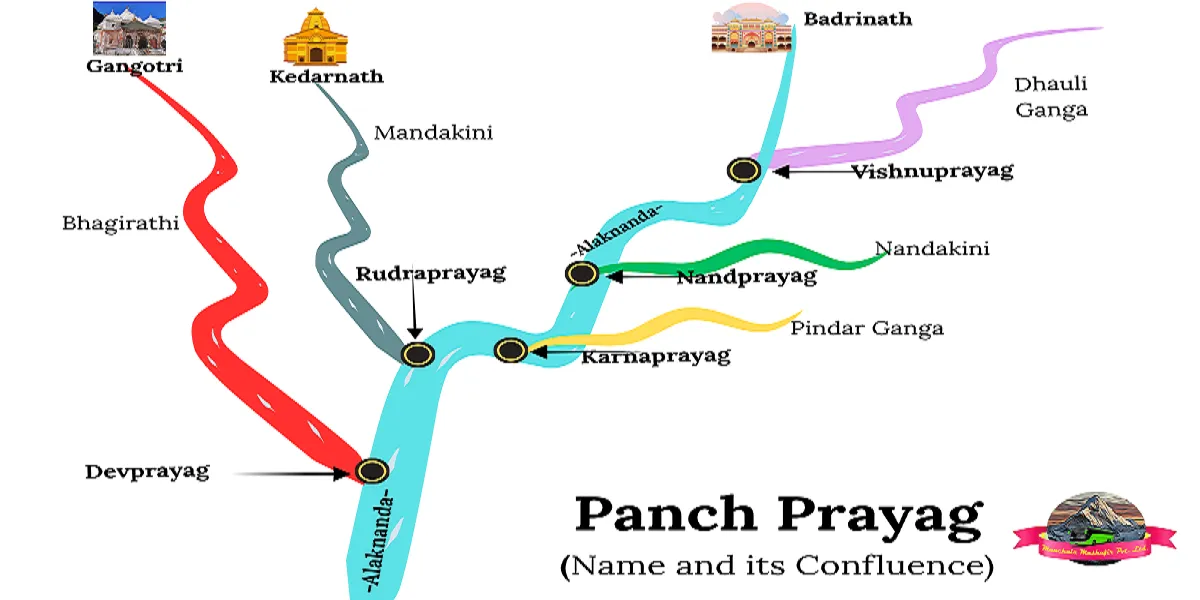
List of Panch Prayag and River Name
- The
first prayag in this route is Vishnu prayag, located near the famous town
of Joshimath. Here, the River Dhauliganga meets the River Alaknanda.
- The second prayag in the route is Nandaprayag, where the river Nandakini meets the river Alaknanda.
- The
third prayag is known as Karnaprayag, as it is believed that here Karna,
son of Lord Sun, did penance to please him. At this place, the river
Pindar meets the river Alaknanda.
- The fourth prayag is Rudraprayag, where the river Mandakini, coming from Kedarnath Valley, meets the river Alakananda.
- The fifth and last prayag is Devprayag, where the river Alaknanda finally meets the river Bhagirathi coming from Gangotri Valley to create the river Ganga.
Panch Prayag Order, Rivers & Distance Chart
Order of Panch Prayag (Upstream to Downstream)
According to Hindu scriptures, when Goddess Ganga descended to Earth, Lord Shiva divided her powerful flow into multiple streams to reduce its force. These sacred streams reunite at Devprayag, where the Alaknanda and Bhagirathi merge to form the River Ganga.
Panch Prayag holds great importance in Hindu tradition, and most of the people coming on this route for the Kedarnath trip, the Do Dham trip, or the Char Dham trip also visit some or all of these Prayag. So let's dive deep into this topic and discuss each prayer in detail.
Prayag (Order) | Mythological / Legend | Rivers Converging | Distance from Haridwar by road | Distance from Dehradun by road |
|---|---|---|---|---|
Vishnu Prayag (1st) | Named for Lord Vishnu; near Joshimath | Alaknanda + Dhauliganga | ~ 286 km | ~ 279 km |
Nandaprayag (2nd) | Named after King Nanda | Alaknanda + Nandakini | ~ 223 km | ~ 200 km |
Karnaprayag (3rd) | Where Karna (from the Mahabharata) did penance | Alaknanda + Pindar | ~ 190 km | ~ 211 km |
Rudraprayag (4th) | Named for Rudra (an aspect of Shiva) | Alaknanda + Mandakini | ~ 160 km | ~ 181 km |
Devprayag (5th) | The confluence that forms the Ganga | Alaknanda + Bhagirathi → Ganga | ~ 94–100 km | ~ 116 km |
About 5 Prayag in Uttarakhand
Vishnuprayag – First of the Panch Prayag
For the full history, distances, and travel guide, read the complete Vishnuprayag Sangam guide.
Distance chart of Vishnuprayag from nearby destinations
| Destination | Distance | Approx. Time |
| Joshimath | 12 km | 30 min |
| Badrinath | 36 km | 2 hrs |
| Karnaprayag | 85 km | 3–4 hrs |
| Rudraprayag | 136 km | 5–6 hrs |
| Devprayag | 214 km | 8–9 hrs |
| Rishikesh | 265 km | 9–10 hrs |
| Haridwar | 286 km | 10–11 hrs |
Nandaprayag – Second Confluence of Panch Prayag
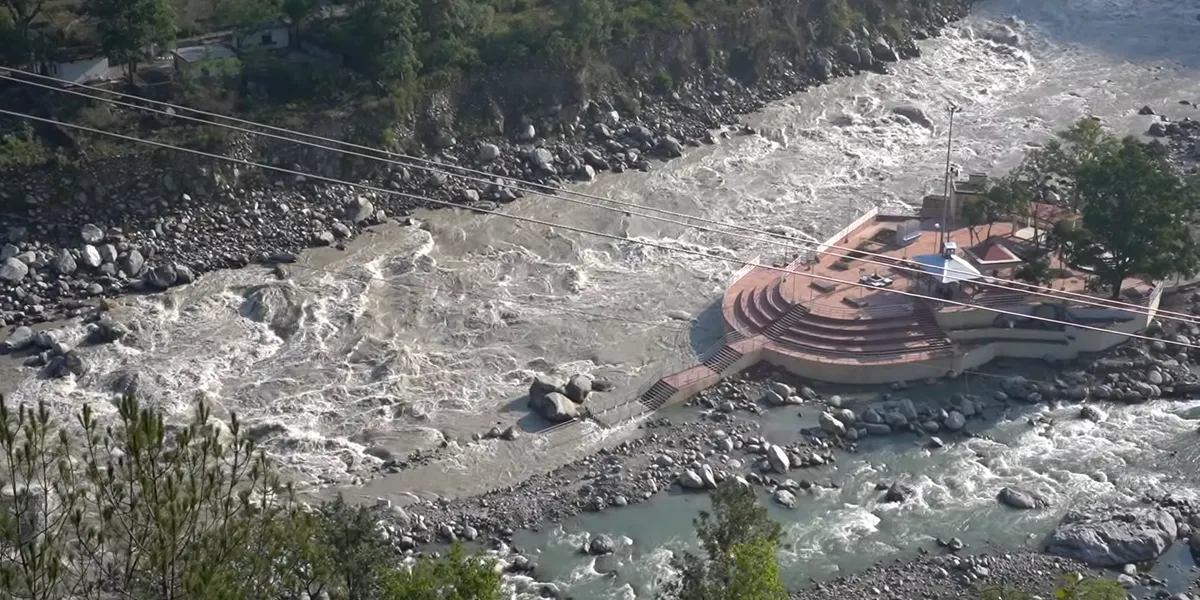
For the full history, distances, and travel guide, read the complete Nandaprayag guide.
Distance chart of Nandaprayag from nearby destinations
| Destination | Distance | Approx. Time |
| Karnaprayag | 21 km | 40 min |
| Rudraprayag | 67 km | 2.5 hrs |
| Devprayag | 145 km | 5–6 hrs |
| Vishnuprayag | 70 km | 2–2.5 hrs |
| Rishikesh | 190 km | 6–7 hrs |
Karnaprayag – Third Confluence of Panch Prayag
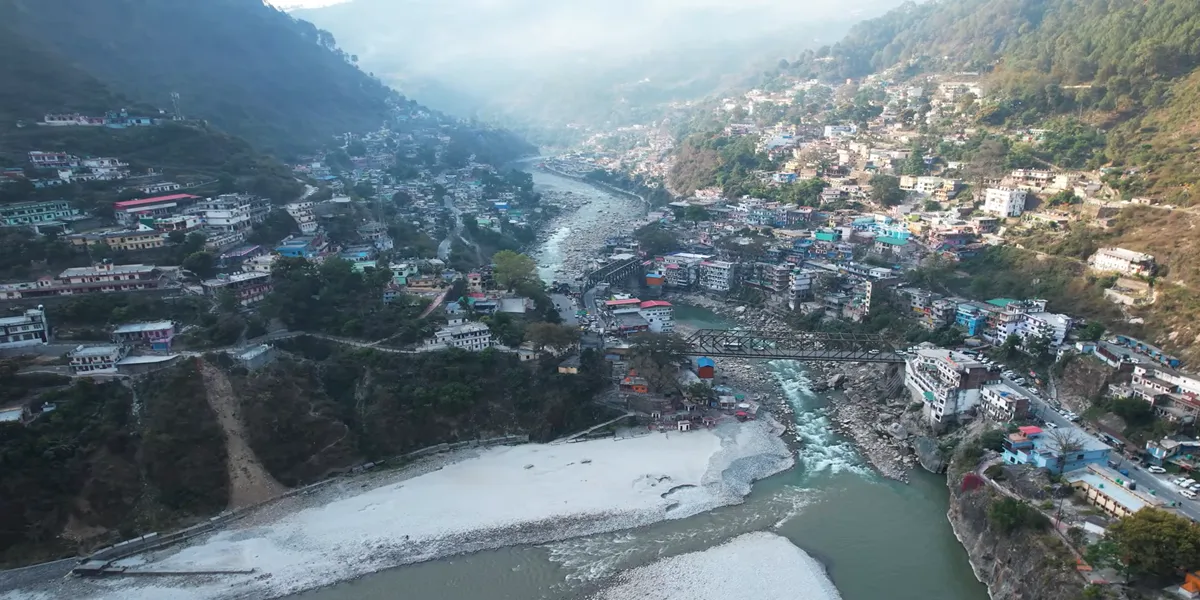
For the full history, distances, and travel guide, read the complete Karnaprayag guide.
Distance chart of Karnaprayag from nearby destinations
| City | Distance (Approx.) | Travel Time (Approx.) |
| Rishikesh | 170 km | 6–7 hrs |
| Haridwar | 190 km | 7–8 hrs |
| Dehradun | 211 km | 8–9 hrs |
| Delhi | 450 km | 12–13 hrs |
| Rudraprayag | 33 km | 1–1.5 hrs |
| Badrinath | 112 km | 4–5 hrs |
Rudraprayag – Fourth Confluence of Panch Prayag
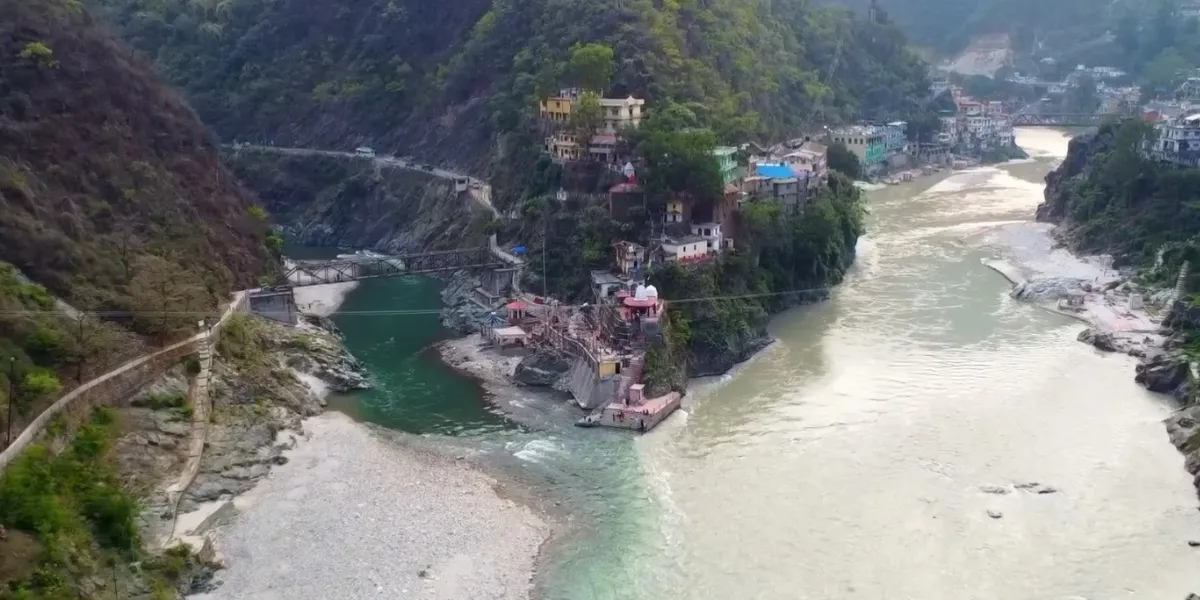
For the full history, mythology, and travel guide, read the complete Rudraprayag Sangam guide.
Distance of Rudraprayag from famous places
| City | Distance (Approx.) | Travel Time (Approx.) |
| Rishikesh | 142 km | 4 hrs |
| Haridwar | 166 km | 4.5–5 hrs |
| Delhi | 390 km | 10–11 hrs |
Devprayag – Where the River Ganga Is Formed
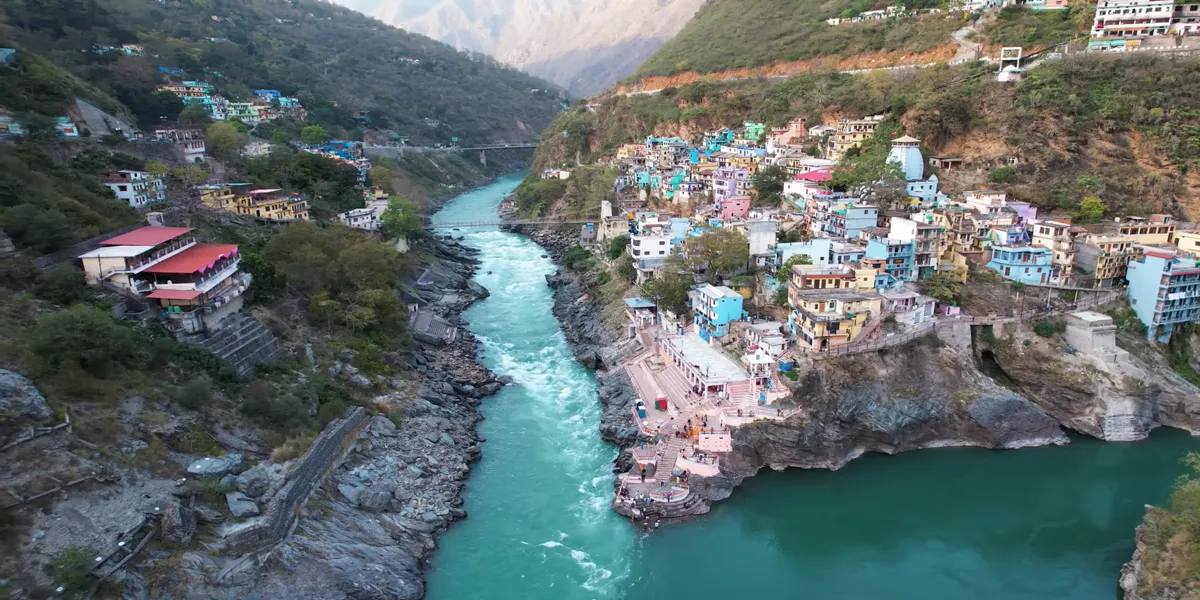
For the full story, the sacred kunds, wedding and travel details, read the complete Devprayag Sangam guide.
Distance of Devprayag from famous places
| City | Distance | Approx. Travel Time |
| Rishikesh | 70.5 km | 2–2.5 hrs |
| Haridwar | 94.3 km | 2.5–3 hrs |
| Delhi | 327 km | 6–7 hrs |
How to Plan Panch Prayag Yatra (4–5 Days Itinerary)
Day 1- Rishikesh to Devprayag
- Morning
& Afternoon: Start your journey from Rishikesh (74km away) to
Devprayag in the early morning. Witness the confluence of the Alaknanda
and Bhagirathi rivers and take a holy dip in the afternoon.
- Evening
& night: Visit the nearby temples, such as Raghunathji Temple and
Dashrath Shila Temple. Stay overnight at Devprayag.
Day 2- Devprayag to Rudraprayag
- Morning
& Afternoon: Drive to Rudraprayag in the early morning, which is about
67km from Devprayag. In the afternoon, see the sangam of the Alaknanda and
Mandakini rivers and take a holy dip.
- Evening
& night: Visit to the nearby temples, such as the Koteshwar Mahadev
temple and Kartik Swami Temple, and stay overnight at Rudraprayag.
Day 3- Rudraprayag to Karnaprayag and Nandaprayag
- Morning
& Afternoon: Drive to Karnaprayag (about 33 km) and witness the
sangam of the Alaknanda and Pindar rivers. In the afternoon, head towards
Nandaprayag, about 21km away. This is the sangam of the Alaknanda and Nandakini rivers.
- Evening
& night: See the confluence of the Alaknanda and Nandakini rivers in
the evening and enjoy the views of stunning Himalayan scenery.
Day 4- Nandaprayag to Vishnuprayag
- Morning
& Evening: Continue to Vishnuprayag via a short drive of about 30-40
minutes from Joshimath. Witness the confluence of the Alaknanda and
Dhauliganga rivers, the first confluence of the panch prayag.
- Evening
& Night: Enjoy the stunning views of the Himalayas, visit the nearby
Kund, and the ancient temple of Lord Vishnu.
Day 5- Vishnuprayag to Rishikesh Return
- Morning
& Evening: Start your long return journey towards Rishikesh from
Joshimath. Enjoy the mountain views and stop along the way for lunch.
- Evening
& Night: Check into your hotel, take a rest, and explore the city in
the evening.
How to reach Panch Prayag
Panch Prayag is located in the Garhwal Himalayas of Uttarakhand and is well connected by road from major gateway cities like Rishikesh, Haridwar and Dehradun.
Note: There is no direct airport or railway station at Panch Prayag, so the journey is completed by road after reaching these cities.
- By Air: The joly grant Airport in Dehradun is the closest. Flights are available for Dehradun from major cities, like Delhi. So you can take a flight from your city to Dehradun airport. From there, you can hire a private taxi to proceed on your journey to each Prayag.
- By Train: The most common and nearest railway station is Rishikesh railway station, so you can travel by train from your city to Yog Nagri Rishikesh station.
- By Road: Travel by road is another convenient option to reach Panch Prayag. You can travel by bus from your city to Haridwar or Rishikesh. From these spots, you need to hire a private vehicle to visit each prayag. Generally, the NH-7 route is followed for this journey.
The standard route itinerary follows the Alaknanda route, with other rivers joining it at each confluence. Devprayag (74 km away from Rishikesh) is the first main stop of the journey, and it proceeds to Rudraprayag, Karnaprayag, Nandaprayag, and finally stretches to Vishnuprayag (located near Joshimath at a distance of around 66 km, on the route to Badrinath temple).
Tips for self-driven
You can also travel by self-driving, considering some things, including
- Ensure that your vehicle is in good condition, as the journey passes through the mountain roads.
- Plan your stops carefully, accounting for the driving time and rest time.
- Drive carefully on mountain routes, as the roads are challenging, and speed can be dangerous, so drive slowly.
- Don't drive after sunset, as it is not allowed and not safe.
- Overnight stays at convenient locations, like Rudraprayag, Karnaprayag, and Joshimath.
Best Time To Visit Panch Prayag
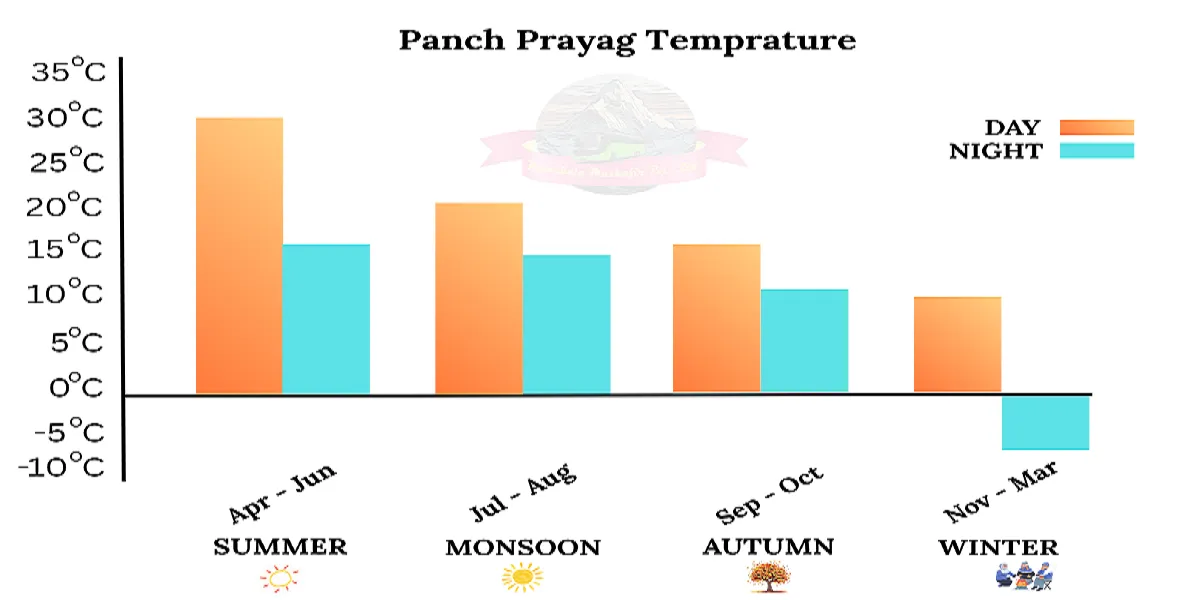
The best time to visit Panch Prayag in Uttarakhand is from April to June and September to October, when the weather is pleasant, roads are open, and the river confluences are clearly visible.
Although Panch Prayag can be visited throughout the year, seasonal conditions in the Himalayas significantly affect travel experience.
Summer Season (April to June): One of the most ideal times to visit, as these months provide favorable weather with clear skies and a mild temperature range. This period offers clear visibility of surroundings and confluences.
- Temperature: ranges from 15 °C to 30 °C.
- Conditions: This time, experience a vast crowd, as it is the pilgrimage season.
Monsoon season (July to August): Monsoon is marked by heavy rainfall, which leads to landslides, thunderstorms, and road blockage, making the rails slippery.
- Temperature: ranges from 14 °C to 22 °C with high humidity.
- Conditions: the river becomes muddy at this time, and the visibility of the confluences is also abysmal due to heavy rain and cloudy skies. Travelling might be risky at this time due to road closures and flash floods.
Post-monsoon season (September to October): Another good time to visit Panch Prayag, as the rain starts retreating at this time and the weather becomes pleasant again.
- Temperature: ranges from 10°C to 15°C, with humidity dropping as the rains retreat.
- Conditions: Comfortable weather with clear skies and clear views. Road conditions are also improved at this time, making it an ideal time for sightseeing and exploration.
Winter Season (Nov to Mar): The weather becomes harsh and cool at this time, with the possibility of snowfall.
- Temperature: at this time, the temperature is down, ranging from 5°C to -10°C.
- Conditions: road closures are possible due to snowfall. This period experiences minimal crowds, as the pilgrimage season ends at this time.
Safety & Travel Tips for Panch Prayag
Visiting the five sacred confluences called “Panch Prayag" is a perfect blend of spiritual and scenic journey, which demands proper planning and preparation to assure a safe and enjoyable journey. Here are some essential travel tips or things to consider before going on this journey.
- Be aware of the weather Conditions: As you know, the journey passes through the Himalayas, which experience variable weather conditions, such as sudden rain, so check the weather forecast and the best time to visit while preparing for a trip.
- Booking tip: Book your trip with a reliable travel agency that has high security standards to assure your safety. If you travel solo or not, book with a travel operator, so book your accommodation in advance, especially during the peak season.
- Packing Essentials: Covering all five confluences is a long journey (around 4-5 days), so packing is a crucial part. Pack light and bright, and carry all the necessary things, such as clothing, health and safety items, and other essential things.
- Respect the local customs & follow the Guidelines: Since every sacred spot has its own customs and guidelines, follow them; don’t ignore them, as these assure your safety on your journey.
- Stay Connected: Mobile networks are inferior in remote areas, so stay connected with your family or friends. Share your tour itinerary with them.
- Be aware of the road conditions: If you travel solo, hire an experienced driver who has experience driving on hilly roads. Be prepared for travelling on winding or hilly roads.
Panch Prayag Yatra: Quick Summary
The Panch Prayag in Uttarakhand — Devprayag, Rudraprayag, Karnaprayag, Nandaprayag, and Vishnuprayag — represent the five sacred confluences of the Alaknanda River that ultimately give birth to the holy River Ganga.
Located in the Garhwal Himalayas of Uttarakhand, these five Prayags are not only spiritually significant but also geographically important in understanding the origin and journey of the Ganga. Each confluence marks the meeting of powerful Himalayan rivers and holds deep mythological connections with Lord Shiva, Lord Vishnu, and characters from the Mahabharata.
Whether you are planning a spiritual pilgrimage, a Char Dham journey, or a scenic Himalayan road trip, covering all five Panch Prayag offers a unique blend of devotion, natural beauty, and cultural heritage.
If planned properly, this 4–5 day circuit from Rishikesh to Joshimath becomes one of the most meaningful journeys in Uttarakhand.
4 Dham Package from Different Cities
FAQs About Panch Prayag of Uttarakhand
How long does it take to visit all Panch Prayags?
It typically takes 4 to 5 days to cover all five Panch Prayag in Uttarakhand — Devprayag, Rudraprayag, Karnaprayag, Nandaprayag, and Vishnuprayag. If you combine the trip with Kedarnath or Badrinath, you may need 6–7 days.
Is there any accommodation near Panch Prayag?
Yes, there are several accommodation options around the
Panch Prayag sites, including guesthouses, Dharamshala, and small hotels. Towns
like Joshimath, Nandaprayag, and Rudraprayag offer basic amenities and are good
places to stay.
Are there any permits or entry fees?
No, there are no specific permits or entry fees to visit
Panch Prayag. Costs to consider for your trip are Transportation,
accommodation, food, and other expenses. These sacred sites are publicly
accessible; no permit is required to visit them.
What are the attractions around Prayag?
All the panch prayags in Uttarakhand are on the route of the Dham Yatra. So in addition to these panch prayags, you can also visit the Kedarnath Temple and the Badrinath Temple. In addition to this, you can also visit the Dhari Devi temple, which is between Srinagar in Uttarakhand and Rudraprayag. You can also visit Triyuginarayan, Gaurikund, Guptkashi, Chorabari
lake, Vasuki tal, Bhairavnath
temple, Mana
village, Vasudhara falls, Chopta Tungnath Trek, and Panch Kedars.
Are there any myths or legends associated with Panch Prayag?
Each Prayag is steeped in rich mythology:
- Vishnuprayag: Sage Narada is said to have meditated here to please Lord Vishnu.
- Nandaprayag: It is believed that King Nanda performed meditation here to gain Lord Vishnu's blessings.
- Karnaprayag: The Mahabharata tells that Karna performed penance at this Prayag.
- Rudraprayag: It's believed that Lord Shiva appeared as Rudra at this spot.
- Devprayag: This Prayag is most famous as the point where the Ganga is born, when the Alaknanda and Bhagirathi meet.
What are the 5 Prayag names?
The five Panch Prayag of Uttarakhand are:
- Vishnuprayag – Alaknanda + Dhauliganga
- Nandaprayag – Alaknanda + Nandakini
- Karnaprayag – Alaknanda + Pindar
- Rudraprayag – Alaknanda + Mandakini
- Devprayag – Alaknanda + Bhagirathi (forms River Ganga)
Which is the first Prayag upstream?
Vishnuprayag → Nandaprayag → Karnaprayag → Rudraprayag → Devprayag.
Vishnuprayag is the first and highest Prayag, located near Joshimath.
How many prayag are there in Uttarakhand?
- Vishnuprayag: Confluence of Alaknanda and Dhauliganga
- Nandaprayag: Confluence of Alaknanda and Nandakini
- Karnaprayag: Confluence of Alaknanda and Pindar
- Rudraprayag: Confluence of Alaknanda and Mandakini
- Devprayag: Confluence of Alaknanda and Bhagirathi
Which two rivers meet at Devprayag, the fifth Panch Prayag?
Why is Devprayag called the final Panch Prayag?
Which two rivers meet at Rudraprayag, the fourth Panch Prayag?
What does the name Rudraprayag mean?
Which two rivers meet at Vishnuprayag, the first Panch Prayag?
Which two rivers meet at Nandaprayag, the second Panch Prayag?
Which two rivers meet at Karnaprayag, the third Panch Prayag?