
Triyuginarayan Temple in Uttarakhand – The Shiv Parvati Marriage Place
Category: Travel | Updated On: August 1, 2026 | Published: October 19, 2023

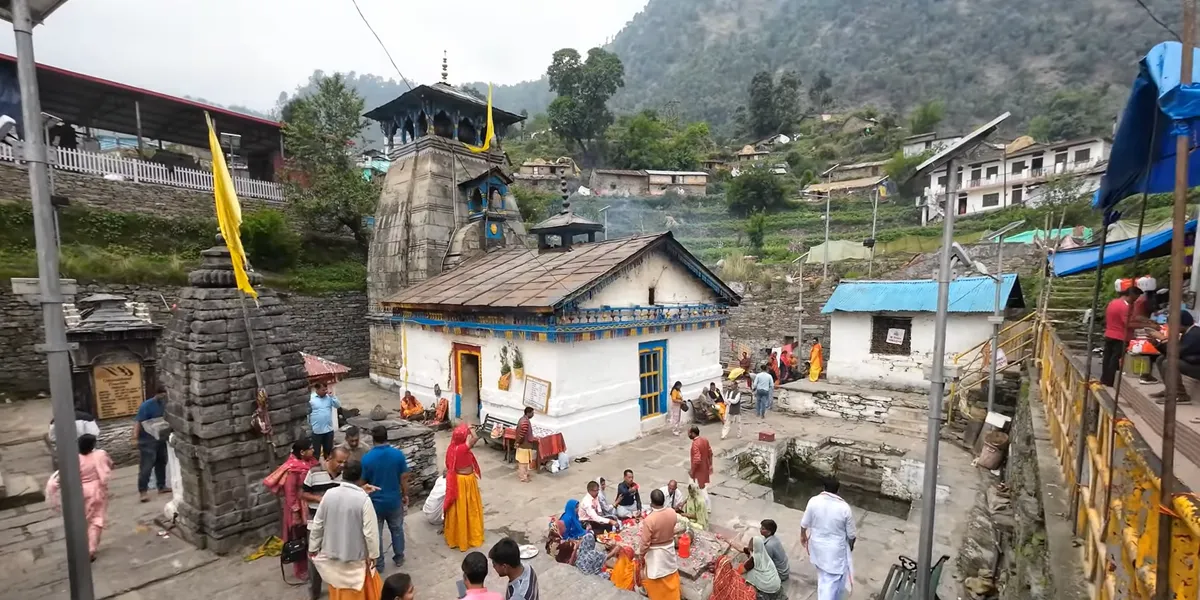
Triyuginarayan Temple: Sacred Shiv-Parvati marriage place
Planning Your Visit
The temple is open every day of the year and does not close for winter, unlike Kedarnath. For darshan timings and a full month-by-month weather guide, see when to visit Triyuginarayan Temple.
- Triyuginarayan Temple: Sacred Shiv-Parvati Marriage Place
- Where is Triyuginarayan Temple Located?
- Triyuginarayan Temple History
- Architecture of Triyuginarayan Temple Uttarakhand
- Spiritual Importance of Triyogi Narayan Temple
- Triyuginarayan Temple Wedding
- How To Get Married At Triyuginarayan Temple?
- How to Register Your Marriage at Triyuginarayan Temple
- Festivals and Pilgrimage at Triyuginarayan Temple
- How To Reach Triyuginarayan Temple
- Travel Tips for Visiting Triyuginarayan Temple
- Do's and Don'ts of Triyuginarayan Temple
- FAQs Related to Triyuginarayan Temple
Where is Triyuginarayan Temple Located?
Quick Facts
- Altitude: 1,980 meters (6,496 feet)
- Temple Deity: Lord Vishnu
- Significance: Associated with Lord Shiva and Maa Parvati Marriage Place
- Highlights: Akhand Dhuni, Sacred Kunds (Rudra, Vishnu, Brahma, & Saraswati Kund), and Wedding destination for couples
- Accessibility: The temple accessible throughout the year and is well connected by road via Guptkashi and Sonprayag
- Best Time: May to June and September to October
Food & Facilities Near Triyuginarayan Temple
Visitors Tips
- Carry cash as digital payment or UPI may not work there.
- Wear comfortable shoes with good grip, there are chances of rainfall in this region which may make the ground slippery.
- Visit early in the morning for a peaceful and convenient darshan and pooja.
Triyuginarayan Temple History
The exact date of construction of Triyuginarayan temple remains unknown, the temple finds its earliest mention in the Skanda Purana. According to the scriptures, the celestial wedding took place here in the presence of all major Hindu deities.
Lord Brahma performed the marriage rituals as the chief priest , while Lord Vishnu fulfilled the role of Goddess Parvati’s brother and conducted the sacred Kanyadaan ceremony.
Interestingly, the temple is primarily dedicated to Lord Vishnu , yet it holds deep spiritual connections with the Hindu trinity — Brahma (creator), Vishnu (preserver), and Mahesh or Lord Shiva (destroyer) . This unique association makes Triyuginarayan one of the rare pilgrimage sites where all three divine forces are symbolically connected.
Historians often credit early regional rulers and Adi Shankaracharya for the reconstruction and revival of the temple. During his mission to reestablish Hindu temples across the Himalayan region, significant efforts were made to preserve its spiritual importance. Over the centuries, the temple has undergone several renovations while maintaining its ancient architectural style and sacred essence.
Lord Shiva and Parvati Marriage Place:
According to Hindu mythology, Triyuginarayan is believed to be the ancient capital of King Himavat, the father of Goddess Parvati. Devi Parvati was the reincarnation of Goddess Sati, the first consort of Lord Shiva.
It is said that Parvati performed intense penance at Gaurikund , near Triyuginarayan, to win Lord Shiva’s love and acceptance. Impressed by her devotion, Lord Shiva agreed to marry her. The divine wedding ceremony was later held at Triyuginarayan Temple in Satya Yuga.
As mentioned in the Skanda Purana, the celestial marriage was attended by gods, sages, and divine beings, with Brahma and Vishnu fulfilling the roles described above. This sacred event is why Triyuginarayan is known as the original Shiv Parvati marriage place.
The Eternal Flame: Akhand Dhuni Temple
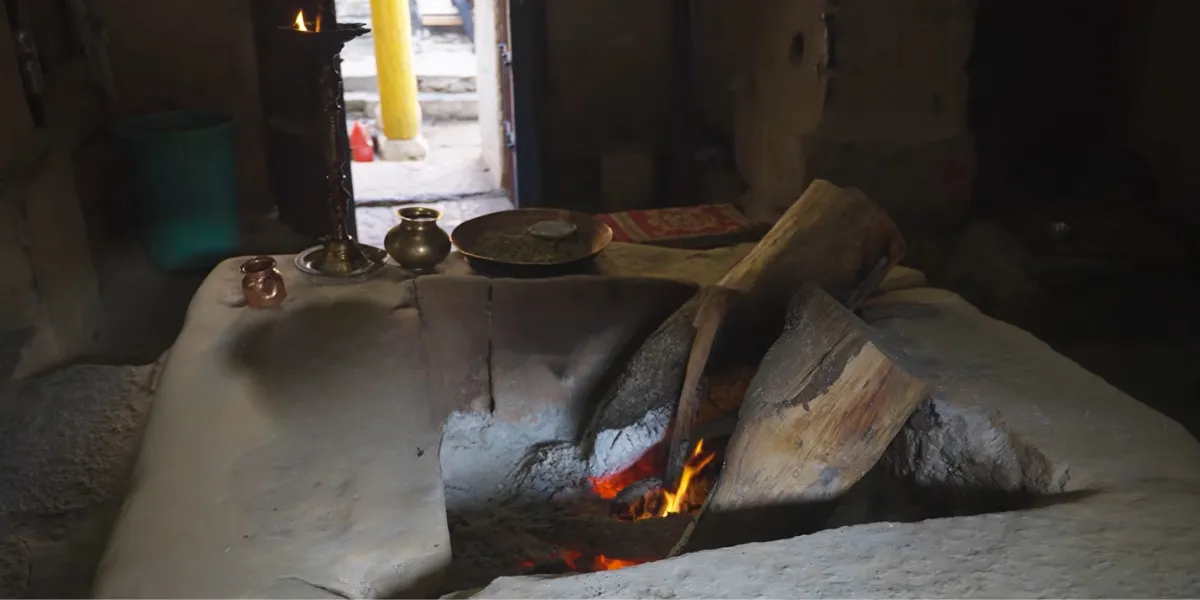
One of the most sacred features of This Temple is the Akhand Dhuni, an eternal flame that is believed to have been burning continuously since the wedding of Lord Shiva and Goddess Parvati.
This sacred fire symbolizes eternal love, purity, and divine union. Devotees offer wood (Samidha) and sesame seed into the flame as a mark of respect and ensure the fire keep on burning till the eternity. Devotees also take its holy ashes as blessings for marital harmony and prosperity.
Because of this perpetual fire, the temple is also popularly called the Akhand Dhuni Temple. Even today, couples visit this sacred site to seek blessings for a happy and long-lasting marriage.
Sacred Ponds Near The Temple
-
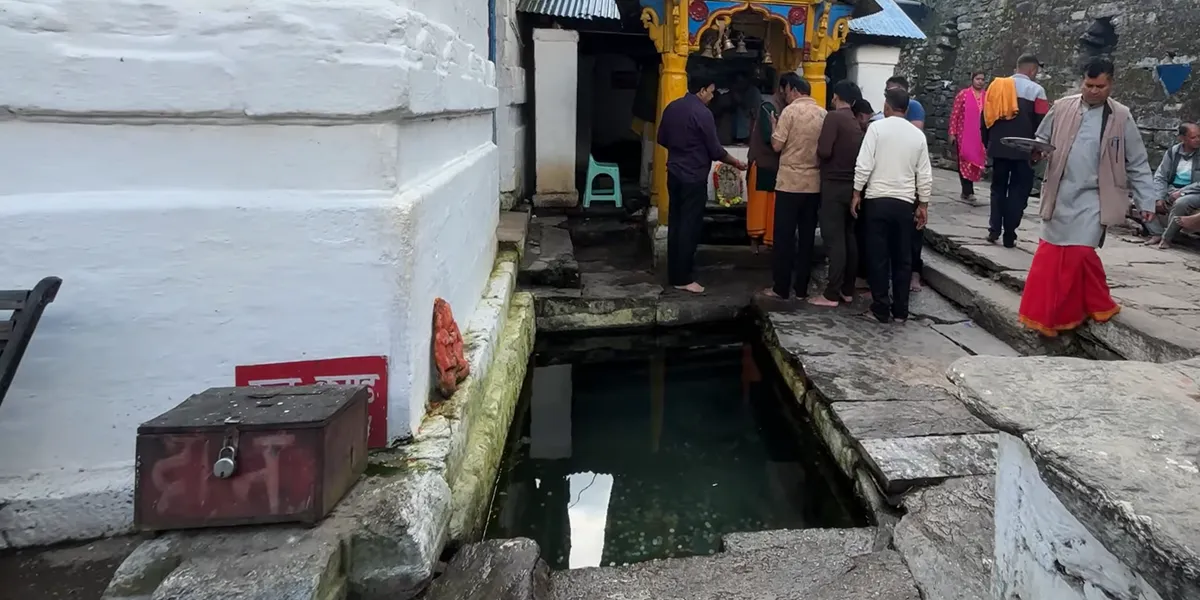
Rudra Kund : It is a sacred Kund in the complex of the Triyuginarayan Temple and is dedicated to Lord Shiva, who is also known as Rudra here. The holy water of this Kund is used for ritual bathing for devotees to cleanse the body and reduce stress before entering the temple. Also the holy kund holds importance in the wedding rituals of couples getting married here.
-
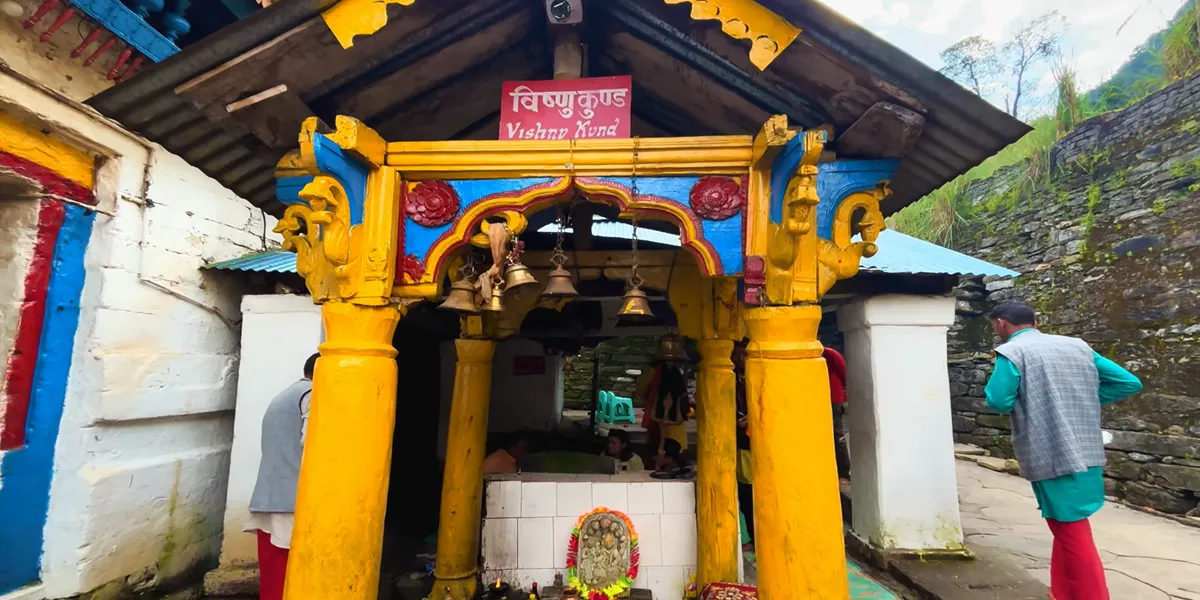
Vishnu Kund : The kund is dedicated to lord Vishnu located in the temple complex. The holy water of this Kund is used for purifying rituals. It is believed that the name of the Kund is named after the Lord Vishnu.
When he took the sacred bath at this kund before the divine wedding of Lord Shiva and Goddess Parvati, making it a crucial part of the Temple and significance in the wedding rituals.
-
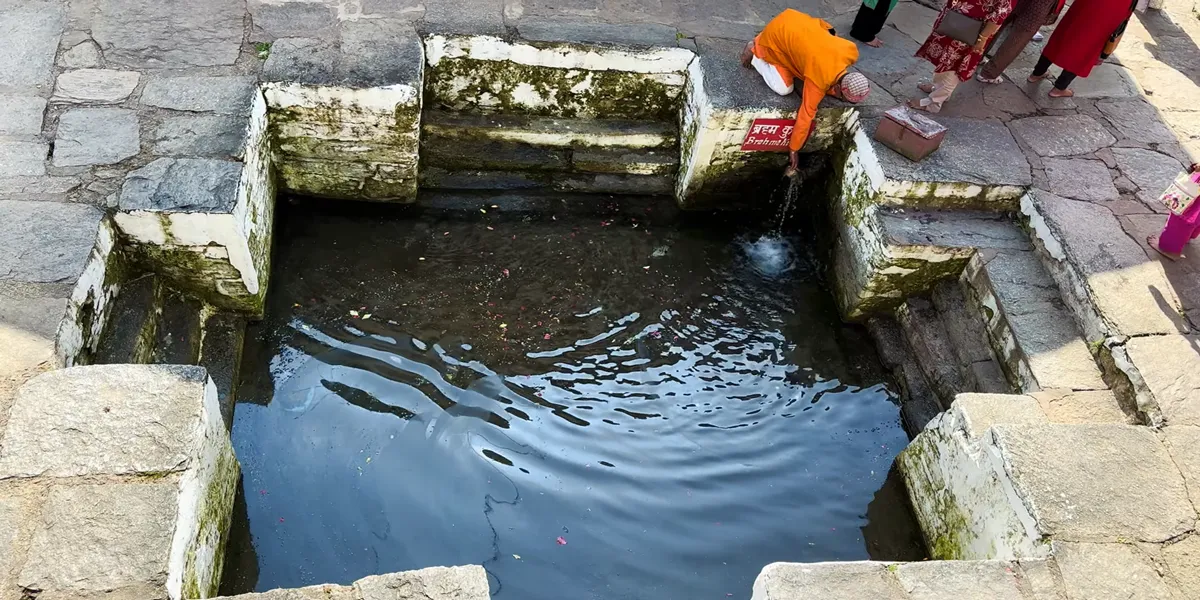
Brahma Kund : This sacred Kund is dedicated to lord Brahma and ideally used for sipping the water to perform tarpan rituals. Pilgrims often sip water here during their visit to this sacred site.
It is believed that sipping the water during the tarpan rituals is a part of the offering to ancestors, sages, and gods. This holy Kund is located in the proximity of the Triyogi Narayan Temple near the other sacred Kunds.
-
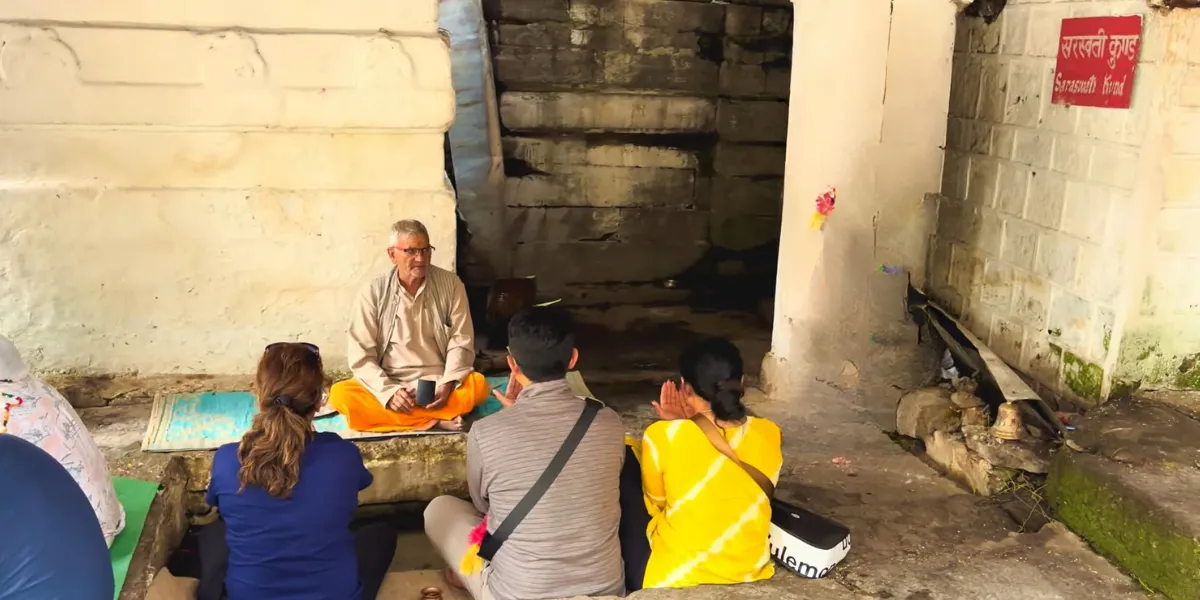
Saraswati Kund : One of the important part of the temple is the Saraswati Kund located in the temple complex, it is believed to have originated from the navel of lord vishnu. Also it is the source of the water for other ponds, including Rudra Kund, Vishnu Kund, and Brahma Kund. The water of this Kund is used in the wedding rituals and during the holy worships.
Architecture of Triyuginarayan Temple Uttarakhand
The Temple is built in the traditional North Indian Nagara architectural style, using locally sourced Himalayan stones. Its design closely resembles the famous Kedarnath Temple, reflecting the ancient temple-building techniques of the Garhwal region.
The main sanctum houses a sacred idol of Lord Vishnu, as the temple is primarily dedicated to him. The interior and exterior walls are adorned with intricate carvings and relief sculptures that depict scenes from Hindu mythology.
Within the temple complex lies the sacred fire pit known as the Akhand Dhuni (see below), further enhancing the sanctum's spiritual aura.
Spiritual Importance of Triyogi Narayan Temple
Triyuginarayan holds a unique spiritual position in Hindu tradition. It is one of the rare sacred sites associated with all three major Hindu deities — Lord Brahma (creator), Lord Vishnu (preserver), and Lord Shiva (destroyer).
According to Hindu beliefs, worshipping at this temple represents harmony among the cosmic forces of creation, preservation, and destruction. Devotees visit the temple to seek blessings for marital happiness, spiritual growth, and inner peace.
The temple is especially revered by newly married couples and those seeking divine guidance in life. Many pilgrims believe that offering prayers here helps restore emotional balance and strengthens spiritual connection.
Triyuginarayan Temple Wedding
How To Get Married At Triyuginarayan Temple?
Wedding Process and Rituals at Triyuginarayan Temple
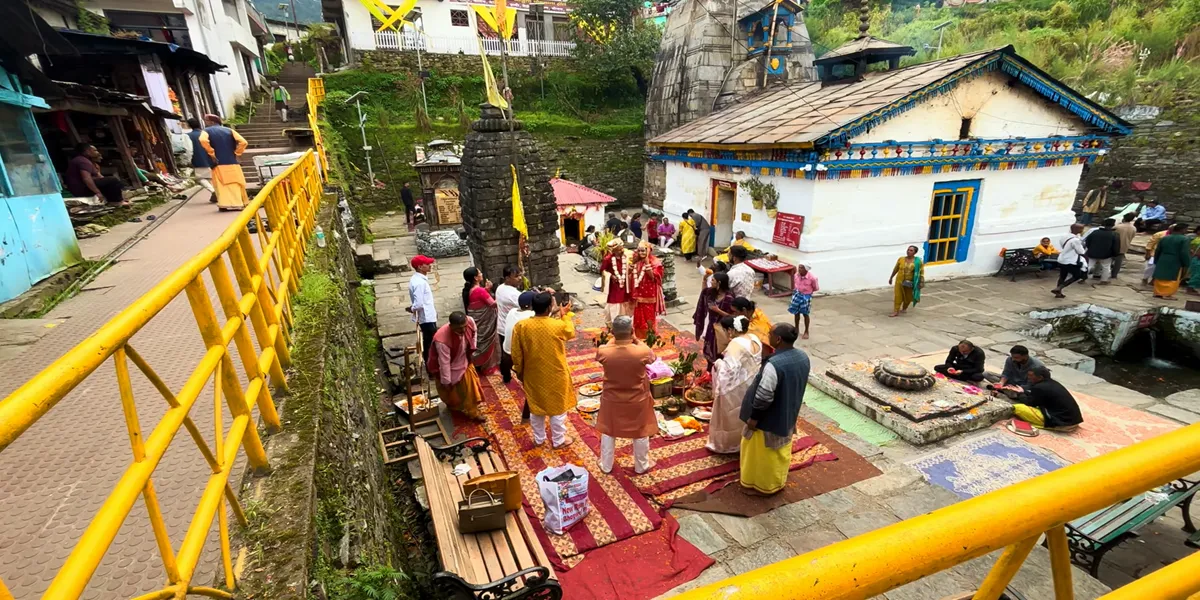
1. Holy Kund Bath
Before marriage, couples must bathe in the waters of three holy Kunds: Rudra Kund, Brahma Kund, and Vishnu Kund. Shiva and Parvati are said to have bathed in these three pools before their marriage
2. Seven Rounds around Akhand Dhuni –
Couples make seven rounds around the Akhand Dhuni, the eternal flame described above, saying particular vows each time.
3. Wood Offerings -
'Tri Yug' refers to three ages. Devotees are said to have been donating wood to the temple's fireplace for three Yugas. During their marriage, couples make Samidha (wooden offerings) to the eternal flame in front of the temple and collect the ashes as a blessing.
4 . Prayer and Blessings –
After completing the holy bath, seven rounds, and wood offerings. The priest performs a short puja with sacred mantras, and devotees offer flowers, rice, and ghee to the deity.
Many couples also light a diya (lamp) near the Akhand Dhuni as a symbol of their unbreakable bond. This final prayer marks the completion of all sacred rituals, filling the heart with divine peace and gratitude.
What is the Wedding Cost at Triyuginarayan Temple?
The Triyuginarayan temple committee doesn't publish any fixed wedding tariff. This will totally depend on the priest charges, local vendor, accommodation category, number of people attending the wedding, decoration and many more.
Estimated cost of wedding at Triyuginarayan are as follows
| Package Type | Guests | Indicative Cost (2026) |
| Temple registration & priest dakshina only | 2 | ₹3,000–₹7,000 |
| Basic wedding ceremony (Pandit, puja samagri, havan, simple mandap) | 2–5 | ₹15,000–₹35,000 |
| Mid-range wedding (ceremony + stay + meals + basic decor) | 10–30 | ₹80,000–₹2,50,000 |
| Destination wedding (premium decor, accommodation, catering & complete event management) | 30–100 | ₹3,50,000 -₹12,00,000+ |
| Service | Approx. Cost |
| Professional Photography | ₹15,000–₹40,000 |
| Cinematic Wedding Film | ₹25,000–₹80,000 |
| Bridal Makeup | ₹8,000–₹25,000 |
| Mehndi Artist | ₹5,000–₹20,000 |
| Flower Decoration Upgrade | ₹15,000–₹1,00,000+ |
| Band & Dhol | ₹10,000–₹40,000 |
| Guest Transportation | ₹5,000–₹50,000 |
| Luxury Hotel Upgrade | As per hotel category |
How to register your marriage at Triyuginarayan Temple
Important Information Committee Needs
- Bride Groom Full Name
- Permanent address
- Mobile numbers
- Preferred wedding date
- Approximate number of guests
- Gotra
- Identification Documents
Documents Permitted of Bride & Groom
- Aadhaar Card / Passport
- PAN Card (optional but useful)
- Age Proof (10th Certificate, Birth Certificate or Passport)
- Address Proof
- Passport-size photographs
If Applicable
- Divorce decree (if previously divorced)
- Death certificate of former spouse (if widowed)
Witnesses
Registration fee
Festivals and Pilgrimage at Triyuginarayan Temple
The temple also comes alive during several Hindu festivals through the year.
Major Festivals CelebratedMajor Festivals Celebrated
The temple celebrates several Hindu festivals with devotion and enthusiasm. The most significant among them is Maha Shivaratri, when large numbers of devotees gather to worship Lord Shiva. During this festival, the temple complex resonates with devotional hymns, temple bells, and spiritual chants, creating a deeply divine atmosphere.
Other important occasions include:
- Shravan month celebrations
- Special pujas during wedding season
- Local Garhwali religious fairs
How To Reach Triyuginarayan Temple
Places To Visit Near Triyuginarayan Temple
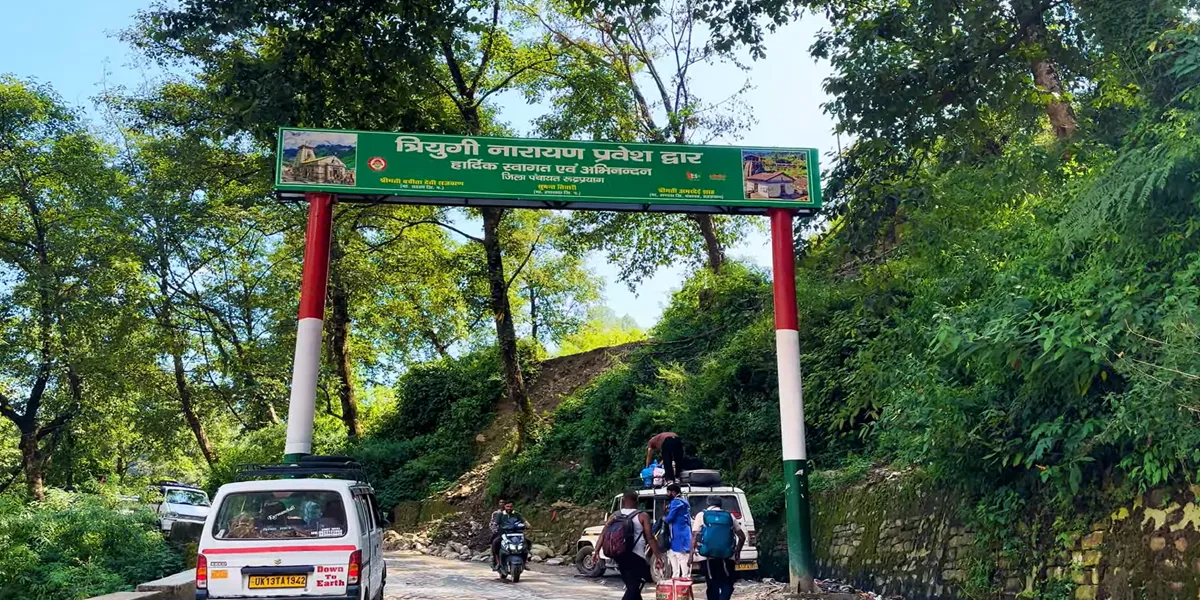
Triyuginarayan Temple is located in the heart of the Garhwal Himalayas and is surrounded by several important pilgrimage and tourist destinations. Many travelers combine their visit with nearby spiritual and scenic locations in the Rudraprayag region. For a detailed list of attractions, distance charts, and travel tips, read our complete guide on Places to Visit Near Triyuginarayan Temple .
Distance of Triyuginarayan Temple from Major Cities
The Temple is located in the Rudraprayag district of Uttarakhand and is well connected to major pilgrimage towns. For a complete distance chart including travel time, routes, and trekking details, read our detailed guide on Distance from Triyuginarayan Temple.
Travel Tips for Visiting Triyuginarayan Temple
2) Start Early in the Morning: - Mountain roads are safer and clearer in the morning. Early travel also helps avoid traffic near Sonprayag and Guptkashi during peak season.
3) Wear Proper Footwear: - Comfortable trekking shoes with good grip are important, especially during monsoon when paths can be slippery.
4) Keep ID Proof and Copies: - Carry valid ID proof and a few photocopies. This is useful for hotel check-ins and any local verification requirements.
5) Avoid Monsoon Travel If Possible:- Heavy rainfall in July and August may cause landslides and road blockages in the Rudraprayag region.
6) Respect Temple Rules:- Photography inside the sanctum is usually restricted. Maintain silence and follow local customs — see Do's and Don'ts below for the full dress-code guidance.
Do's and Don'ts of Triyuginarayan Temple
- Wear a modest clothes while visiting to the temple. Some of the appropriate clothes are Saree, Salwar, Kurta or any other traditional attire. Full length trousers and shirts are recommended for men. Avoid revealing or inappropriate clothing.
- Always remove the footwear while entering the temple.
- Avoid loud conversation inside the temple and maintain silence.
- Akhand dhuni is the Pious fire in the temple compound. Always respect the local authority and priest guidance.
- Use dustbin to dump your garbage, don't litter around.
- Always check the weather and road condition before planning your trip.
- Don't consume alcohol or tobacco products inside the temple complex.
- Take picture only if permitted. Special permission may be required before flying a drone in the temple region.
FAQ’s Related to Triyuginarayan Temple
What is the Triyuginarayan Temple famous for?
Triyuginarayan Temple is famous for the Shiv Parvati marriage place , which makes it a spiritual and mythological place to explore. It is also known as the Akhand Dhuni Temple for the perpetual fire (Akhand Dhuni), which is believed to be alive since the marriage of the deities. Also features the four sacred Kunds, including Rudra, Vishnu, Brahma, and Saraswati Kund in the temple complex.
How can I reach the Triyuginarayan Temple from Delhi?
To get from Delhi to Triyuginarayan Temple, you can take a bus or train to Rishikesh or Dehradun, then travel by road to Sonprayag. From Sonprayag, a motorable road covers the remaining 11.4 km to the temple by taxi or local bus. You can also fly to Dehradun's Jolly Grant Airport and travel the rest of the way by road.Note: For more details, you can refer to our blog on How to reach to Triyuginarayan temple from Delhi .
Can I get married at Triyuginarayan Temple?
Yes, the temple is a symbol of love because Lord Shiva and Goddess Parvati got married here. Temple registration and priest dakshina alone cost approximately ₹3,000–₹7,000; a fuller basic wedding ceremony (pandit, puja samagri, havan, simple mandap) typically runs ₹15,000–₹35,000 — see the full cost table above for every tier. Couples can have a simple and humble wedding at Triyuginarayan temple with the blessings of Lord Vishnu, Lord Shiva, and Mata Parvati.
Is Triyuginarayan near Kedarnath?
Yes, Triyuginarayan is close to Kedarnath Temple, connected via Sonprayag and Gaurikund. See our Triyuginarayan to Kedarnath distance guide for the full road-and-trek breakdown, or book the Kedarnath helicopter services .
How high is Triyuginarayan Temple?
Triyuginarayan temple is located at an altitude of 1980 meters (6496 feet) above the sea level in the Garhwal Himalayas of Rudraprayag district of Uttarakhand.Which celebrities got married at Triyuginarayan Temple?
How many guests can attend a wedding at Triyuginarayan Temple?
Are Tungnath and Triyuginarayan the same?
How far is Kedarnath from Triyuginarayan?