
Top 10 Places to Visit Near Triyuginarayan Temple
Category: Travel | Updated On: August 1, 2026 | Published: November 16, 2025

The best places to visit near Triyuginarayan Temple are Kedarnath, Guptkashi, Ukhimath, Chopta–Tungnath, Deoria Tal, Kalpeshwar, Kalimath, Panch Prayag, Dhari Devi and Vasuki Tal. Inside the temple complex you can see the Akhand Dhuni eternal flame and four sacred kunds. Most nearby sites have free entry and can be covered in 3 to 5 days.
Places to visit near Triyuginarayan Temple include several sacred temples, scenic Himalayan locations, and spiritually significant destinations in the Rudraprayag district of Uttarakhand. Triyuginarayan Temple itself is famous as the divine wedding place of Lord Shiva and Goddess Parvati, attracting pilgrims and travellers from across India.
Apart from the temple, the surrounding region offers a perfect blend of religious sites, peaceful villages, trekking routes, and natural viewpoints, making it an ideal destination for both pilgrimage and travel enthusiasts. For exact distances and travel time to each place, see our Triyuginarayan distance chart.
Hello, I’m Hema from Delhi, and I love exploring the hidden gems of Uttarakhand. In this guide, I’ll share the top places to visit in and around Triyuginarayan Temple, helping you plan a meaningful, well-rounded trip. If you plan to visit, check out our Kedarnath trip package, where you can add Triyuginarayan to your private itinerary.
- Things to Do in and Around Triyuginarayan Temple
- Places to Visit Inside the Temple Complex
- Top 10 Best Places to Visit Nearby
- Nearby Places at a Glance
- Triyuginarayan vs Tungnath vs Kedarnath
- How Many Days Are Enough
- Travel Tips
- Why Triyuginarayan Is a Gateway to Nearby Attractions
- Frequently Asked Questions
Things to Do in and Around Triyuginarayan Temple
Beyond simply visiting, there's a real list of things to actually do here:
- Witness the Akhand Dhuni eternal flame and, if you wish, collect a pinch of its ash as prasad
- Attend the morning or evening aarti at the main temple
- Bathe in or sip water from the four sacred kunds — Rudra, Brahma, Vishnu and Saraswati
- Watch or take part in a traditional temple wedding, if one is taking place
- Photograph the Himalayan peaks visible from the village on a clear morning
- Walk the old bridle path toward Sitapur for a short, easy stretch of trail
- Stay overnight in the village for sunrise over the surrounding ridgelines
- Time your visit to the wedding season (April–June and Oct–Nov) to see ceremonies in progress
A few practical notes: carry cash, since ATMs are limited in the village; the temple generally opens by 6 AM and closes around 8 PM, with the evening aarti in between; and photography inside the inner sanctum may be restricted during rituals, so ask before shooting.
Places to Visit Inside the Triyuginarayan Temple Complex
1) Triyuginarayan Temple Complex
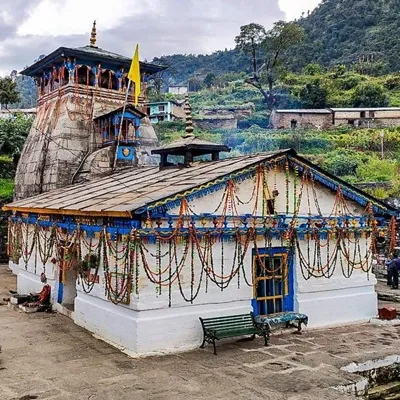
The first and central place to visit in Triyugi village is the Triyuginarayan Temple, the well-known sacred site where Lord Shiva and Goddess Parvati got married. The temple holds deep mythology and fascinating cultural facts, and is also the wedding site for couples, who can register for their own ceremony at this heavenly destination.
2) Akhand Dhuni — The Eternal Flame
The clearest piece of living history here is the eternal flame that has burned continuously since the divine wedding of Lord Shiva and Goddess Parvati, known as the Akhand Dhuni. Legend holds that the flame symbolises the sacred union of love, and pilgrims often take a pinch of its ash as prasad.
3) Saraswati Kund & the Four Sacred Kunds
Saraswati Kund carries its own mythology — it's said to have originated from the navel of Lord Vishnu, making it one of the must-visit spots in the Triyuginarayan complex. It also feeds the temple's three other ponds: Brahma Kund, Rudra Kund, and Vishnu Kund. These kunds are used for bathing, sipping, and ritual cleansing, and devotees believe their water carries medicinal properties.
Top 10 Best Places to Visit Near Triyuginarayan Temple
There are many places to visit near Triyuginarayan temple, including sacred temples like Kedarnath, one of the four holy shrines of the Char Dham yatra circuit, Kalpeshwar Mahadev Temple, Kalimath, and Dhari Devi, plus trekking and sightseeing spots like Chopta, Rudraprayag Sangam, and Deoria Tal.
1) Kedarnath Temple
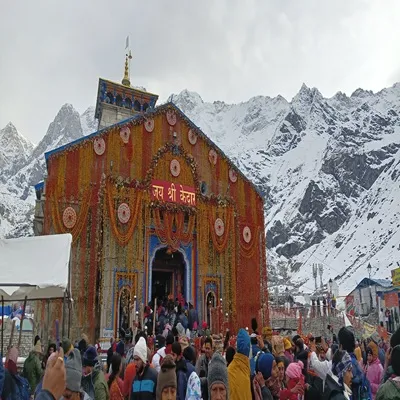
Kedarnath Dham is one of the 12 Jyotirlingas and Panch Kedar temples in India, and the most popular of the four sacred shrines of Chota Char Dham in Uttarakhand. Millions of devotees visit every year and complete the Kedarnath trek to seek Lord Shiva's blessings, taking in scenic Himalayan views along the way.
Travel time: 1 hr drive + 5–6 hr trek
Altitude: 3,583 m (11,755 ft)
Entry fee: Free
Best combined with: A full day on its own, usually as part of a Do Dham Yatra
Why visit: Seek blessings, experience spiritual energy, scenic Himalayan views
Kedarnath Temple is one of the most visited pilgrimage sites in Uttarakhand, and many devotees choose a guided Kedarnath package from Haridwar for convenience.
2) Guptkashi

Guptkashi is the base town for pilgrims heading to Kedarnath, and the most common overnight stop in the region. The name means "hidden Kashi" — legend says Lord Shiva hid here from the Pandavas. Guptkashi also offers Kedarnath helicopter services and by far the widest hotel choice in the area.
Travel time: 2 hours by road
Altitude: 1,319 m (4,327 ft)
Entry fee: Free
Best combined with: Ukhimath, Kalimath
Why visit: Vishwanath Temple and Ardhnareshwar Temple
3) Ukhimath
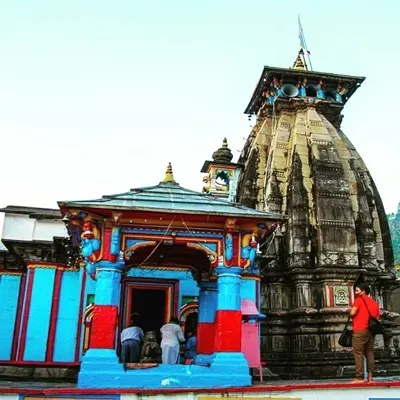
In winter, Ukhimath becomes the seat of Lord Kedar and Madhyamaheshwar, one of the winter homes of the Panch Kedar deities. The utsav murtis of both temples are moved here for nearly six months due to inaccessibility, and the main attraction is the Omkareshwar Temple. The town also serves as a scenic gateway to the wider Himalayan trekking routes.
Travel time: 2–2.5 hours
Altitude: 1,317 m (4,321 ft)
Entry fee: Free
Best combined with: Guptkashi, Madhyamaheshwar
Why visit: Madhyamaheshwar and Omkareshwar Temple
4) Chopta–Tungnath
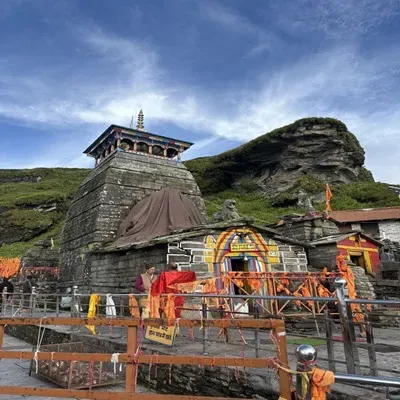
Known as the Mini Switzerland of India for its scenery, Chopta is the base for Tungnath Temple, the highest Shiva temple in the world. Chandrashila ("Moon Rock") sits a short climb above Tungnath Temple, at an altitude of about 4,000 m. Tungnath is a short trek above Chopta — see our Chopta to Tungnath distance guide for the exact route. It's ideal for trekkers and devotees of all ages, though the temple closes in winter and the utsav murti moves to Makkumath. The Chopta–Tungnath trek itself stays open year-round.
Travel time: 4 hours
Altitude: 2,849 m (9,350 ft)
Entry fee: Free
Best combined with: Deoria Tal (via Sari village)
Why visit: Tungnath Temple and Chandrashila
5) Deoria Tal
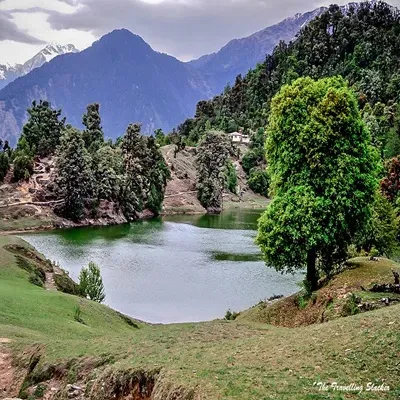
A well-known alpine lake, famous for reflecting the Chaukhamba and other Himalayan peaks on a still morning, surrounded by rhododendron, oak and deodar forest. The trek to Deoria Tal starts from Sari village, not from the main road. You can book our Chopta Tungnath trek package, which includes Triyuginarayan and covers Deoria Tal too.
Travel time: Half a day (drive + trek)
Altitude: 2,438 m (8,000 ft)
Entry fee: Free
Best combined with: Chopta–Tungnath
Why visit: Serene surroundings and reflection of the Chaukhamba peaks
6) Kalpeshwar
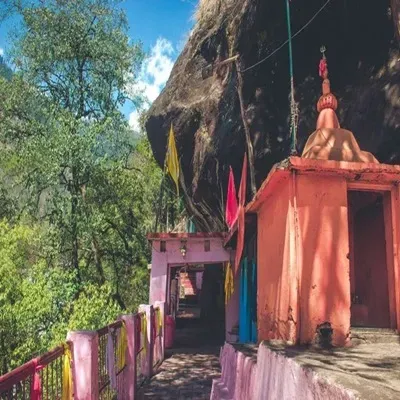
Kalpeshwar Mahadev Temple sits in the Urgam Valley and is one of the Panch Kedar temples — the last in the circuit. It's unique for its idol of Lord Shiva in matted-hair (Jata) form, and it's the only Panch Kedar temple that stays open all year, so it sees far fewer crowds than the others.
Travel time: A full day
Altitude: 2,200 m (7,218 ft)
Entry fee: Free
Best combined with: A separate day trip — it's a detour into Urgam Valley
Why visit: Spiritual temple and scenic valley, open year-round
7) Kalimath
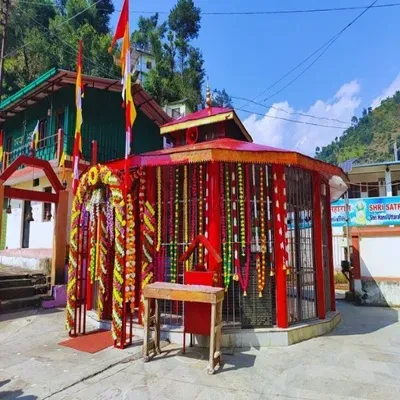
One of the most famous Shaktipeeths near Triyuginarayan, the Kalimath Temple is dedicated to Goddess Kali, whose lower body is worshipped here while the upper body is worshipped at Dhari Devi Temple, between Rudraprayag and Srinagar. Kalimath's mythological connection to Triyuginarayan makes it a natural add-on for pilgrims already in the area.
Travel time: 2 hours
Altitude: 1,800 m (6,000 ft)
Entry fee: Free
Best combined with: Guptkashi, Dhari Devi
Why visit: Kalimath and Dhari Devi Temple's shared mythology
8) Panch Prayag
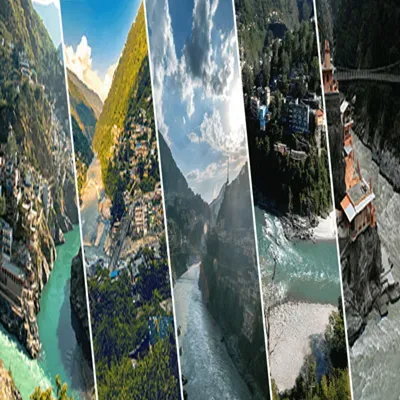
One of the most historically significant stops en route is Panch Prayag Uttarakhand — five sacred river confluences where you can witness the formation of the holy Ganga: Karnaprayag, Devprayag, Rudraprayag, Nandaprayag, and Vishnuprayag.
Travel time: 7–8 hours to cover all five
Altitude: Varies by confluence
Entry fee: Free
Best combined with: Seen en route between Rudraprayag and Karnaprayag — no separate detour needed
Why visit: Scenic mountain views and holy confluences
9) Dhari Devi Temple

Dhari Devi Temple is dedicated to Goddess Kali, whose upper body is worshipped here. The idol is considered the guardian deity of Uttarakhand and of pilgrims heading for the Char Dham Yatra. The temple sits in the middle of the Alaknanda River, framed by the surrounding mountains.
Travel time: 3 hrs 30 mins
Altitude: 560 m (1,837 ft)
Entry fee: Free
Best combined with: Kalimath, Panch Prayag — all on the same road
Why visit: Dhari Devi Temple, the Alaknanda River, and scenic mountain views
10) Vasuki Tal
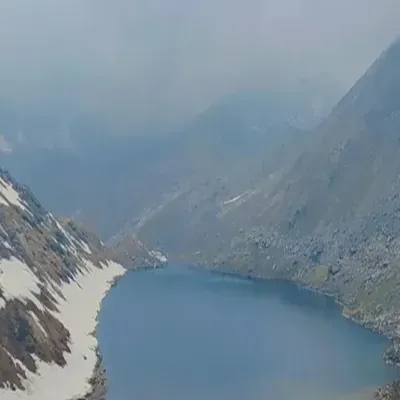
For trekkers wanting a close look at the Chaukhambha peak, Vasuki Tal is a must — trekking is the only way in. This snake-shaped lake is said to depict the Vasuki Naag, the holy serpent worn around Lord Shiva's neck, and locals say the snake itself has occasionally been spotted here.
Travel time: 3–4 hours
Altitude: 4,135 m (13,566 ft)
Entry fee: Free
Best combined with: Only reachable as an extension of the Kedarnath trek
Why visit: Scenic mountain views and the Vasuki Naag legend
Nearby Places at a Glance
| Place | Travel Time | Altitude | Entry Fee | Best For |
|---|---|---|---|---|
| Kedarnath Temple | 1 hr drive + 5–6 hr trek | 3,583 m | Free | Jyotirlinga darshan |
| Guptkashi | 2 hrs | 1,319 m | Free | Base town, Vishwanath Temple |
| Ukhimath | 2–2.5 hrs | 1,317 m | Free | Winter seat of Kedarnath |
| Chopta–Tungnath | 4 hrs | 2,849 m | Free | Highest Shiva temple, short trek |
| Deoria Tal | Half day | 2,438 m | Free | Alpine lake, Chaukhamba reflection |
| Kalpeshwar | Full day | 2,200 m | Free | Panch Kedar, open all year |
| Kalimath | 2 hrs | 1,800 m | Free | Shaktipeeth |
| Panch Prayag | 7–8 hrs (all five) | Varies | Free | River confluences en route |
| Dhari Devi | 3 hrs 30 min | 560 m | Free | Guardian deity of Char Dham |
| Vasuki Tal | 3–4 hrs | 4,135 m | Free | High-altitude lake beyond Kedarnath |
Triyuginarayan vs Tungnath vs Kedarnath: Are They the Same?
No, all three are different temples, and the confusion is common enough that it's worth clearing up directly.
Triyuginarayan vs Tungnath — No, they are different. Triyuginarayan is dedicated to Lord Vishnu and marks the wedding site of Shiva and Parvati; Tungnath is dedicated to Lord Shiva and is the highest Shiva temple in the world. They sit in different valleys, reached by different routes.
Triyuginarayan vs Kedarnath — No, they are different. Both are in Rudraprayag district and both are reached via Sonprayag, but Kedarnath is a Jyotirlinga requiring a trek from Gaurikund, while Triyuginarayan is road-accessible all the way to the village.
Other names — Triyuginarayan is also called Triyugi Narayan, Triyuginarayan Dham, and locally the "Akhand Dhuni temple," after its eternal flame. You may also see it spelled Triyogi Narayan or Triguninarayan in search results — all refer to the same temple.
How Many Days Are Enough to Explore Nearby Places?
To comfortably explore the major places near Triyuginarayan Temple, travellers usually need 3 to 5 days, depending on how many destinations are on the itinerary. Pilgrims focusing mainly on temples can cover the key sites in fewer days, while travellers adding treks like Chopta–Tungnath or Deoria Tal should plan for the longer end.
Keeping a flexible day or two in hand helps when covering high-altitude or trek-based spots, since weather and road conditions can add unplanned time.
Travel Tips for Exploring Places Around Triyuginarayan Temple
Proper planning helps you cover more locations comfortably, especially since most attractions are spread across the Garhwal Himalayan region.
- Group nearby places together: Kedarnath, Guptkashi, Kalimath, Chopta and Deoria Tal sit at varying travel times from Triyuginarayan. Group destinations that are close to each other to avoid backtracking — see the "Best combined with" note on each place above, or check exact travel distances for precise planning.
- Choose the right season: Summer and post-monsoon months are best for scenic spots like Chopta and Deoria Tal alongside the religious sites. See our guide on the best time to visit Triyuginarayan Temple.
- Start early: Most nearby places involve hill roads. Starting early lets you cover more ground and get back before dark, especially on Kedarnath route towns or the Panch Prayag stretch.
- Combine pilgrimage with short treks: Chopta–Tungnath and Deoria Tal are both suitable for beginners and pair well with a temple-focused trip.
- Check transport in advance: Shared jeeps and taxis are the usual way to get around locally. See our step-by-step guide on how to reach Triyuginarayan Temple by bus, train or taxi.
- Carry the basics: Warm clothing, comfortable walking shoes, a water bottle, and basic medicines — weather can turn quickly even over short distances.
- Keep buffer days: High-altitude spots especially can need extra time if weather or road conditions shift. A buffer day or two keeps the trip from feeling rushed.
Why Triyuginarayan Temple Is a Gateway to Nearby Attractions
Triyuginarayan Temple isn't just a standalone pilgrimage site — it's a base for exploring several nearby religious and scenic destinations across the Garhwal region. Its proximity to Kedarnath route towns, the Panch Kedar temples, and popular trekking spots means travellers often build a longer spiritual or sightseeing journey around it.
Many visitors choose to stay near Triyuginarayan specifically so they can explore nearby temples, alpine lakes, and Himalayan viewpoints at a relaxed pace — combining devotion with nature and a bit of culture, all from one base. Pack accordingly, explore at least a few of the places above, and consider a guided package if you'd rather not plan the logistics yourself.
FAQs — Places to Visit Near Triyuginarayan Temple