
Tungnath Temperature and Best Time to Visit: Month-Wise Guide 2026
Category: Travel | Updated On: August 3, 2026 | Published: November 8, 2025

Hi, I am Hema Kumari. I visited Tungnath Temple on 1st August, during the rainy season. I chose this time because I prefer peaceful mountains over crowded ones, even if it means spending extra days due to the weather. But everyone has different travel preferences, so let's cover the temperature, weather, and pros and cons of each season below.
Quick Answer
- Best time to visit Tungnath: May to June, and September to October.
- Temple opens: 2 May 2026 (closing date not yet announced by BKTC; typically late October to early November) · Altitude: 3,680 m (12,073 ft)
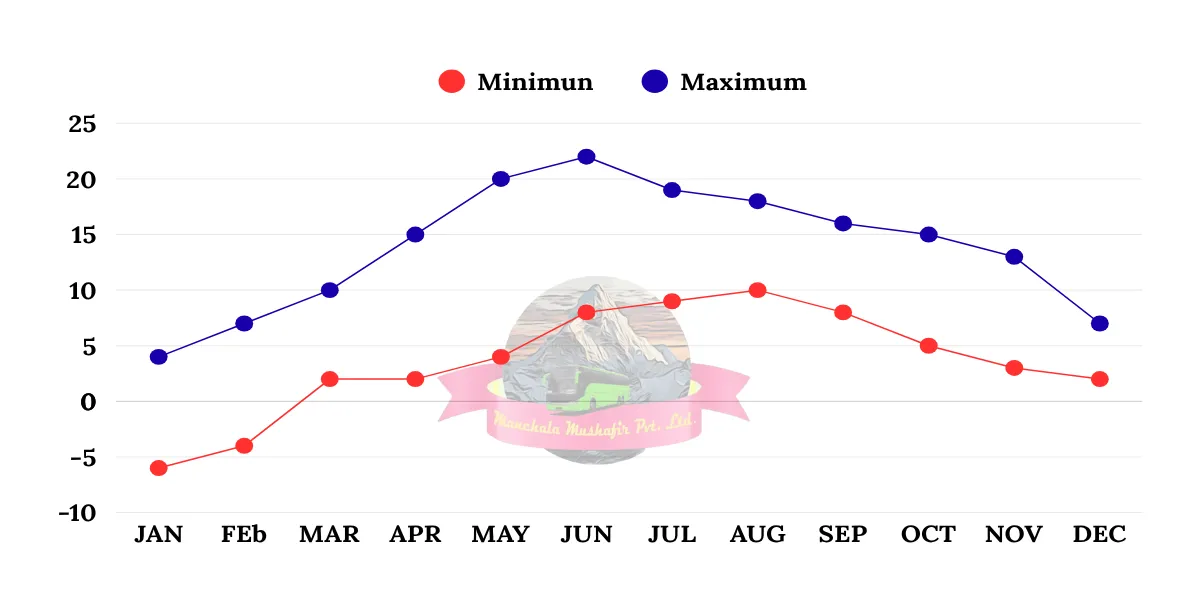
- Warmest month: June — 22°C day / 8°C night · Coldest month: January — 4°C day / -6°C night
- Snow months: December to February (heaviest), with snowmelt beginning in March · Avoid: July to August (landslides, slippery trail)
- Trek: 3.5 km from Chopta, 2–3 hours one way
Table of Contents
Tungnath Temperature and Best Time to Visit: The Short Answer

Tungnath is the world's highest Shiva temple, located in the Rudraprayag district of Uttarakhand at an elevation of 3,680 meters (12,073 feet) above sea level. It is part of the Panch Kedar pilgrimage circuit, built by the Pandavas and revived by Adi Shankaracharya. Tungnath remains open for around six months a year and closes during winter due to harsh weather and heavy snow. It's accessible by a moderately easy 3.5 km trek that starts from Chopta Bugyal.
The best time to visit is a genuine safety and accessibility question, not just a comfort preference. The temple is accessible from May to October, and the monsoon (July–August) makes travel risky due to heavy rain. If you're planning your trip with Tungnath Trek packages, share your age, fitness level, and any medical conditions with your travel partner so they can advise you on the most suitable time.
Tungnath Temperature Month by Month (Jan–Dec)
| Month | Day °C | Night °C | Snow Chance | Temple Status | Conditions |
|---|---|---|---|---|---|
| January | 4°C | -6°C | High | Closed | Cold and harsh, experiences snow |
| February | 7°C | -4°C | High | Closed | Cold and harsh, experiences snow |
| March | 10°C | 2°C | Melting | Closed | Snow starts to melt, but trails remain inaccessible |
| April | 15°C | 2°C | Low | Opens early May | Cool, nights are still chilly |
| May | 20°C | 4°C | None | Open | Clear and comfortable |
| June | 22°C | 8°C | None | Open | Chilly mornings and evenings, warm days — an ideal time to visit |
| July | 19°C | 9°C | None | Open | Monsoon begins with moderate rain |
| August | 18°C | 10°C | None | Open | Rainfall increases; slippery trails make travel risky |
| September | 16°C | 8°C | None | Open | Rain retreats, weather turns pleasant again |
| October | 15°C | 5°C | None | Open | Cool, vibrant scenery with great visibility |
| November | 13°C | 3°C | Possible | Closes | Winter season starts, and the temple closes |
| December | 7°C | 2°C | High | Closed | Foggy and cold winter, experiences moderate snowfall |
Tungnath Temperature in Summer (April–June)
If you're aiming to witness the traditional rituals during the temple opening and want excellent visibility, visit during summer from April to June. It offers great accessibility and pleasant weather, with days ranging from 15°C to 22°C.
Tungnath Temperature in Monsoon (July–August)
The temple stays open during the monsoon, but it's not an ideal time to visit — heavy rain causes landslides and makes paths slippery. Days stay mild (18–19°C), but the risk isn't worth it for most travellers.
Tungnath Temperature in Autumn (September–October)
September and October are another ideal window to visit Tungnath. The post-monsoon weather offers excellent visibility of the peaks and fewer crowds — ideal for a peaceful darshan, with days cooling gradually from 16°C to 15°C.
Tungnath Temperature in Winter (November–March)
The temple closes for winter (November to March), though the trek to Chandrashila summit remains open for those who want a snow trek with proper planning. Daytime temperatures range from 4°C to 13°C across these months, and nights regularly drop below freezing, down to -6°C in January.

Tungnath Night Temperature: What to Actually Expect
Night temperatures at Tungnath's 3,680 m elevation are consistently colder than daytime figures suggest — expect single digits or below for most of the year. Even in June, the warmest month, nights drop to around 8°C. Through winter (November–March), nights fall well below freezing, bottoming out around -6°C in January. If you're camping or staying overnight near the temple or in Chopta, pack for the night temperature, not the day one.
Chopta vs Tungnath Temperature: The Altitude Gap
| Location | Altitude |
|---|---|
| Chopta | 2,680 m (8,790 ft) |
| Tungnath | 3,680 m (12,073 ft) |
Tungnath sits roughly 1,000 meters higher than its own base camp, Chopta, so it always runs noticeably colder — pack for Tungnath's temperature, not Chopta's, even if you're only staying overnight at the base.
When Does It Snow in Tungnath? Snowfall Month Guide
Based on typical conditions, Tungnath sees its heaviest snow from December through February, with snow beginning to melt in March (though trails often remain inaccessible until the temple reopens). Snowfall is possible but lighter in November, right as the temple is closing for the season.
Can you see snow in May or June? Generally no — by May, conditions turn clear and comfortable, and June is one of the most pleasant months to visit, with no snow expected in either month.
Months You Should Avoid Tungnath (and Why)
July and August (monsoon): the temple stays open, but heavy rain causes landslides and makes the trek path slippery and risky.
December to February (peak winter): the temple is closed entirely, and the region gets heavy snowfall. Only the Chandrashila trek route stays open for experienced winter trekkers with proper gear and planning.
Tungnath Temperature Chart 2026
Frequently Asked Questions About Tungnath Weather & Timing
When will the Tungnath temple open in 2026?
The Tungnath temple opening date for 2026 has been officially announced by the Badrinath–Kedarnath Temple Committee (BKTC) as 2 May 2026. The closing date is typically announced closer to the season and usually falls in late October or early November. See our Tungnath Opening & Closing Date 2026 guide for updates.
Is the Tungnath trek open in winter?
Since the Tungnath temple closes in winter, but the Tungnath–Chandrashila trek stays open. So if you want to experience snow trekking, you can visit Tungnath in winter with proper planning and preparation.
How hard is the Tungnath trek?
Tungnath is a moderately easy 3.5 km trek with stone-carved paths, which starts from Chopta and leads to the temple.
What is the height of the Tungnath temple?
The Tungnath temple sits at an altitude of 12,073 feet (3,680 meters) above sea level and is renowned as the world's highest Shiva temple.
Which months are best for the Tungnath trek?
May–June and September–October are the best months for the Tungnath trek, as these months offer pleasant weather, clear skies, and a well-accessible trail.
What are the best places to visit near Tungnath Temple?
Some beautiful places to visit near Tungnath Temple include Triyuginarayan Temple, Ukhimath, Badrinath Temple, Mana Village, Vasudhara Falls, and Pandukeshwar, each offering unique spiritual, natural, and cultural experiences in the Garhwal Himalayas.
Planning Your Tungnath Trip: Next Steps
Everyone has different travel preferences, so the best time to visit Tungnath Temple truly depends on what kind of experience you're looking for. I personally visited in August, during the rainy season — the trails were misty, the mountains lush, and the crowd was minimal, exactly what I wanted.
If you're a snow lover, the winter months from November to March are worth it for the Chandrashila trek, once the temple itself closes for the season. If you prefer pleasant weather and clear views, May to June or September to October offer the most comfortable trekking and darshan conditions.
For the parts of the journey this page doesn't cover in depth, here's where to go next:
- How to Reach Tungnath Temple — full route, air/train/road options and step-by-step directions.
- Panch Kedar — the full mythology and significance of all five temples, including Tungnath.
- Chopta Tungnath Chandrashila Trek Package — duration, itinerary and route map for the trek itself.
- What to Pack for the Trek — the full season-wise packing checklist.
- Where to Stay Near Tungnath — stay options in Chopta and Ukhimath, the two base villages for the temple.
- Things to Do Near Tungnath — Chandrashila summit, Deoria Tal, birdwatching and more.
- Tungnath Distance Chart — distance from every major city and nearby town.
- Tungnath Opening and Closing Date 2026 — confirmed dates and ceremony details.
Checking conditions before you leave: live temperature and forecast data changes daily, so for the most current reading, check the India Meteorological Department (IMD) for the nearest station, and confirm the road and trail status locally in Chopta or Ukhimath before you start the trek.