Chopta Tungnath Chandrashila Trek: Complete Packing List
Category: Travel | Updated On: August 3, 2026 | Published: August 19, 2025
Introduction
The Chopta Tungnath and Chandrashilla trek is located in the Garhwal Himalayas of Uttarakhand, India. The trek passes through the lush meadows, dense forest, and high Himalayan ranges. Although Chopta to Tungnath distance is just 3.5 kms but packing is an essential part of trekking in the unpredictable weather conditions of the Himalayan region.
The Chopta-Tungnath and Chandrashilla trek is a perfect blend of adventure, spiritual experience, and natural beauty. Right packing is important to ensure your safe and enjoyable trekking journey. Here is the complete guide to packing for the trek to Tungnath temple.
Also read:
Table of Contents
- Introduction
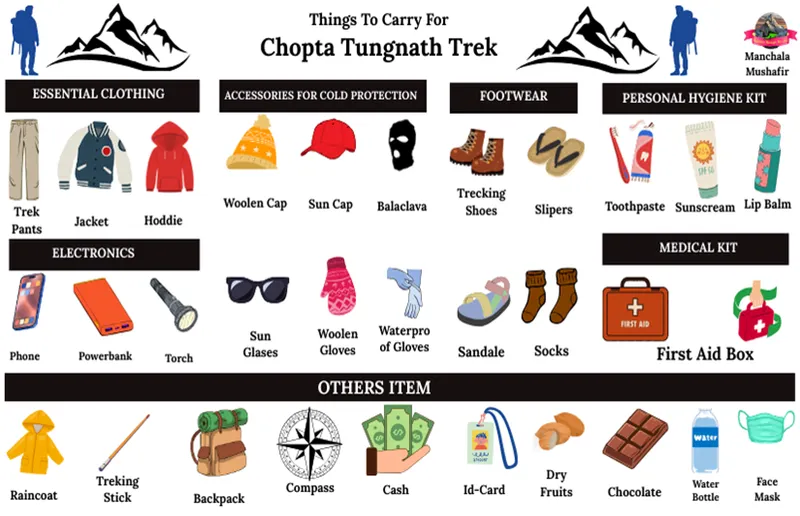
- Quick Packing Checklist at a Glance
- Backpack and Bag Essentials
- Clothing Essentials
- Footwear Guide
- Health and Safety Items
- Nutrition and Hydration
- Documents and Cash
- Personal Hygiene Items
- Other Useful Trekking Gear
- Season-Wise Packing Tips
- Downloadable Packing Checklist
- Frequently Asked Questions
- Conclusion
Quick Packing Checklist at a Glance
| Category | Key Items | Must-Carry |
|---|---|---|
| Backpack & Bag | 50-70L backpack, 20-30L daypack, rain cover | Y |
| Clothing | Thermal base layers, waterproof outer jacket, trekking pants | Y |
| Footwear | Trekking shoes, campsite slippers | Y |
| Health & Safety | Medical kit, altitude sickness medicines | Y |
| Nutrition | Energy snacks, ORS and glucose | Y |
| Documents & Cash | ID proof, photos, permits, cash | Y |
| Hygiene | Toothbrush, wet wipes, sunscreen | Y |
| Other Gear | Headlamp, power bank, trekking pole | Y |
Backpack and Bag Essentials
Choosing the Right Backpack Size
Comfortable and sturdy backpacks are essential to carry your essential things during the trek. Choose a good-quality backpack with a capacity of 50-70 litres and features like shoulder straps and a hip belt.
Rain Cover and Daypack
A rain cover keeps your backpack and its contents dry during sudden showers or wet snow on the trail — pack one that fits your bag's capacity, or carry a large plastic liner as a backup.
- For a summit day on the Chandrashilla trek, carry a small daypack with a capacity of 20-30 litres for carrying essential things like water bottles, snacks, and warm layers.
- Opt for a backpack with multiple compartments to easily organise the items and quickly access them when needed.
Clothing Essentials
Layering for Changing Weather
Since the trek passes through the high altitudes and cold regions, layering is crucial. Layers include:
- Base layers: Pack thermal innerwear (top & bottom) to trap body heat.
- Outer layers: carry a waterproof jacket for protection from sudden rain.
- Trekking pants: Pack 2-3 pairs of sturdy and comfortable trekking pants.
- Accessories: Pack winter accessories, including gloves, socks (2-3 pairs), a woollen cap, and a scarf for sun protection.
Footwear Guide
Trekking Shoes
Since the trek passes through the rocky and slippery trails, sturdy trekking shoes with excellent grip are important to protect your feet from rough paths.
- For comfort at the campsite, carry a pair of slippers.
Socks and Gaiters
Pack 2-3 pairs of trekking socks, and consider gaiters to keep mud, snow and debris out of your shoes on the rockier or slushier stretches of the trail.
Health and Safety Items
Trekking at high altitudes, the oxygen level is very low, and weather conditions also affect your health, which may cause altitude sickness, so be prepared.
Medical Kit Essentials
- Small medical kit: pack a small medical kit, including personal prescription, pain removal sprays, band-aids, and antiseptic cream for emergencies.
| Item | Purpose |
|---|---|
| Diamox / altitude medicine (consult your doctor first) | Commonly used to help prevent or ease symptoms of altitude sickness |
| Pain relief tablets | For headaches and muscle soreness after long trekking days |
| ORS / electrolytes | Replaces fluids and salts lost through exertion and altitude |
| Antiseptic cream | Prevents infection in minor cuts and scrapes |
| Bandages | Dresses cuts, blisters and sprains on the trail |
| Motion sickness tablets | Helps with nausea on the winding hill roads to Chopta |
| Personal prescriptions | Continue any ongoing medication as prescribed by your doctor |
Altitude and Acclimatisation Items
- Other medicines: For protection from altitude sickness, pack tablets for fever and headache.
- Pace yourself, stay hydrated, and take it slow on summit day — these are the simplest ways to reduce your risk of altitude sickness on the Chandrashila climb.
Nutrition and Hydration
Light eating and hydration are important during your whole journey.
- Energy snacks: Pack dry fruits and energy bars to get instant energy.
- Light snacks: Pack your favourite snacks to satisfy your cravings during the trek.
- Packets of ORS and Glucose: They are helpful for hydration.
Documents and Cash
Carry personal ID proofs, including an Aadhaar card, Voter ID card, or any other Government-certified identity card.
- Photo: carry 2-3 passport-sized photos for emergencies.
- Permits: carry all required permits for trekking.
- Carrying cash, as ATMs are limited in this region.
Personal Hygiene Items
Carry a small kit of toiletries; things include:
- Toothpaste and toothbrush
- Toilet paper, wet wipes, hand sanitiser
- A quick-dry towel
- Sunscreen and lip balm
Other Useful Trekking Gear
- Headlamps and flashlights
- Sunglasses and sunhats for protection from ultraviolet rays
- Power bank with a capacity of 10,000 mAh
- Trekking poles or a stick
- Sleeping mats and bags
- Trekking maps or a compass
- Hot water bags
Season-Wise Packing Tips
- Pack smart and light: Avoid unnecessary things to make the trek easier
- Layering is key for trekking
- Stay hydrated during the trek
- Inform your friends or family about trekking plans
- Summer (April to June): Mild days and cool evenings — light layers, sun protection, and a light rain jacket for occasional showers.
- Monsoon (July to August): This trek isn't recommended during peak monsoon due to landslide-prone hill roads; if you do travel, carry full waterproofs and a rain cover for your backpack.
- Autumn (September to mid-December): Clear skies with cold nights — one of the best windows for the trek, so pack proper thermal layers for the evenings.
- Winter (mid-December to March): Heavy snow closes the trail for most of this period — check with a local operator before planning a winter visit.
Downloadable Packing Checklist
Want to take this list with you? Download our free, printable Chopta Tungnath Chandrashila trek packing checklist and tick off each item as you pack.
Download the Packing Checklist (PDF)
Frequently Asked Questions
Conclusion
A journey to Chopta-Tungnath and Chandrashila trek is a blend of spiritual and adventure experiences, and packing is a crucial part of your journey. So smart and right packing makes your journey smooth and comfortable. Smart packing means carrying all the essential items, like warm clothes, light snacks, spiritual items, gadgets, and a medical Kit, etc. Some other important things include walking sticks, sunglasses, hot water bags, etc. This is the right way; you can focus on your adventure and spiritual experiences instead of worrying about missing things. Prioritise your health and essentials to make your trekking journey unforgettable. If you are booking your Chopta Tungnath trek package with Manchala Mushafir, then you can contact us for more details about it.