Altitude Sickness on High Altitude Treks: Symptoms & Prevention
Category: Travel | Updated On: October 15, 2026 | Published: October 15, 2026
Introduction
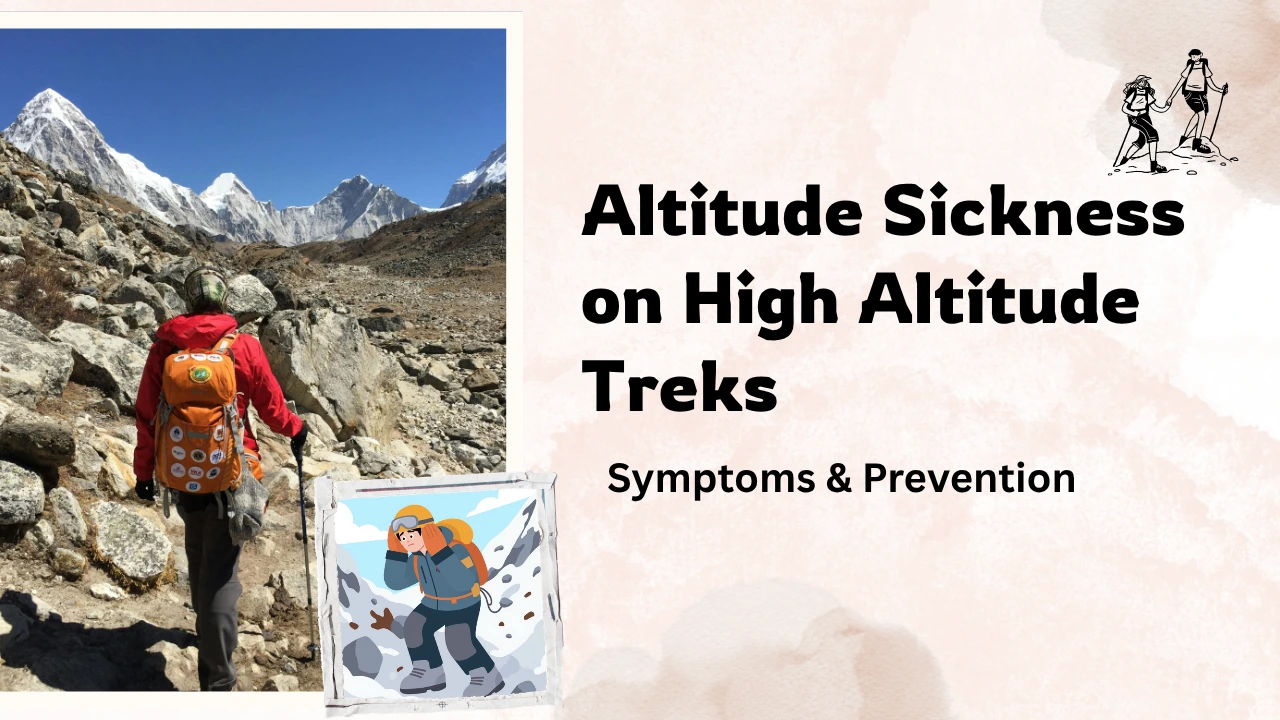
Trekking is one of the most thrilling and adventurous experiences, filled with memorable and joyful moments, especially at destinations like Gaumukh Tapovan, Kedartal, and more, which offer rewarding views. But it also comes with challenges, and high-altitude sickness is one of them.
It occurs at higher elevations because of thin air and lower oxygen availability. Many trekkers feel symptoms like headache, nausea, or dizziness during the trek and take it as normal tiredness.
But these are early signs of mountain sickness, which can turn your adventure into a challenging activity.
That’s why we have prepared this guide on how to prevent altitude sickness on high-altitude treks, covering everything you need to know, including its common types, symptoms, prevention measures, and safety tips for a safe high-altitude trek, like Kedartal, Kuari Pass, or Chopta Tungnath Chandrashila Trek.
- Introduction
- What is Altitude Sickness?
- What are the three stages of altitude sickness?
- Types of Altitude Sickness
- Common Effects of High Altitude on the Human Body
- How To Combat Altitude Sickness During High Altitude Treks?
- How to Prevent Altitude Sickness on High Altitude Treks?
- Conclusion
- FAQs
- At what height do you get altitude sickness?
- What to do if you get altitude sickness while hiking?
- What does altitude sickness feel like?
- Does drinking water help with altitude sickness?
- What is the best treatment for altitude sickness?
- How long does acute mountain sickness last?
- What is the best home remedy for altitude sickness?
- When to take Diamox for altitude sickness?
- Why do mountaineers suffer from nosebleeds at high altitude?
What is Altitude Sickness?
Altitude sickness, also known as altitude illness, is a negative physical reaction that can happen when a trekker ascends to higher altitudes and their body cannot quickly adapt to changes like thinner air and lower oxygen levels.
As per the observations of experts, it usually triggers at altitudes above 8,000 feet (2,500 meters), regardless of your fitness level. We have seen many professional trekkers suffer from mountain sickness, so it does not matter how many high-altitude treks you have done in the past; it can still happen even with a minimal rise in altitude.
What are the three stages of altitude sickness?
Three major stages/types of altitude sickness:
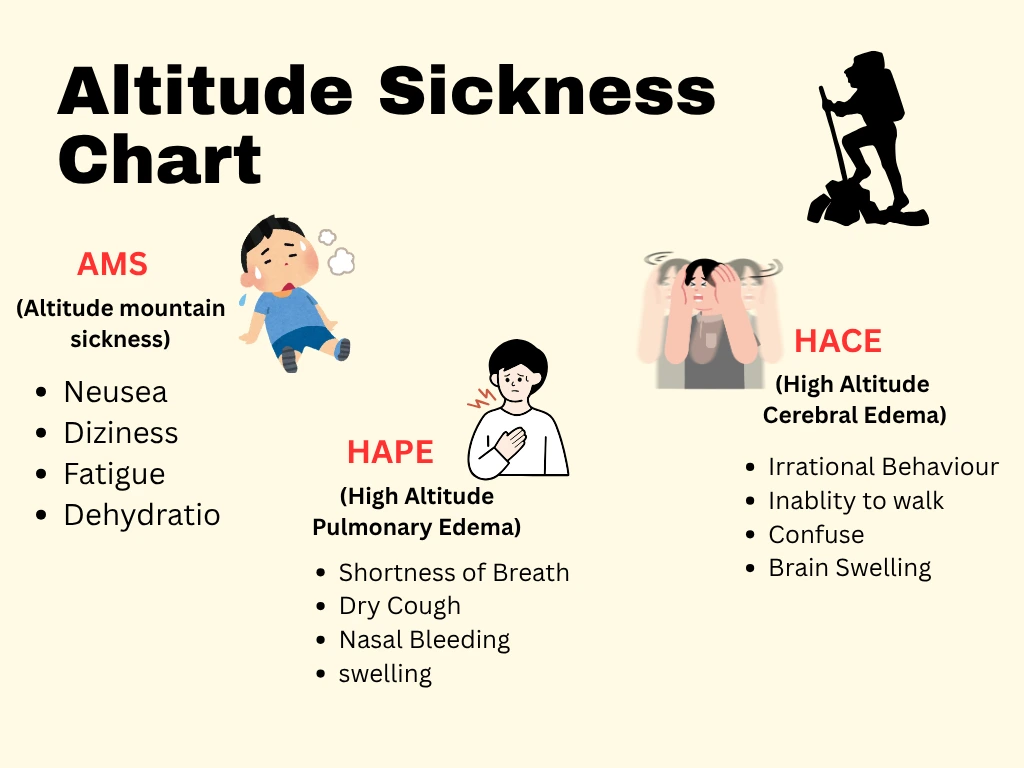
- Acute mountain sickness (AMS): The most common form of altitude illness. It is characterized by nausea, fatigue, and dizziness.
- High Altitude pulmonary edema (HAPE): A severe condition where fluids build up in the lungs. It includes symptoms like shortness of breath, dry cough, and chest tightness. Can be treated only with a quick descent.
- High Altitude Cerebral Edema (HACE): The most severe form of altitude sickness. Usually happens at altitudes around 4,000-5,000 m and results in brain swelling due to fluid leakage.
Let's learn about these in detail:
Types of Altitude Sickness
This illness has three distinct types: AMS, HAPE, and HACE, ranging from mild discomfort to life-threatening medical conditions. That’s why knowing about this is very important, especially when you plan for winter treks.
Let’s discuss each type of altitude sickness, its symptoms, and how to prevent it.
Acute Mountain Sickness (AMS)
Acute mountain sickness, or altitude sickness (AMS), is an early warning sign that generally happens when a trekker's body has difficulty acclimating or adjusting to altitude.
It affects large numbers of high-altitude trekkers, including both beginners and experienced ones. No matter what your fitness level is or how many treks you have done in the past.
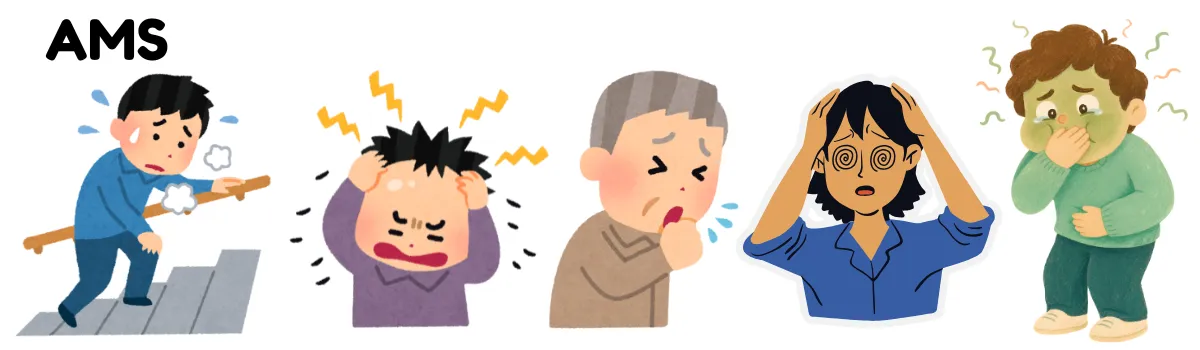
Common Acute Mountain Sickness Symptoms: Headache, nausea, dizziness, loss of appetite, breathlessness, and vomiting are main signs of AMS.
How to Prevent Acute Mountain Sickness (AMS):
The quickest step to take is to stop ascending. Then, get proper rest for at least 24 hours at your current altitude
- Gradual Ascent: Do not ascend quickly. Stopping ascent is the first step. Take proper rest and pain relievers when you need them.
- Proper Acclimatization: Give your body time to adjust to altitude. Plan your trek itinerary with proper rest days.
- Follow a Steady Pace: Avoid overpacing yourself. Take a proper break during day trekking.
- Stay Hydrated: Drink plenty of water to support your activity.
- Altitude sickness medicine: Diamox tablet helps to treat mild altitude sickness. But tablets should be taken after a doctor's consultation.
Important Note: If you have an allergy, you must avoid taking any medicine without consulting.
High Altitude Pulmonary Edema (HAPE)
HAPE is a condition in which fluids accumulate in a trekker’s lung air sacs. It usually happens when high pressure affects the pulmonary arteries.
HAPE is a critical medical emergency that requires immediate treatment. It can be life-threatening if it isn’t treated.
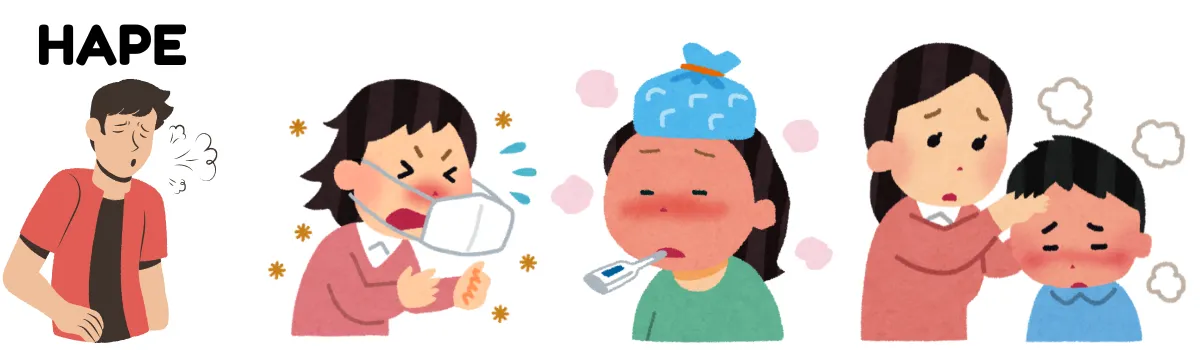
Core HAPE Symptoms: Shortness of breath, worsening cough, chest congestion, and severe weakness.
How to Treat It: If a person is suspected of having HAPE, immediate descent is necessary. Urgent medical assistance and oxygen support are the main requirements.
High Altitude Cerebral Edema (HACE)
High Altitude Cerebral Edema (HACE) is the most severe form of altitude sickness. It happens when fluid leaks through the blood-brain barrier.
It results in dangerous brain swelling at high elevations. Usually happens above an altitude of 2,500 m to 4,000 m (10,000 to 13,000 feet). It is also considered the last stage of AMS.
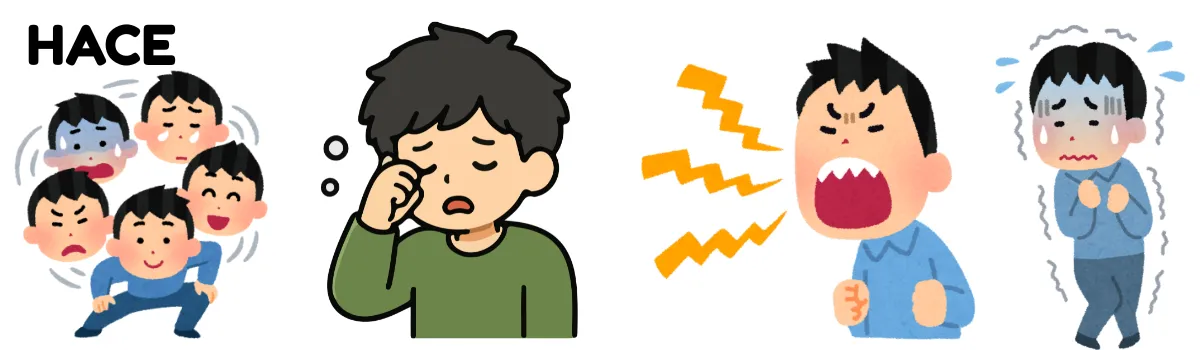
Common HACE Symptoms: Ataxia-like loss of physical coordination, irrational behavior, severe headache, and extreme drowsiness are main signals of HACE.
How to Deal with it: This is a life-or-death medical situation that can’t be ignored. Immediate descent to a lower altitude is the only solution, and quick medical assistance is needed to deal with HACE.
Most importantly, a person with suspected HACE cannot be left alone, and medical assistance is required for that person.
Common Effects of High Altitude on the Human Body
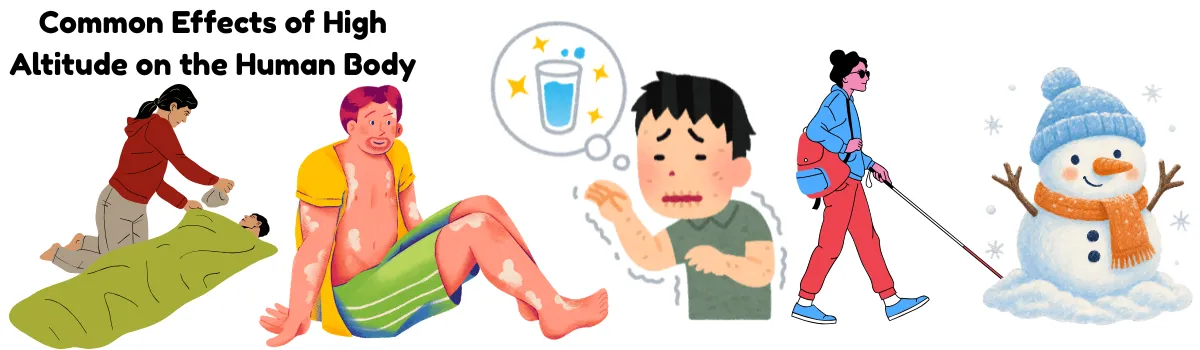
Dehydration: The most common issue caused by physical exertion and oversweating. It can lead to acute mountain sickness if it is ignored.
Hypothermia: A situation in which body temperature drops drastically in cold temperatures and cold winds at altitude. It is characterized by poor coordination and irrational human behavior.
Sunburn & Snow Blindness: At higher elevations, ultraviolet sun rays can be intense, and snow reflects sunlight, which increases exposure to eyes and skin. That’s why sunglasses and sunscreen are required in a trekking packing list.
How To Combat Altitude Sickness During High Altitude Treks?
Here is an explanation of what a person/trekker should do if they experience altitude sickness.

- Stop Quick Ascent: Don’t continuously ascend while you are experiencing possible AMS symptoms. Rest properly at your current altitude and monitor your symptoms immediately.
- Inform Your Trek Leader: Whenever you feel discomfort or symptoms, inform your trek guide.
- Climb High & Sleep Low: Walk to higher altitudes during daytime hours to stimulate acclimatization.
- Never Ascend with Symptoms: If you monitor altitude sickness symptoms, do not climb higher. Seek medical help and assistance for worsening symptoms.
- Descend if symptoms are severe or worsen; if the trekker's condition cannot be improved despite the rest of the treatment, then descent becomes important.
How to Prevent Altitude Sickness on High Altitude Treks?
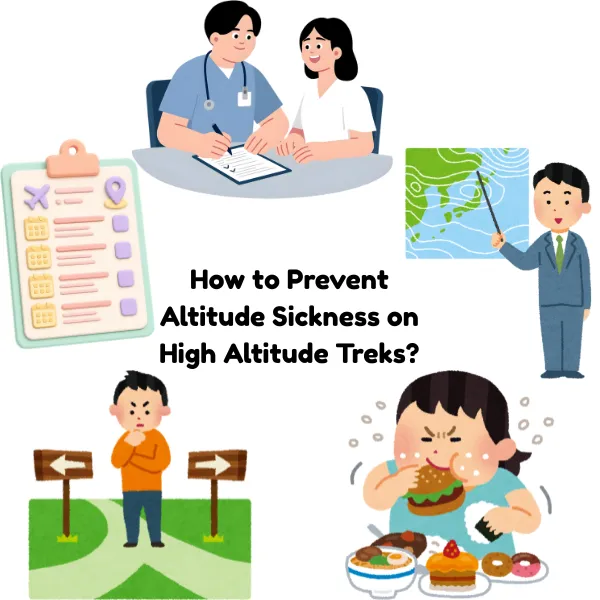
- Plan Your Itinerary with sufficient rest days to acclimatize properly for the trek.
- Inform your trek leader about medical concerns and symptoms you face during the trek.
- Check the weather before travel and follow local trekking advisories.
- Listen to your guide's instructions and never ignore prior signals.
- Avoid eating heavy, oily, high-fiber foods and alcohol. Also, avoid excessive caffeine or energy drinks.
- Arrange a pre-trek medical consultation if you have a history of altitude sickness.
- Choose Route Wisely: Trekkers must select a route after researching its highest point, overnight acclimatization, and available evacuation options.
For a better understanding, you can read our comparison guide on topics like the Chotpa vs Laka Glacier trek or Uttarakhand vs Himachal Treks, and more.
Conclusion
Thus, high-altitude trekking offers rewarding experiences, but safety in the mountains comes first. That’s why recognizing altitude sickness is important, as it can be treated with proper acclimatization, preparation, and quick response.
Read our blog on how to prepare for a high-altitude trek for a better understanding. So, before heading for a trek, prepare your body well and choose a sensible itinerary. Seek medical advice and plan your trip with a trusted trekking company like Manchala Mushafir.
FAQs
At what height do you get altitude sickness?
Typically, at an elevation of 8000 feet (2500 meters), trekkers feel early symptoms of altitude sickness. You must worry about altitude sickness at this height and continue to monitor yourself at this altitude.
What to do if you get altitude sickness while hiking?
Immediately inform your trek leader and get medical support if symptoms are mild. Treat it with gradual acclimatization, and if the symptoms can be prevented after treatment, trek down to a lower altitude.
What does altitude sickness feel like?
Altitude sickness feels like breathing problems and dizziness. Some early signs include nausea, dizziness, dehydration, vomiting, and snow blindness, which require continuous monitoring.
Does drinking water help with altitude sickness?
No, water can not prevent altitude sickness. But it helps to prevent dehydration, which many trekkers face during the trek, and it must be treated with drinking water and fluids during the trek.
What is the best treatment for altitude sickness?
The primary way to treat altitude sickness is a quick descent to a lower altitude, combined with proper acclimatization, hydration, and medical assistance. Diamox tablets can help in prevention, but I must take them on a doctor's prescription.
How long does acute mountain sickness last?
Generally, the symptoms of acute mountain sickness last up to 1 or 2 days as trekkers make a quick ascent to lower altitudes. While 3 days to completely resolve.
What is the best home remedy for altitude sickness?
Some effective home remedies/natural methods for altitude sickness are:
- Rest & proper acclimatization
- Proper strategic hydration during the trek
- Eating carb-rich food like oats and whole grains during the trek
- Avoid alcohol and tobacco
- Consuming Ginger in tea/chews/candies
When to take Diamox for altitude sickness?
Diamox tablets are generally used as a preventive measure to treat mild altitude sickness, and it is recommended to take them before starting a climb to higher altitudes. It should be taken on a doctor's advice. However, if symptoms are severe, the trekker must descend to a lower altitude.
Why do mountaineers suffer from nosebleeds at high altitude?
Many mountaineers suffer from nosebleeds at high elevation when their blood vessels feel pressure in the presence of thin and dry air. This can cause tiny nasal capillaries to burst. It can be prevented by consuming ginger candies/chews, staying hydrated, and using first-aid treatment.