How To Get Fit For High Altitude Trek
Category: Travel | Updated On: March 26, 2026 | Published: August 20, 2025
Introduction
Trekking through high altitudes means experiencing less oxygen, so it's essential to focus on building a strong cardiovascular foundation and to prepare your body and mind in advance through rigorous training. Practising flexibility and breathing exercises to prepare for trekking at high altitudes.
The trekking at high altitude, like Friendship peak trek, Valley of flowers trek , Gangotri Gaumukh Tapovan trek or Kedarnath trek , is not the same as hiking on small hills like Nag tibba trek , Laka glacier trek , Deoban trek, etc, so preparation is the key. It demands well-planned preparation, including both mental and physical preparation.
Understanding the challenges of high-altitude treks, like altitude sickness and uneven terrain, and listening to your body is also important to consider. Hydration and nutrition are the other important things to keep in mind. The trek tests your endurance and stamina, so endurance training and consistency are also important.
Mental preparation, like positive self-talk and visualisation, helps to build stamina and motivation. A proper and well-planned training helps you to enjoy the trek and reduces the risks and challenges regarding your trek. Here is the complete guide on how to prepare:
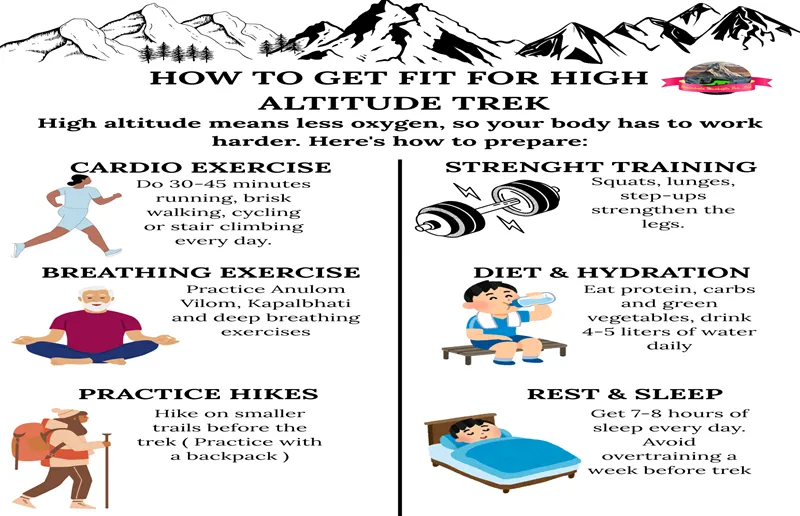
Cardiovascular Training:
High-altitude trekking requires stamina and a strong and healthy heart and lungs, and cardio exercises improve the efficiency of your heart and lungs.
What to Do
- Practice cardio exercises, including
- Running for at least 30-40 minutes, 3-4 times a week.
- Swimming and cycling to improve your lung health and capacity.
- Stair climbing with a loaded backpack.
Practice these cardio exercises every day before starting your trekking journey.
Strength training
Focus on the exercises that strengthen your muscles and legs. Exercises for strength training include:
- Squats, lunges, and step-ups to build leg strength and stability.
- Planks, leg raises, and other core exercises for balance and stability.
- Practice the shoulder exercises, like overhead presses, to build muscle strength for carrying backpacks.
Mental preparation
The high-altitude trekking tests patience and willpower, so good mental health is required to make your journey enjoyable, and it helps to reduce the risks of your trek.
Things to Do
- Meditation and Mindfulness : Practice Anulom-vilom and deep breathing exercises to improve mental resilience and lung capacity.
- Visualization : Visualize yourself as you complete your trek successfully; it will boost your confidence and motivate you.
- Focus : Prepare yourself for potential challenges like discomfort and altitude sickness.
Flexibility & Balance Training
Trek demands constant climbing and uneven steps, so flexibility and balance are required.
- Do yoga for at least 20-25 minutes daily to improve your endurance; Gradually increase the time of your yoga session.
- Practice dynamic stretching exercises to improve your range of motion, and it will also reduce the risk of injuries during the trek; increase repetition sets after a habit.
Nutrition & Hydration
The trek demands good health, and the body demands healthy eating, so nutrition and hydration are important for good health. Things to Do or Don’t
- Eat a balanced diet that is enriched in protein and carbohydrates, like pulses, green vegetables, and dairy products, which is a perfect option to maintain your energy level during the trek.
- Don’t smoke; it reduces the efficiency of your lungs
- Don’t eat junk and oily food for a month before your trek.
- Drink 4-5 litres of water daily during your preparation for the trek.
Rest & Sleep
Sleeping well during the training and trekking.
- Get 7-8 hours of sleep every day to recover your muscle strength.
- Give your body rest during your entire trek journey.
Practice Hikes
- Practice short hikes on smaller trails before the trek; it will help to build endurance and acclimatize your body to the demands of your trek.
- Tips : Practice hikes with a loaded backpack.
Endurance Training
Some important things to build endurance while you train yourself for a high-altitude trek include:
- Frequency : Gradually increase the distance and duration of your training. Increase the density of the work, like running 5-7 km daily, and increase the time of yoga and stretching exercises.
- Rest & Recovery : Allow your body to rest and recover between your physical training sessions to reduce the risk of injuries. And give your body time for muscle recovery during the training.
- Listen to your Body : Avoid pushing your body to work too hard. Always listen to your body's signals, especially in the initial stage of your training.
Understand the acclimatization to high altitudes:
- Climb low during the trek : gradually increase the altitude during the trek and allow your body to adjust to the low-oxygen levels.
- Hydration : Hydration is important throughout your entire trek; drink plenty of water to reduce the risk of altitude sickness and dehydration.
- Altitude simulation : Use altitude simulation equipment and altitude tents to prepare your body for high-altitude climates.
Important tips regarding your preparation
- Start training/preparation early : Start your training early, at least 23 months before the trek.
- Listen to your body : Always listen to your body signals; if your body gives the signals of altitude sickness, then give your body time for muscle recovery.
- Consult a Doctor or a professional : While preparing yourself for a high-altitude trek, take advice from a doctor or fitness trainer regarding your health and training.
- Don’t overtrain yourself before a week-long trek : Avoid overtraining a week before the trek; it causes the risk of injuries.
- Understanding the challenges of altitude : Challenges include uneven terrain, less oxygen, and the risk of altitude sickness. Understanding these challenges helps you to prepare yourself physically and mentally for the trek
Conclusion
Preparation for the high-altitude training, including physical and mental training regarding the trek. Trekking at high altitude is not the same as hiking on small hills; it demands stamina and willpower.
The trek at high altitude passes through uneven terrain, steep ascents, and dense forest, so preparation is the key to your trek. On the one side, the Physical training includes cardiovascular, strength, flexibility, and balance training. On the other side, mental preparation includes practices of meditation and mindfulness or deep breathing exercises.
Things to consider regarding the training include Nutrition & hydration, and understanding challenges regarding the altitude of the trek. Trekking at altitudes tests endurance and discipline, so consistency and willpower are also important.
Don’t push your body to work too hard, and sleep well during the trek. Be prepared mentally and physically, keep these tips in your mind, and make your trekking journey enjoyable with lots of adventurous experiences.
FAQs
-
How do I prepare my body for high altitude?
Ascend gradually from a lower altitude to a high altitude; this technique will help your body to adjust to the lower oxygen level and even stay longer at high altitudes. For detailed preparation tips, read the information given above.
-
How long does it take for your body to get used to high altitude?
Generally, it takes around one to two days for your body to get familiar with the heights, but it also depends on your body and physical fitness. Taking precautions is necessary at high altitudes.
-
How to make your body fit for trekking?
To make your body fit for trekking, you need to follow these techniques:
-
Start walking slowly and exercise daily
-
Do Cardio and leg exercises
-
Walk in all types of weather to sustain
-
Do swimming and cycling
-
Climb the stairs with a backpack
-
What should you not eat at high altitude?
At high altitudes, avoid alcohol, caffeine, excessive protein, oily, and fried food, it can cause digestive issues, altitude sickness, and worsen dehydration. Instead, you should eat light and healthy food, and plenty of water for hydration.
-
What are the first signs of altitude sickness?
The first signs of motion sickness at high altitudes are headaches, dizziness, nausea, loss of appetite, fatigue, and disrupted sleep. Sometimes it often feels like a bad hangover; it appears within one hour after reaching high altitudes.
-
Does drinking water help with high altitude?
Absolutely! Drinking water helps a lot at high altitudes, it prevents dehydration, and eases headaches. Moreover helps in acclimatization, but avoid excessive intake, drink 3 to 4 litres a day.
-
At what height does altitude sickness start?
Altitude sickness or Acute Mountain Sickness (AMS) generally starts at an altitude above 8,000 feet (2,400 meters), but some individuals can suffer from 5,000 to 6,000 feet above sea level.