
Ladakh Beyond the Bucket List: Should You Drive It or Ride It?
Category: Travel | Updated On: July 8, 2026 | Published: July 8, 2026
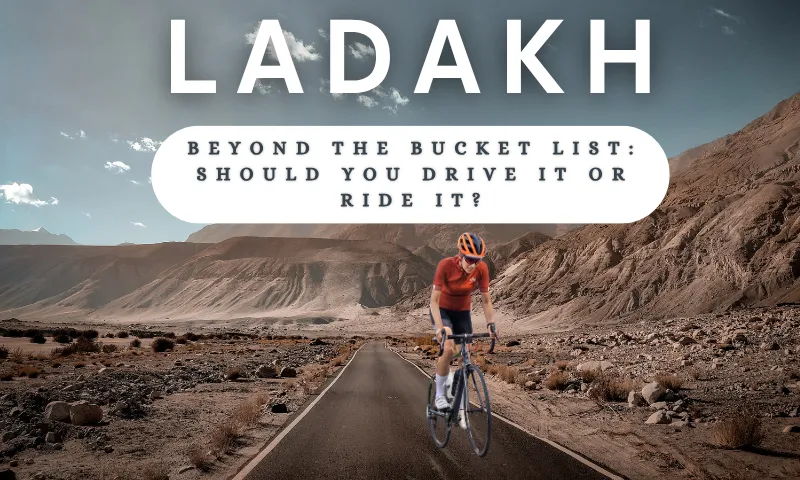
Ladakh Beyond the Bucket List: Drive It or Ride It?
Somewhere after you pass Baralacha La on the road to Leh, you will find yourself in a landscape that doesn't look like Earth anymore, but another planet where everyone who travels there asks themselves one question: why didn't I do this before?
After spending years planning trips to the Himalayas, I've learned that if you are planning your trip to Ladakh casually, you're going to have a bad time, and if you plan it purposefully, you're going to have a great time. The second thing I've learned is that most people worry about the wrong things; they spend weeks trying to pick out hotels while only spending about eleven minutes choosing how they will go about experiencing the trip.
When travelling to Ladakh, you have two distinct options: either go on a classic road trip or go on a high-altitude cycling trip. This guide looks at the two experiences side by side, including the stuff that is usually left out of itineraries.
Ladakh Is Not Just a Place to 'Visit'
Situated at over 3000 meters’ elevation, wedged between the Karakoram and Greater Himalayas, Ladakh is a cold desert that has a living Buddhist culture and several of the world’s highest motorable passes. Pangong Tso changes colour every hour. Nubra Valley has dunes and two-humped camels 10,000 feet (3,048 meters) high. The monasteries of Thiksey and Hemis have stood sentinel over these valleys for centuries.
Altitude means that the itinerary doesn't make any difference; distances are misleading, and the weather will change every hour, even though the infrastructure has been massively improved. Thus, travelling, more than where to stay, makes a difference.
Option 1: The Classic Leh Ladakh Road Tour
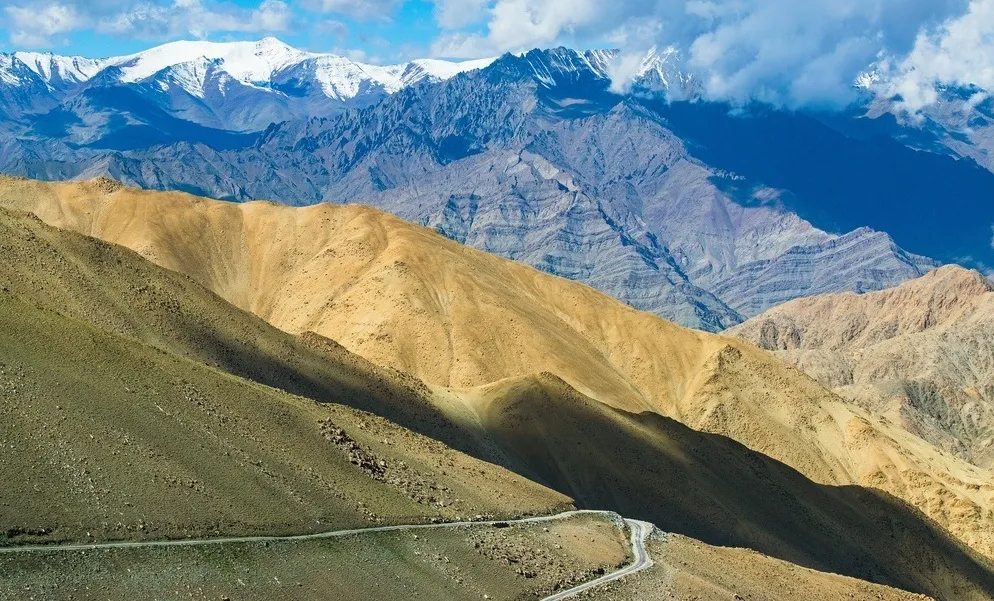
There is absolutely nothing wrong with doing a road tour of Ladakh, which is by far the most common way that people visit this beautiful region of India; if done correctly, it can be absolutely breathtaking!
If you want to know what a properly structured Leh Ladakh tour looks like, consider the following.
A well-planned, properly constructed itinerary should not be a race to take pictures with as many things as possible. A good itinerary will acclimatize you before beginning your climb up to higher altitudes (Leh first, up to Nubra/Pangong), will assist in obtaining the necessary permits for visiting designated "inner line" areas, and will have drivers who have experience driving these roads and understand what a clear day will look like in Chang La compared to the afternoon of that same day.
An example of a well-structured itinerary would be that you would land in Leh and rest and acclimatize to the area for 48 hours (this is a mandatory part of the itinerary); visit a few of the local monasteries; and then travel outwards to Nubra Valley (via Khardung La) and Pangong Lake; and, if time allows, to Aryan Valley or Tso Moriri. In the evenings, you can enjoy butter tea, apricot trees, and beautiful night skies that make you rethink where you live on this planet.
If you want to get away from it all but don't want to miss out on the entire experience, you'll want to be one of these people. Including families, first-timers and photographers (who want to experience all that each stop has to offer rather than just trying to make it through the day), older people , travelling with older parents, younger kids and anyone else who's interested in seeing Ladakh in all its sensory splendour without making their time there an ordeal; There's a certain level of elitism in some types of adventure travel that looks down on comfort as a bad thing, so ignore it; your experience of witnessing the sun rising over Pangong from the comfort of a warm car with a flask of chai, just isn't going to be the same as someone else's experience of doing so in extreme physical conditions.
The Manali - Leh Cycling Expedition
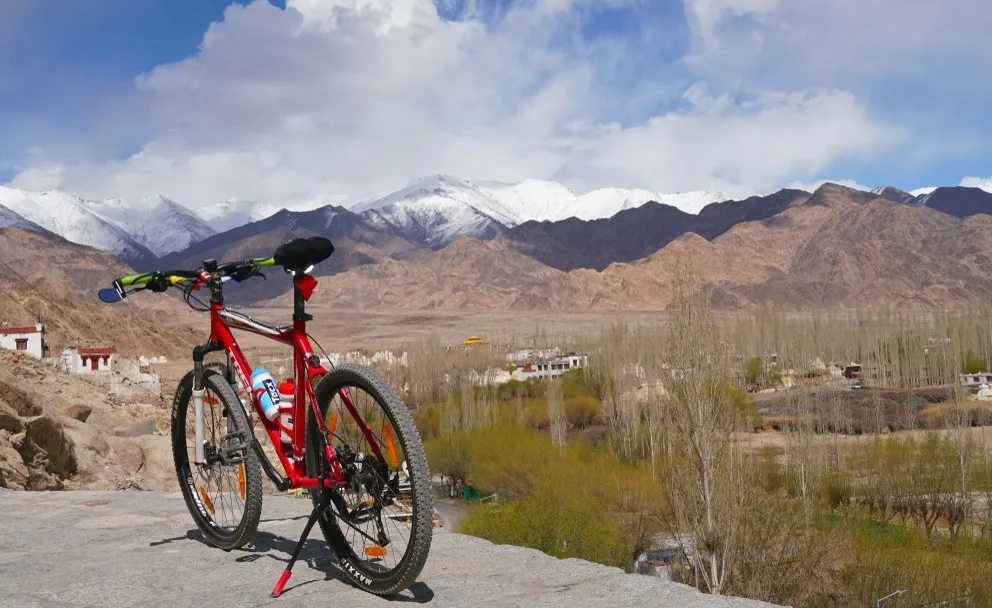
And now for the other part of the spectrum - where you're about to begin a journey that will change your life.
What You Will be Signing Up for (If you really want to).
The Manali to Leh cycling expedition via Khardung La is one of the most mentally and physically demanding cycling routes on the planet, with nearly 500 kilometres (about 310 miles) to be completed in 10 to 12 days and five major passes (Rohtang Pass, Baralacha La, Nakee La, Lachulung La, Tanglang La) to cross before reaching the final, lung-bursting climb to over 5,350 metres at Khardung La.
Let me cut straight to the chase and tell you exactly what you're going to be undertaking - personal headwinds, waking up below freezing in the morning, riding over stretches of road that look more like a suggestion than a surface, and simply being able to say you have completed a day of riding will be the biggest accomplishment in your life.
However, this is possible through supported riding. Backup vehicles, mechanics, a camp crew, oxygen support, and having route leaders who will know when to push a rider or put them in the van for an hour will help to ensure your success.
And what is the return on this investment? The return on this investment is going to be as euphoric as climbing the last mountain pass and having a renewed sense of accomplishment. The 21 hairpin turns at the Gata Loops and the two-hour climb to the top of Nakee La will humble you while you're riding up to the top, but will also make you slightly unbearable at dinner parties for many years to come. A view you've earned will give you a different experience because of the physical (soul) aspect.
There are no requirements on whether you're a pro cyclist or not; however, you must have a good training base established with 8–12 weeks of organized rides leading up to the trip. You must feel comfortable riding two tough days in a row and you will require to have an honest understanding of how well your body adjusts to riding at high altitude.
If you have ridden in the Himalayas on shorter rides in the past or have gone on multi-day tours before, you will most likely have the ability to complete this trip. If your last bike ride was more than 2 years ago, plan on preparing yourself over a minimum of one season prior to departing! The mountains will be there when you arrive!
This is one of the most underrated issues with acclimatization. The acclimatization question - the one nobody is discussing - is as follows: No matter how fit you are, AMS (Acute Mountain Sickness) will affect you. For example, I have seen marathon runners brought to their knees at about 3500m while their mother's 60+ year of age had no issues walking around the Leh market.
There are four basic acclimatization rules that people ignore because they are simple and boring: make your way up slowly, drink a ton of water, don't drink alcohol for the first few days and never sleep at a height above where you were the previous night by more than 300 to 500m after you have reached 3000m.
Therefore, if you are on one of the many road tours in India, make sure there are at least two days of "full acclimatization" included in Leh. Whereas, those on a bicycle who are on an expedition from Manali have the benefit of natural acclimatization occurring due to the gradual ascent from Manali, and for this reason, the majority of cyclists choose to go from Manali to Leh rather than fly and then ride home.
Do not book any tour operator's itinerary that indicates the itinerary is PANGONG LAKE ON DAY 2 AFTER FLYING INTO LEH... It is more like it is a medical incident waiting for a location to occur.
Road Tour vs Cycling Expedition: A Quick Comparison
| Factor | Road Tour | Cycling Expedition |
| Duration | 7–10 days | 10–12 days |
| Fitness required | Low to moderate | High |
| Best for | Families, first-timers, photographers | Endurance cyclists, adventure seekers |
| Physical challenge | Minimal | Extreme |
| Immersion level | High | Total |
| Preparation time | 2–3 weeks planning | 2–3 months training |
| Bragging rights | Solid | Lifetime supply |
When to Visit (And When Not to)
The time frame for visiting Ladakh is shorter than most people realize; typically between mid-June through mid-September is the best time to go. All of the passes are open, the weather is (normally) fairly stable and the Manali to Leh road will be completely open.
Out of these dates, July and August would be preferred for cyclists due to having the best weather and road conditions, although, occasionally, due to unexpected rain, cyclists will encounter some rain on their travel through Manali. In September, you will find the best photography conditions because of the clear air and light, along with fewer tourists, but be prepared for cool nights.
Do not travel during the shoulder seasons of late May when you can encounter snow walls and roads closed due to unpredictable snowfall, as well as the beginning of the off-road season in late-October when the roads will begin closing for the winter. The winter time in Ladakh is an entirely different experience (Chadar Trek, Snow Leopards), and will not be covered here.
Final Thoughts - There Are No Right Answers - There is Only Right Preparation
What I always tell people, "Road Tours will show you Ladakh. Cycle Tours will show you Ladakh as a backdrop for finding yourself." For both, if you use the local operator, follow a gradual acclimatisation program, and have realistic expectations, the experience you have on either of these trips will be an experience that you measure the rest of your travels against.
The only real bad way to do Ladakh is to be on a fast tracked tour with poor acclimatisation and using operators that commute to the Himalaya like on a highway. Take your time, get prepared and allow the mountains to do the inexpensive work. They are very good at it.
Frequently Asked Questions
Is a Leh Ladakh tour safe for first-time high-altitude travellers?
Yes, provided the itinerary includes at least two acclimatization days in Leh before visiting higher regions like Khardung La or Pangong. Choose operators who structure routes by altitude progression, stay hydrated, and consult your doctor beforehand if you have heart or respiratory conditions.
How fit do I need to be for the Manali to Leh cycling expedition?
You should be able to comfortably ride 60–80 km on consecutive days with climbing involved. Most riders train for 8–12 weeks beforehand. Supported expeditions with backup vehicles make the route achievable for committed amateurs, not just elite cyclists.
What is the best month for a Ladakh trip?
Mid-June to mid-September. July–August offers the most stable conditions for both road tours and cycling. September brings beautiful light and fewer travellers but colder nights.
Do I need permits to visit Ladakh?
Indian nationals need Inner Line Permits for areas like Nubra Valley, Pangong Tso, and Tso Moriri. Foreign nationals require Protected Area Permits. Reputable tour operators arrange these as part of the package.
Can I do both a road tour and cycling in one trip?
Absolutely. Some travellers ride the Manali–Leh route and then explore Nubra and Pangong by vehicle afterward, which is a brilliant way to recover while still covering the region's highlights.
How do I avoid altitude sickness in Ladakh?
Ascend gradually, drink 3–4 litres of water daily, avoid alcohol for the first 48 hours, and never ignore symptoms like persistent headache, nausea, or breathlessness at rest. Descending is the only reliable cure. Good operators carry oxygen and know evacuation protocols.