
India’s sacred temples: exploring Rameshwaram Jyotirlinga
Category: Travel | Updated On: August 24, 2026 | Published: April 8, 2026
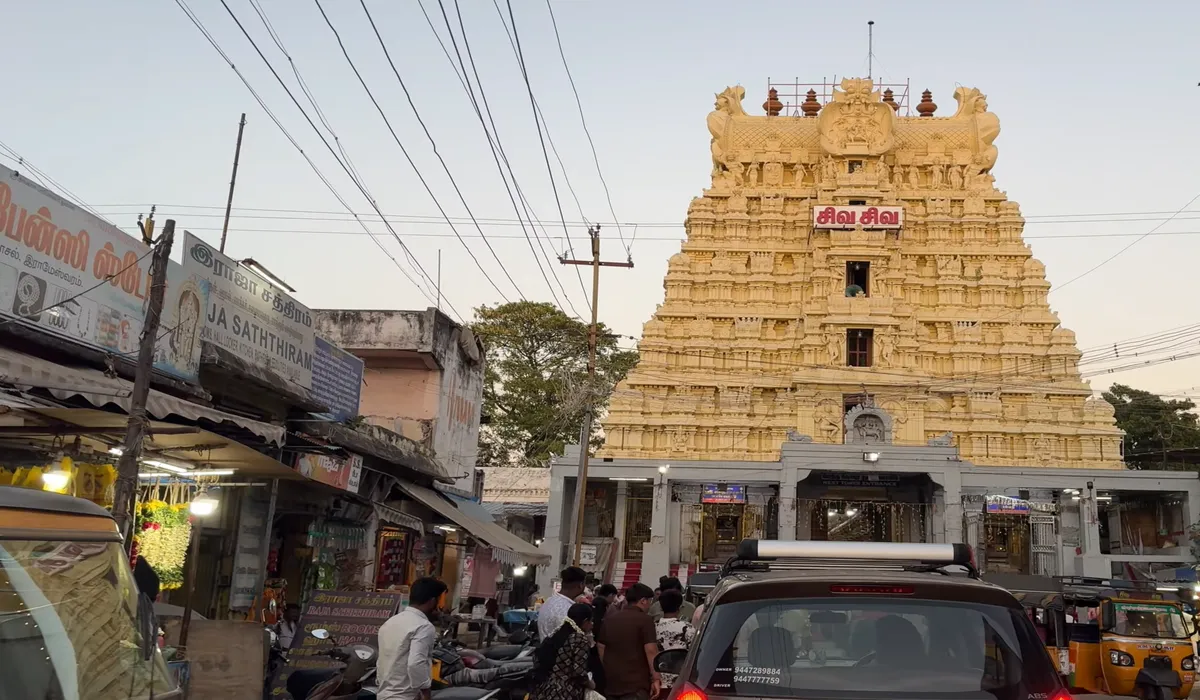
Beyond the temple itself, Rameshwaram holds one of India’s most striking walks: the shoreline route out to Dhanushkodi, the abandoned town at the island’s southeastern tip, where the Bay of Bengal meets the Indian Ocean at what’s known as the “last land of India.” Situated on Pamban Island in Tamil Nadu, Rameshwaram Jyotirlinga is one of the twelve most revered shrines dedicated to Lord Shiva. Many people visit the temple for spiritual reasons, often as part of the Bada Char Dham Yatra — the pan-India pilgrimage circuit that also includes Badrinath, Dwarka, and Puri. Others are drawn by its remarkable architecture, long pillared corridors, and its status as a culturally and historically significant site on India’s southern coast.
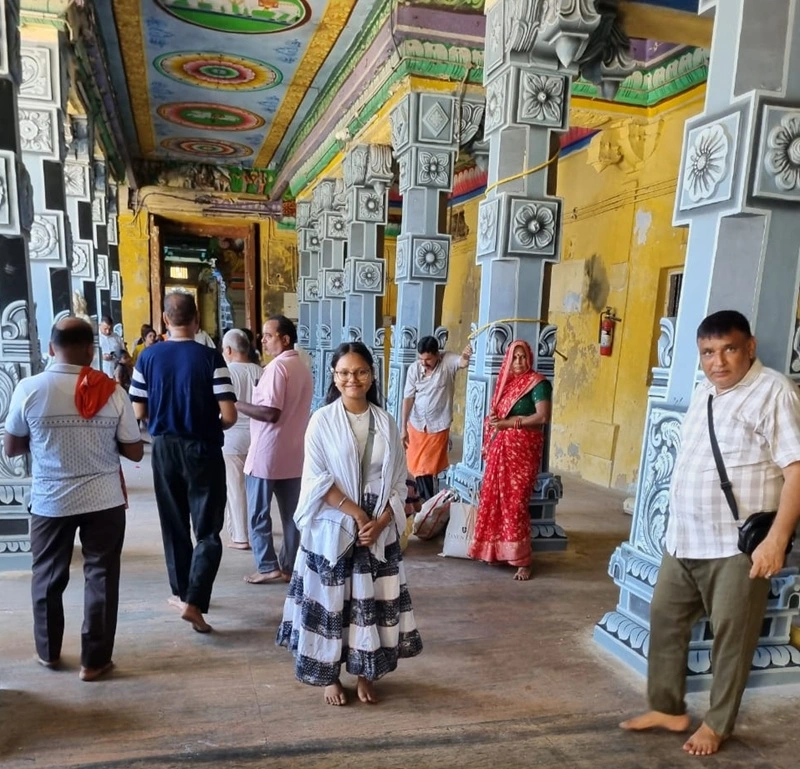
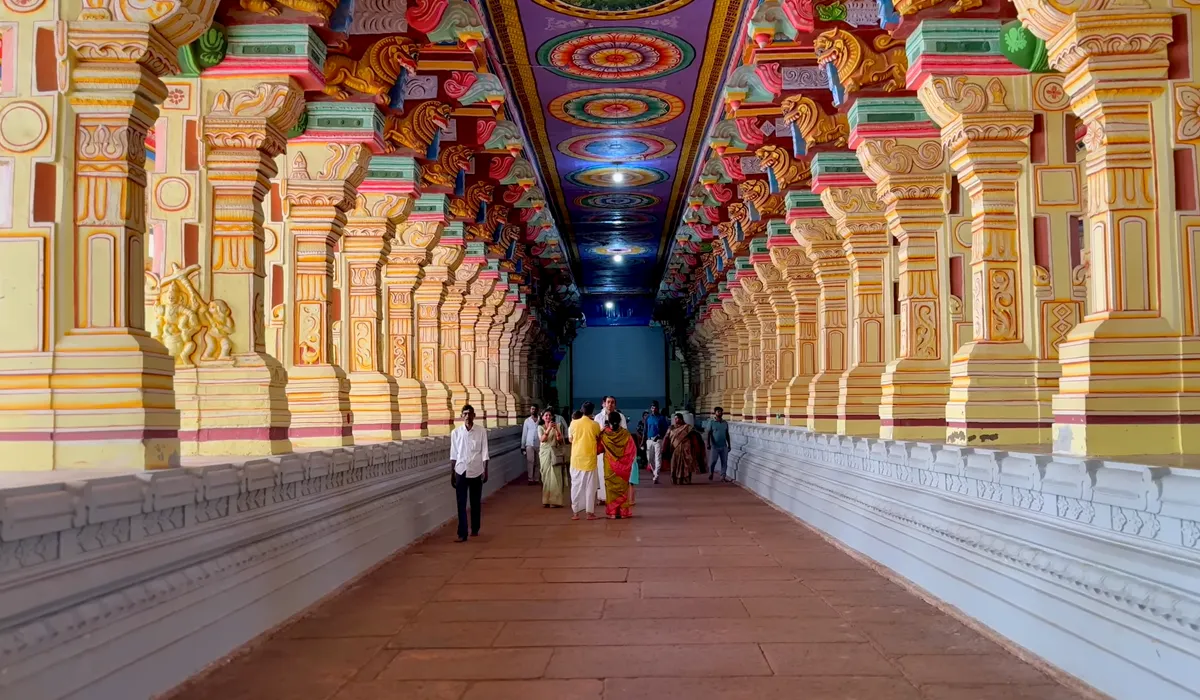
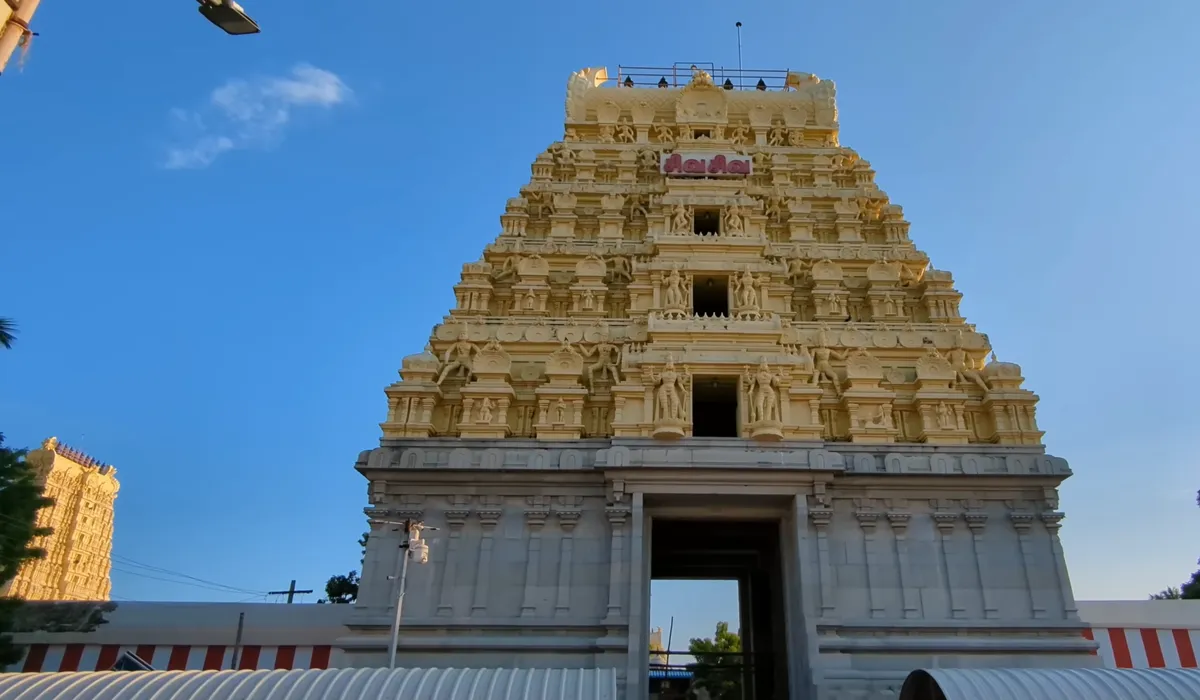
In this guide, we discuss the history and significance of Rameshwaram Jyotirlinga and share tips for visiting the sacred temple.
The history and significance of Rameshwaram Jyotirlinga
According to the epic Ramayana, Rama arrived at Rameshwaram before crossing to Lanka to rescue Sita from Ravana. Before beginning the battle, Rama wished to worship Shiva to seek blessings and atone for any sins from the impending war. He instructed Hanuman to bring a lingam from Mount Kailash, but as Hanuman was delayed, Sita fashioned a lingam from sand herself, and this became the revered Ramanathaswamy Jyotirlinga. When Hanuman returned and found the sand lingam already installed, he was upset at being delayed, so Rama installed Hanuman’s lingam from Kailash alongside it — known as the Vishwalingam — and, out of respect for his effort, instructed that it be worshipped first, with the Ramanathaswamy lingam second, an order still followed in the temple’s rituals today. Both lingams sit in the sanctum, symbolising devotion, humility, and the unity of different divine paths, as a part of the 12 Jyotirlinga in India.
Historically, the temple at Rameshwaram developed over centuries under various South Indian dynasties such as the Pandyas, Cholas, and later the Nayaks, who expanded it into one of the largest temple complexes in India. Its most famous feature — the corridors reputed to be among the longest in the world — is specifically credited to the Setupati rulers of Ramnad: Kizhavan Sethupathi sanctioned the temple’s current form in the 17th century, and Muthuramalinga Setupati later built the third corridor. The temple’s sacred water tanks (theerthams) are used for ritual purification. Over time, Rameshwaram has become not just a Shaivite pilgrimage site but also a crucial stop in the pan-India Bada Char Dham Yatra, reflecting its historic significance across the country.
Table of Contents
Advice for visiting Rameshwaram Jyotirlinga
Best Time to Visit
The best time to visit is between October and April, when the weather is relatively pleasant. The summer months, especially April to June, are extremely hot and humid and are best avoided, particularly around midday.
Dress Code & Entry Rules
Rameshwaram temple enforces a strict dress code — modest clothing only, with Western or revealing attire not allowed. Lightweight cotton clothing works best given the climate. Footwear is not permitted inside the temple, so be prepared to walk barefoot on stone floors that can get quite warm during the day. Photography inside the main sanctum is prohibited, and touching the lingam or idols is not permitted — only the temple’s Archakas (priests) are allowed to do so.
Theertham Bath Process
It’s advisable to start your temple visit early in the morning. The temple opens before sunrise, and the early hours tend to be less crowded and carry a serene, meditative atmosphere. Pilgrims traditionally begin by bathing at Agni Theertham, the sacred sea-bathing spot on the eastern shore facing the temple, before moving inside to bathe at the 22 theertham wells in the temple corridors — the full ritual bathing process the pilgrimage is built around. Carrying a change of clothes is highly recommended, since getting wet is part of the process.
Early risers can also opt for the Spatika Lingam (Mani) Darshan — a special, ticketed early-morning viewing of the temple’s crystal lingam near the sanctum, offered shortly after the temple opens each day. It’s one of the temple’s special/VIP darshan options; check with temple authorities or an authorized counter for current timings and fees.
Local Food
Rameshwaram’s food reflects its coastal Tamil Nadu setting — fresh seafood, traditional South Indian thalis served on banana leaf, and filter coffee are all easy to find. Being a major pilgrimage town, many eateries near the temple also serve pure vegetarian food to cater to visiting devotees.
Stay hydrated and carry sunscreen and a hat — the surrounding areas can be crowded and bustling, so a bit of patience goes a long way.
Top Places to Visit Near Rameshwaram
Rameshwaram’s most rewarding experiences often lie just outside the temple itself. The route to Dhanushkodi – an abandoned town at the southeastern tip of the island – is worth exploring on its own. While vehicles are commonly used, parts of the journey can be experienced on foot, especially along the shoreline, with the Bay of Bengal on one side and the Indian Ocean on the other. Known as the “last land of India,” walking here feels almost surreal, as if you are at the edge of the world.
Dhanushkodi is also the closest vantage point to Ram Setu (Adam’s Bridge) – the chain of shoals stretching toward Sri Lanka that, by legend, was built by Rama’s Vanara army using stones that miraculously floated, inscribed with Rama’s name so they wouldn’t sink. Modern geology attributes the formation to naturally occurring limestone shoals built up over millennia, though some of the lightweight, pumice-like stones found in the area genuinely do float, which keeps the legend alive for visitors today.
Another lesser-known route involves exploring the coastal villages around Rameshwaram. These paths take you through sandy trails, coconut groves, and fishing hamlets where you can witness local life up close. While they’re not strenuous, these walks offer a quiet contrast to the crowded temple complex and allow you to connect with the region’s natural beauty.
Bada Char Dham Yatra and Jyotirlinga Yatra
The Ramanathaswamy Temple is part of two important Hindu pilgrimage circuits in India — not to be confused with each other, or with Uttarakhand’s separate Chota Char Dham circuit (Kedarnath, Badrinath, Gangotri, Yamunotri):
Bada Char Dham Yatra (the Pan-India Circuit)
Rameshwaram is one of the four sacred sites in the Bada Char Dham Yatra, which also includes Badrinath Temple, Dwarkadhish Temple, and Jagannath Temple. These four temples are located in the north, south, east, and west of India, symbolically covering the entire country. Completing this pan-India Char Dham Yatra is believed to help devotees achieve spiritual liberation (moksha), making it one of the most famous temples in India.
Jyotirlinga Yatra
Rameshwaram is also one of the twelve sacred Jyotirlingas dedicated to Lord Shiva, making it part of the Jyotirlinga Yatra. Devotees who undertake this yatra aim to visit all twelve Jyotirlinga temples across India, each representing a different manifestation of Shiva. Rameshwaram holds special importance among them because of its connection to the Ramayana and Lord Rama.
Because it belongs to both these major yatras, Rameshwaram is considered one of the most spiritually significant pilgrimage destinations in India, attracting both dedicated yatris and general travellers alike.
Why choose a yatra tour?
Opting for a yatra tour can make your entire journey feel smoother and more meaningful. These tours are designed to take care of the logistics, like transport, accommodation, and guided temple visits, so you can fully focus on the experience. They also tend to include assistance with darshan timings and guidance on traditional rituals, which can be especially helpful if you’re visiting for the first time. If you’re unsure about which tour to choose, or need help planning your trip, it’s a good idea to speak to your tour provider.
How to Reach Rameshwaram
By Air: The nearest airport is Madurai Airport, about 170–180 km away. From there, taxis and buses run regularly to Rameshwaram.
By Train: Rameshwaram is connected to Chennai and other major cities by rail, crossing onto Pamban Island via the Pamban Bridge – one of the most scenic railway stretches in India, offering sweeping views of the surrounding waters.
By Road: Rameshwaram is well-connected by road to Madurai, Chennai, and other Tamil Nadu cities via state and national highways; regular buses and taxis are available, and you can drive across Pamban Bridge on the parallel road route running alongside the railway.
Address: Ramanathaswamy Temple, Rameswaram, Tamil Nadu 623526, India.
Distance from major cities:
| City | Approx. Distance |
| Madurai | ~176 km |
| Kanyakumari | ~312 km |
| Coimbatore | ~428 km |
| Chennai | ~566 km |
| Bengaluru | ~620 km |
| Hyderabad | ~1,180 km |
An unforgettable trip to Rameshwaram Jyotirlinga
Visiting this sacred temple is a bucket list experience for most explorers, and for many, it’s also a sacred journey of self-discovery. Whether you’re travelling from overseas or joining a tour from another part of India, you’re guaranteed an unforgettable experience.
FAQ'S
Is there a Jyotirlinga in Rameshwaram?
Yes, Rameshwaram is one of the 12 Jyotirlinga of Lord Shiva, located in Tamil Nadu, India. Believed to be a site installed and worshipped by Lord Ramam, making it a crucial site for Shaivites and Vaishnavites.
Why is Rameshwaram in 4 Dham?
Rameshwaram is the key part of the Bada 4 Dham circuit due to its location in the four cardinal directions, representing the southern abode that is established to achieve salvation (Moksha).
How to visit Rameshwaram, Jyotirling?
The nearest airport to Rameshwaram is Madurai Airport; from there, you can take a taxi to reach the temple. You can also travel by train across the Pamban Bridge, with direct connections to Chennai and other major cities. Direct buses are also frequent to southern cities, so check availability.
Can I touch Rameshwaram Jyotirlinga?
No, according to the temple regulation, visitors are not allowed to touch Rameshwaram Jyotirlinga; only the Archakas (the priests) are allowed to touch and perform rituals on the deity.
What to see inside Rameshwaram temple?
Inside the Ramanathaswamy temple in Rameshwaram, you can explore some must-see highlights such as the 22 holy theertham wells, a massive statue of Nandi, the longest corridor, the separate shrine of Parvathavardhini Amman (the temple’s consort deity), and the lingam of Ramanathaswamy.
What is not allowed in Rameshwaram temple?
Rameshwaram temple enforces a strict dress code — modest clothing only, with Western attire discouraged. Photography inside the main sanctum is prohibited, and touching the lingam or idols is not permitted.