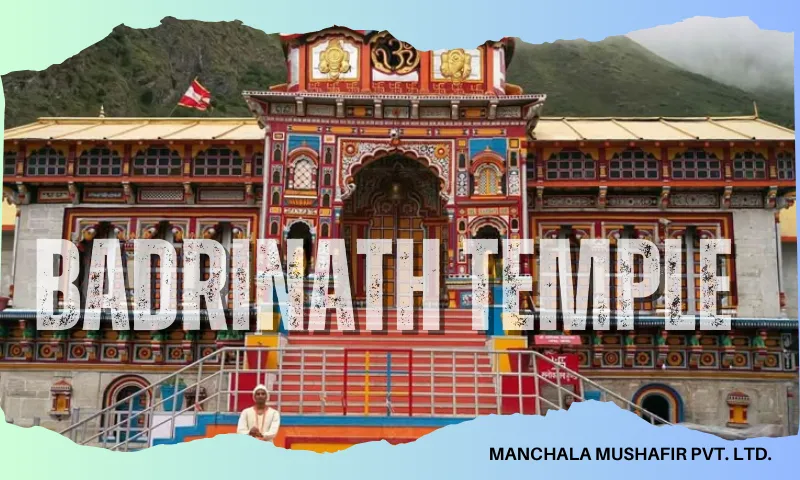
About Badrinath Temple
Category: Travel | Updated On: March 20, 2026 | Published: November 30, 2025
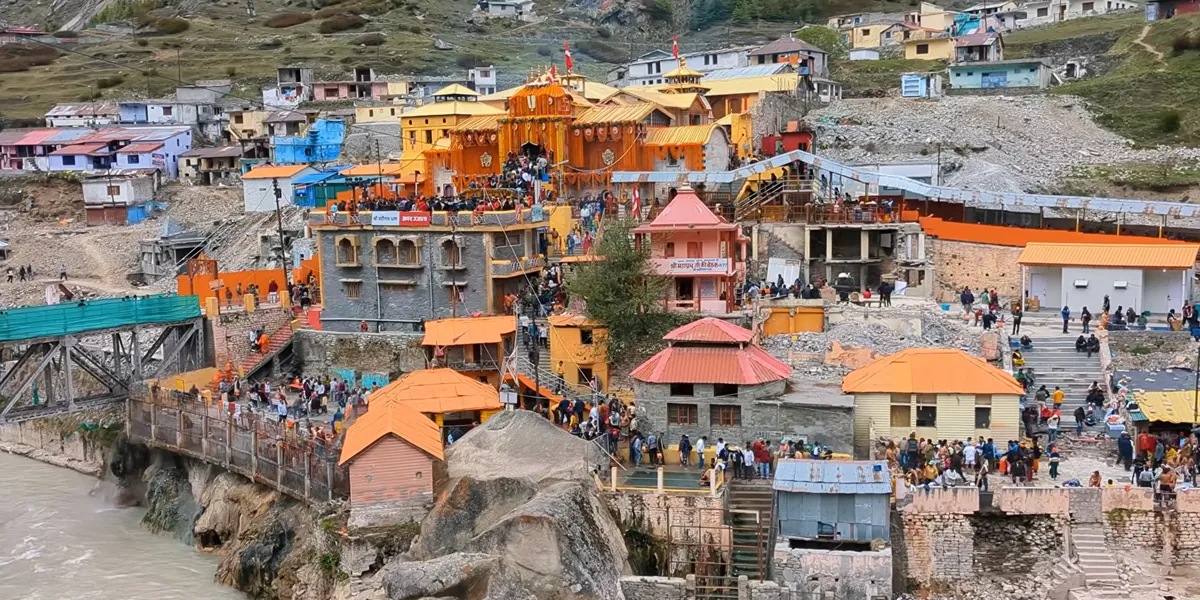
Introduction About Badrinath Temple
Quick Facts About Badrinath Temple
| Key Information | Details |
| Location | Chamoli district, Uttarakhand, India |
| Altitude | ~3,300 meters (10,827 feet) |
| Dedicated To | Lord Vishnu (Badrinath Narayan) |
| River | Alaknanda River |
| Mountain Range | Nar & Narayan Parvat |
| Part of | Char Dham & Chota Char Dham Yatra |
| Established / Revived By | Adi Shankaracharya |
| Temple Style | North Indian Nagara architecture |
| Opening Months | May – November (approx.) |
| Nearest Village | Mana (Last Indian village) |
| Famous Nearby Sites | Tapt Kund, Brahma Kapal, Charan Paduka |
| Idle Time to Visit Badrinath Temple | May–June & September–October |
Architecture of Badrinath Temple
Badrinath Temple is built in the traditional North Indian Nagara architectural style, but what makes it unique is its vibrant façade and Himalayan adaptation. Unlike many stone temples in North India, Badrinath stands out with its bright colors, wooden elements, and a gold-gilt roof that reflects both spiritual symbolism and practical design suited to extreme weather conditions.
Over the centuries, the temple has been rebuilt and restored multiple times due to earthquakes, avalanches, and harsh climatic conditions of the region. The current structure is largely credited to the efforts of Adi Shankaracharya, who revived Badrinath as a major pilgrimage site in the 8th century.
The layout of the temple follows a simple yet spiritually significant progression — from the entrance to the inner sanctum — allowing devotees to gradually move from the outer world into a deeply meditative space.
Key architectural features include: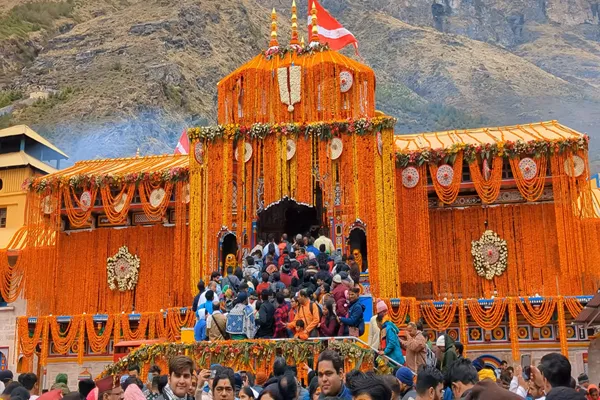
External Facade: A brightly coloured façade with a gold-gilt roof and an ornately decorated Singhdwar.
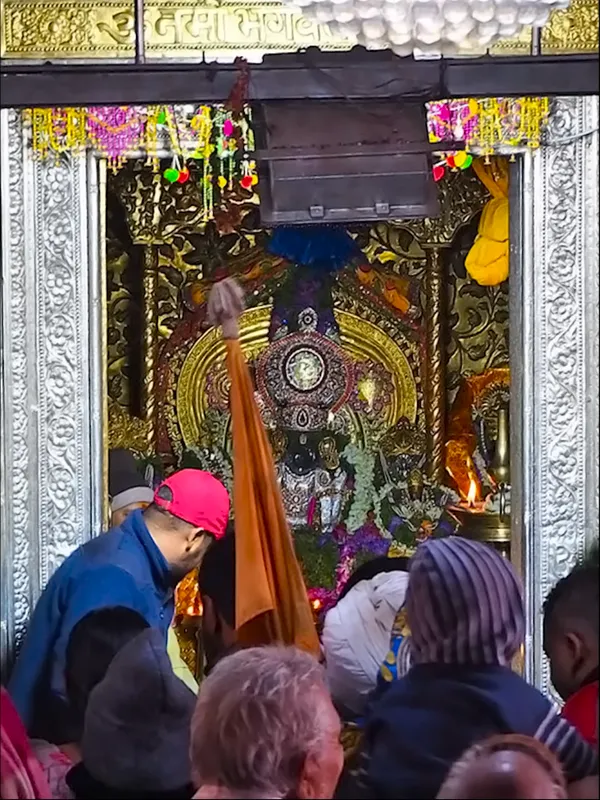
Main Deity: A black stone idol of Lord Vishnu seated in a meditative posture inside the sanctum.
Garbhagriha: The innermost chamber of the temple, where the primary idol of Lord Badrinath is enshrined.
Sabha Mandap & Darshan Mandap: Halls used for religious rituals, aarti, and gatherings of priests and devotees.
Importance of Badrinath Temple in Char Dham
Badrinath Temple holds a central place in both the Char Dham Yatra of India, which includes Badrinath, Dwarka, Puri, and Rameshwaram, and the Chota Char Dham Yatra of Uttarakhand, comprising Yamunotri, Gangotri, Kedarnath, and Badrinath. Among the four Himalayan shrines, Badrinath is considered the final and most significant destination, symbolising the completion of the sacred pilgrimage.
Pilgrims traditionally visit Badrinath after paying homage at Yamunotri, Gangotri, and Kedarnath. This spiritual sequence is believed to purify the soul and guide devotees towards liberation. According to Hindu beliefs, completing the Char Dham Yatra helps devotees attain Moksha (salvation) and strengthens their spiritual journey.
Badrinath Temple is highly revered in ancient Hindu scriptures, including the Skanda Purana, which praises it as one of the most sacred shrines on earth and identifies it as the divine abode of Lord Vishnu. Nestled between the Nar and Narayan mountain ranges on the banks of the Alaknanda River, the temple’s serene and elevated setting further enhances its spiritual significance, making it one of the most famous temples in India.
Badrinath Temple Darshan Timings
| Darshan Type | Timings |
| Morning Darshan | 4:30 AM – 1:00 PM |
| Evening Darshan | 4:00 PM – 9:00 PM |
| Ritual | Timing |
| Mahabhishek | Around 4:30 AM |
| Abhishek & Puja | Early morning |
| Evening Aarti (Geet Govind) | 6:00 PM – 7:00 PM |
| Shayan Aarti | Around 8:30 PM |
Best Time for Darshan (Expert Tip)
- Visit early morning (4:30 AM – 7:00 AM)
- Avoid peak hours between 7:00 AM – 11:00 AM (heavy crowd)
- Evening darshan is less crowded but weather can be colder
- Wake up early and join the queue by 3:30 AM: For the smoothest darshan, reach the temple before opening time. Early morning queues move faster and are far less crowded.
- If traveling with elderly, book Badrinath VIP darshan online ticket in advance: During peak season (May–June), long waiting hours can be difficult for senior citizens. VIP darshan helps avoid heavy queues.
- Avoid late morning rush (after 9 AM): This is the busiest time, and waiting can extend up to 2–3 hours.
- Evenings are less crowded but colder: If you miss morning darshan, evening is a good option, but carry warm clothes.
Badrinath Temple Location and Geographical Facts
Badrinath Temple is located in the Chamoli district of Uttarakhand, on the banks of the Alaknanda River, amid the majestic Garhwal Himalayas. The temple lies at an altitude of approximately 10,170 feet (3,100 meters) above sea level and is surrounded by the sacred Nar–Narayan mountain ranges.
The village of Mana, known as the first Indian village near the India–Tibet border, is the nearest settlement to Badrinath Temple and holds great cultural and mythological significance. The region around the temple is dotted with several sacred natural and spiritual sites, including Tapt Kund, Charan Paduka, and Brahma Kapal, which add to the religious importance of the area.
Flowing alongside the temple, the Alaknanda River enhances the spiritual ambience of Badrinath and plays a vital role in Hindu pilgrimage traditions.
To explore more fascinating details, you can read our dedicated guide on interesting facts about Badrinath Temple.
History of Badrinath Temple
The origins of Badrinath Temple are ancient and deeply rooted in Hindu tradition, with references dating back to the Vedic period. The temple gained prominence after Adi Shankaracharya revived it in the 8th century as a major pilgrimage site.
According to mythology, Lord Vishnu meditated here under the Badri tree, giving the place its name Badrinath.
Read the complete history and legends: Badrinath Temple History & Mythology
Important Sacred Sites Around Badrinath Temple
The area surrounding Badrinath Temple is rich in sacred landmarks, natural wonders, and mythologically significant sites that form an important part of the pilgrimage experience. These places are closely associated with Hindu traditions and are frequently visited by devotees during their journey to Badrinath.
Some of the most important sacred and nearby sites include:
- Tapt Kund hot spring – the holy hot water spring near the temple
- Charan Paduka – believed to bear the footprints of Lord Vishnu
- Brahma Kapal – an important site for ancestral rituals
- Mata Murti Mandir – dedicated to the mother of Lord Vishnu
- Mana Village – the first Indian village near the India–Tibet border
- Vyas Gufa & Ganesh Gufa – associated with the writing of the Mahabharata
- Vasudhara Falls – a sacred waterfall near Mana Village
- Neelkanth Peak – the majestic Himalayan peak overlooking the temple
Explore detailed guides on places to visit in and around Badrinath Temple.
Emergency Contacts for Badrinath Yatra
| Service | Contact Number |
| Ambulance | 108 |
| Police | 112 |
| Disaster Helpline (Uttarakhand) | 1070 |
| Tourist Helpline | 1364 |
Explore More About Badrinath Temple
For detailed travel planning, rituals, nearby attractions, and pilgrimage-related information, you can explore the following dedicated guides:
Travel & Planning
- How to Reach Badrinath Temple
- Mumbai to Badrinath Complete Travel Guide
- Kedarnath to Badrinath Distance
Temple Information & Rituals
FAQs About Badrinath Temple
1. What is Badrinath famous for?
Badrinath is a common temple for both the Chota Char Dham Yatra and the main Chardham Yatra. Badrinath is one of the famous temples for the incarnation of lord Vishnu.
2. Is Badrinath Yatra safe for senior citizens?
Yes, the Badrinath Yatra is generally safe for senior citizens if proper planning and precautions are taken. Unlike Kedarnath, there is no trekking involved, and the temple is directly accessible by road.
However, since Badrinath is located at a high altitude (around 3,300 meters), elderly travelers may experience breathlessness, fatigue, or mild altitude discomfort. To ensure a safe journey:
- Consult a doctor before travel, especially for heart, BP, or respiratory conditions
- Travel slowly and include a stop at places like Joshimath for acclimatization
- Travel slowly and include a stop at places like Joshimath for acclimatization
- Carry necessary medicines and stay well-hydrated
3. Are medical facilities available near Badrinath Temple?
Yes, basic medical facilities are available near Badrinath Temple, including small clinics and first-aid centers. During the Char Dham Yatra, temporary medical camps, doctors, and ambulance services are also available.
However, for serious treatment, the nearest well-equipped hospitals are in Joshimath (about 20 km away).
It is advisable to carry your personal medicines and consult a doctor before traveling to Badrinath.
4. What is special about Badrinath?
Badrinath is a sacred pilgrimage shrine, dedicated to Lord Vishnu, and part of the Char Dham, Panch Badri, and Sapt Badri pilgrimage circuits. Badrinath is famous for its stunning natural beauty, including natural hot springs, like Tapt Kund, and great spiritual significance; it is believed that lord vishnu meditated at this sacred spot. also famous for its nearby highlights like Charan Paduka, Mana Village, Vasudhara Falls, etc.
5. Is Badrinath a Jyotirlinga?
No, Badrinath is not among the 12 Jyotirlinga, as Jyotirlinga is dedicated to Lord Shiva, and Badrinath is the abode of Lord Vishnu. It is part of the Panch Badri, Sapt Badri, and 108 Divya Desam temples of Lord Vishnu.
6. Which two rivers meet in Badrinath?
As per the holy legend, the Alaknanda and Saraswati rivers (originating from Mana Pass) meet in Badrinath, known as Keshav Prayag, considered the sixth prayag. The main confluence of these two rivers is at Mana Village, 3 km from the Badrinath Temple.
7. Is mobile network and internet available in Badrinath?
Mobile network is available in Badrinath, but it is limited and often unreliable due to the high-altitude location. BSNL and Jio usually work better than other networks, though signal strength can fluctuate.
Internet connectivity is slow, and in many areas (especially indoors or during bad weather), it may not work at all.
It’s best to inform family in advance, keep important details offline, and not rely on mobile internet during your visit.
8. Why is it called Badrinath?
The reason for calling Badrinath lies with the legend of Lord Vishnu and Goddess Laxmi. Lord Vishnu performed penance at Badri Forest, and Goddess Laxmi took the form of a Badri tree to shade Lord Vishnu. This event led to the name of lord Vishnu as Badrinarayan and this site as Badrinath, meaning “Lord of Badri.”
9. Which mountain is behind Badrinath Temple?
The Neelkanth peaks are behind the Badrinath temple, offering breathtaking views to enjoy and adding another touch to its beauty.