
Neelkanth Mahadev Temple: Timings, Distance & Trek Guide 2026
Category: Travel | Updated On: October 10, 2026 | Published: January 1, 2026
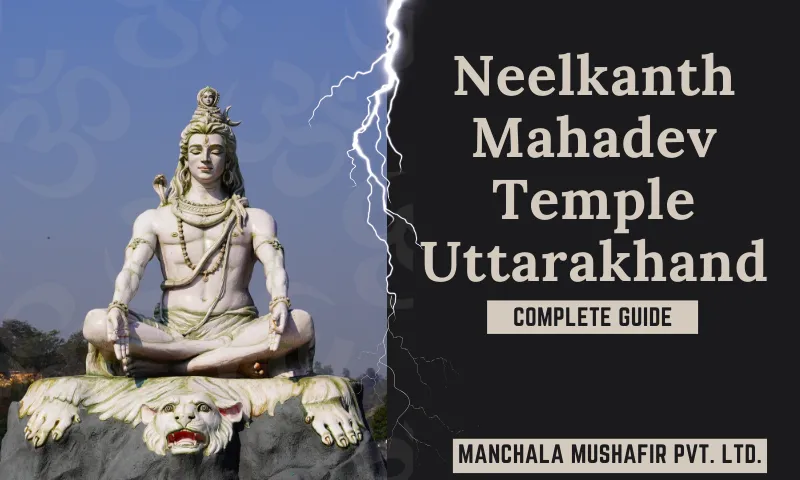
Shri Neelkanth Mahadev Temple Rishikesh
Shri Neelkanth Mahadev Temple is one of the most sacred Shiva temples near Rishikesh, in the Pauri Garhwal district of Uttarakhand. It sits at about 926 metres (as per the Pauri district administration; many sources quote 1,330 m), in dense forest among the Vishnukoot, Brahmakoot and Manikoot hills, where the Pankaja and Madhumati rivers meet.
It is dedicated to Lord Shiva as “Neelkanth” for his blue throat after drinking the poison during the Samudra Manthan period, making it a significant pilgrimage site. The drive or trek to the temple through the forested hills makes the visit a mix of devotion and nature.
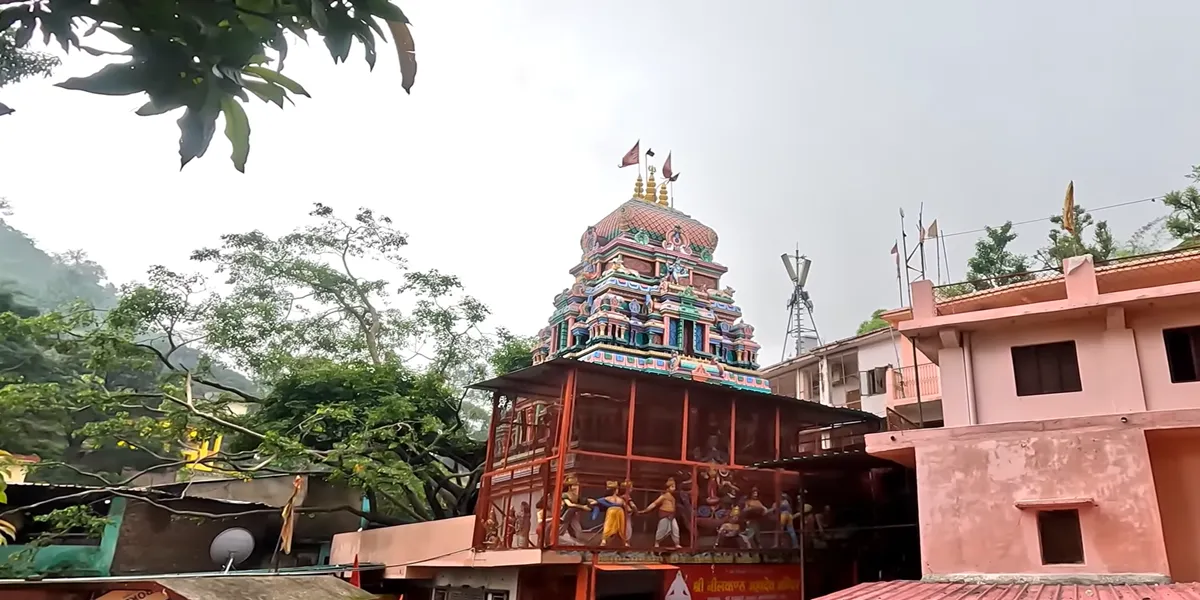
Neelkanth Mahadev Temple at a glance
- Where: Pauri Garhwal, Uttarakhand, 32 km from Rishikesh by road via the Barrage, or 22 km via the Ram Jhula side
- Travel time: about 1 to 2 hours by taxi from Rishikesh, or 4 to 5 hours on foot by the 12 to 14 km trek from Ram Jhula
- Timings: about 5:00 AM to 6:00 PM daily (about 6:00 AM to 5:00 PM in winter), with a midday bhog break; longer hours in Shravan and on Mahashivratri
- Fares: shared jeep from Ram Jhula about ₹150 to ₹250 per person; private taxi from Rishikesh about ₹2,200 to ₹3,000 return
- Entry fee: none
- Is it a Jyotirlinga? No
- Best time: February to April and September to November for comfortable weather; Shravan (July to August) and Mahashivratri for festivals, with very large crowds
- Next Mahashivratri: Saturday, 6 March 2027
- Shri Neelkanth Mahadev Temple Rishikesh
- About Neelkanth Mahadev Temple Uttarakhand
- What is Neelkanth Mahadev Temple famous for?
- Where is Neelkanth Mahadev Temple?
- Neelkanth Mahadev Temple History
- Inside Neelkanth Mahadev Temple
- How To Reach Neelkanth Mahadev Temple
- Neelkanth Mahadev Trek Routes
- Neelkanth Mahadev Distance Guide
- Neelkanth Mahadev Temple Timings
- Neelkanth Mahadev Uttarakhand Weather
- Festivals and Crowds at Neelkanth
- Hotels Near Neelkanth Mahadev Temple Rishikesh
- Places To Visit Near Neelkanth Rishikesh
- Neelkanth Mahadev Temple + Rishikesh: One-Day Itinerary
- Travel Tips For Visitors
- FAQs
About Neelkanth Mahadev Temple Uttarakhand
Neelkanth Temple is among the most revered Shiva temples in Uttarakhand, especially for devotees visiting Rishikesh. It sits on the confluence of the Madhumati and Pankaja rivers, holding great spiritual significance.
It is renowned for its scenic beauty, surrounded by picturesque valleys, such as Vishnukoot and Brahmakoot, and is associated with the legends of cosmic Samudra Manthan.
According to Hindu mythology, it is a spot where Lord Shiva drank Halahal Vish (deadly poison), which turned his throat blue and gave him a “Neelkanth". It is a major pilgrimage center that attracts devotees, especially during the Mahashivratri and Shravan Months, making it one of the famous places to visit in Rishikesh.
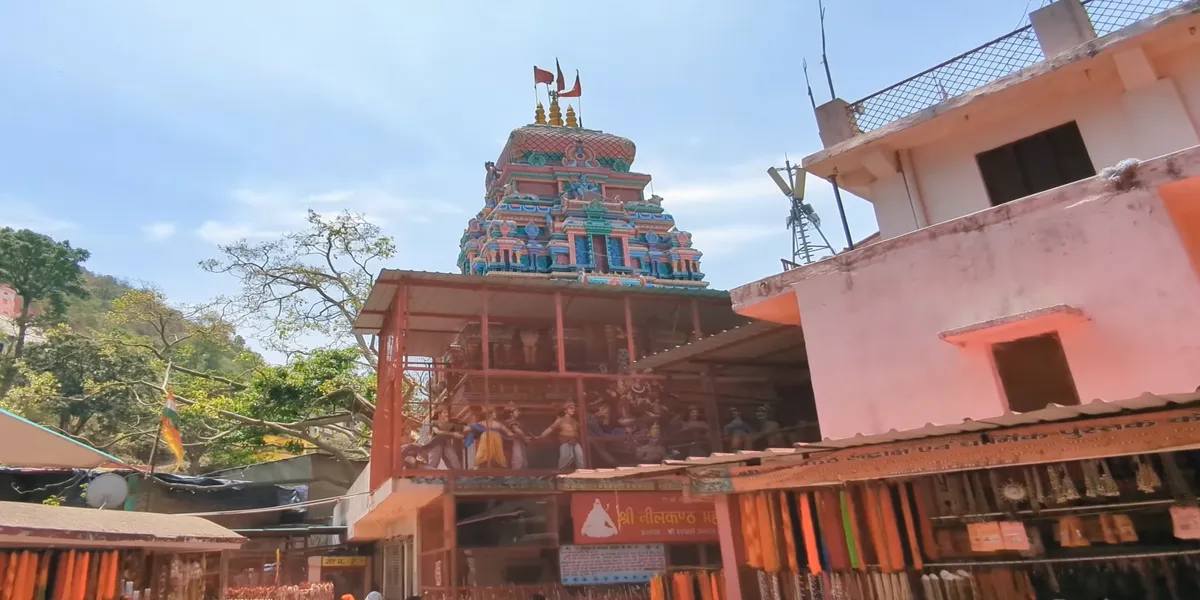
What is Neelkanth Mahadev Temple famous for?
Neelkanth Mahadev Temple is one of the most famous temples of Uttarakhand, as the sacred site where Lord Shiva drank poison during Samudra Manthan, turning his throat blue. It is renowned for its spiritual significance, scenic Himalayan location near Rishikesh, and devotion during Shravan and Mahashivratri.
Where is Neelkanth Mahadev Temple?
Neelkanth Mahadev Temple is located in the Pauri Garhwal district of Uttarakhand, near Rishikesh. The temple is at about 926 metres above sea level, as per the Pauri district administration (other sources often quote 1,330 m). The temple sits on the confluence of the Madhumati and Pankaja rivers.
Quick Facts About Neelkanth Mahadev Temple
- Location: Pauri Garhwal, Uttarakhand
- Nearest City: Rishikesh (32 km via the Barrage, 22 km via Ram Jhula)
- Pin Code: 249302
- Altitude: about 926 m (Pauri district administration; often quoted as 1,330 m)
- Deity: Lord Shiva
- Significance: Associated with Lord Shiva's blue throat, after he drank poison during the Samudra Manthan
- Entry fee: None
- Key times to visit: Sawan (July-August) and Mahashivratri (February-March)
- Coordinates: 30.0807° N, 78.3409° E
Neelkanth Mahadev Temple History
The Neelkanth Mahadev Temple has a great history and mythology rooted in the legends of Samudra Manthan (Churning of the Ocean). It is believed to be the place where Lord Shiva drank deadly poison, turning his throat blue.
Mythological Story of Neelkanth Mahadev Temple
During the Samudra Manthan period, gods and demons churned the cosmic ocean to obtain Amrita, but the lethal poison was on the surface before the emergence of Amrita, which threatened to destroy all creation. Lord Shiva consumed the poison, and to prevent the poison from spreading through his body, Devi Parvati gripped his neck, and his throat turned blue, which gave him the name “Neelkanth.”
Another legend suggests that Lord Shiva meditated at this sacred spot under a tree named Panchpani (Peepal) to reduce the toxic effects of poison. After his meditation, a self-manifested Shivalinga emerged here beneath a Peepal tree, which is a key highlight of this spot.
Source: Nilkanth Mahadev (Wikipedia), Legend section
Architectural History and Style
While the site is ancient, the modern temple was built by a local priest named “Mekh Chand” over the spot where Lord Shiva meditated. The architecture of the temple features a modern and colorful Dravidian Style.
The temple is adorned with intricate sculptures, depicting the scenes of the Samudra Manthan period. The main sanctum houses a swayambhu Shivlinga shaped like a throat. A natural spring named “Amrit Kund” is within a complex where devotees take a holy bath.
Natural Highlights: The Neelkanth Mahadev Temple is situated on the sacred confluence of the Pankaja and Madhumati rivers, which is auspicious for ritual bathing before entering the shrine. The natural surroundings of the temple, including dense forest and hills, are another added attraction in its significance.
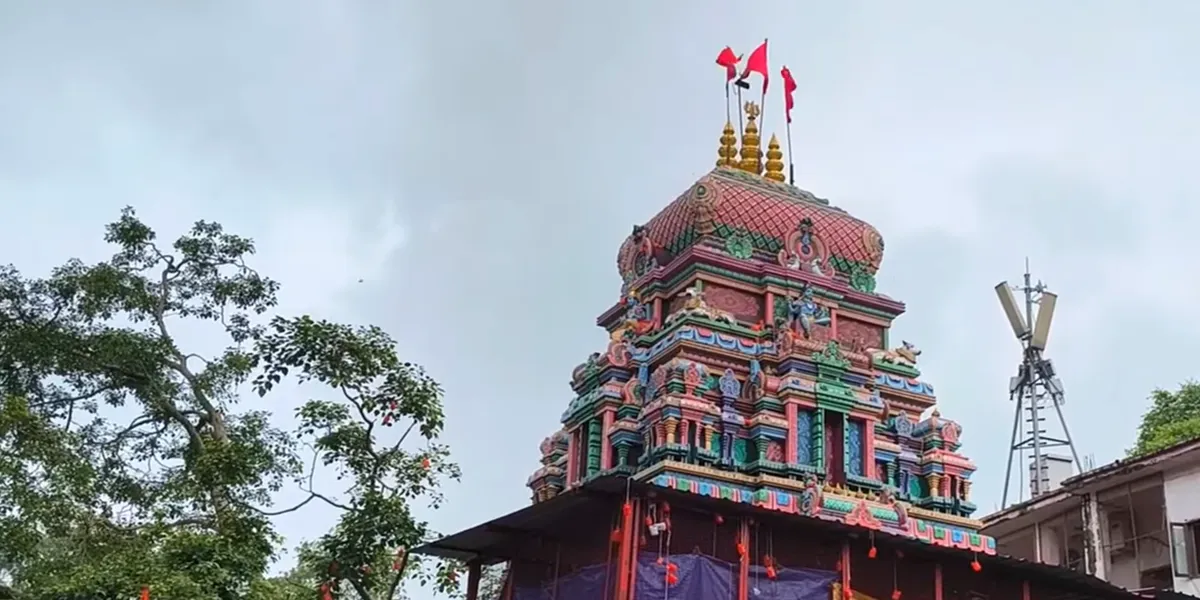
Inside Neelkanth Mahadev Temple
- Sanctum: a throat-shaped swayambhu Shivling, with Nandi facing it.
- Gopuram: the colourful tower over the entrance is carved with scenes of the Samudra Manthan.
- Peepal tree: devotees tie sacred threads around the tree to make a wish, and many return to untie the thread once it comes true.
- Natural spring: the temple complex has a spring where devotees take a holy dip before darshan.
- Offerings: stalls outside sell bael leaves, flowers, coconut, milk and prasad; carry some cash.
- Etiquette: remove your shoes before entering the temple premises, dress modestly and follow the notices on photography.
How To Reach Neelkanth Mahadev Temple
The Neelkanth Mahadev temple is about 32 km from Rishikesh by road via the Barrage, or 22 km via the Ram Jhula side, and you can reach it by car, taxi, bus or on foot. Here is a breakdown on how to reach the Neelkanth Mahadev temple.
Quick Answer: The easiest way to reach Neelkanth Mahadev Temple is by taxi or private car from Rishikesh — the temple is about 32 km away by road and takes roughly 1–2 hours. A 12 to 14 km trekking route is also available from Swarg Ashram or Ram Jhula for those who want to walk in.
By Air: Jolly Grant Airport near Dehradun is the nearest airport to the Neelkanth Mahadev temple, about 45 km away by road. From the airport, you can take a taxi to reach the temple.
By Train: Rishikesh Railway Station, about 32 km away from the temple, is the closest railway station to the temple. From there, you can take a taxi or local bus to reach the temple. Haridwar Junction is the second nearest railway station. From there, you can easily find local transport to the Neelkanth Mahadev temple.
By Road: Neelkanth Mahadev temple is easily accessible by road via car or taxi from Rishikesh or Haridwar. Take a state-run bus from your city to Rishikesh or Haridwar. From there, proceed to the temple.
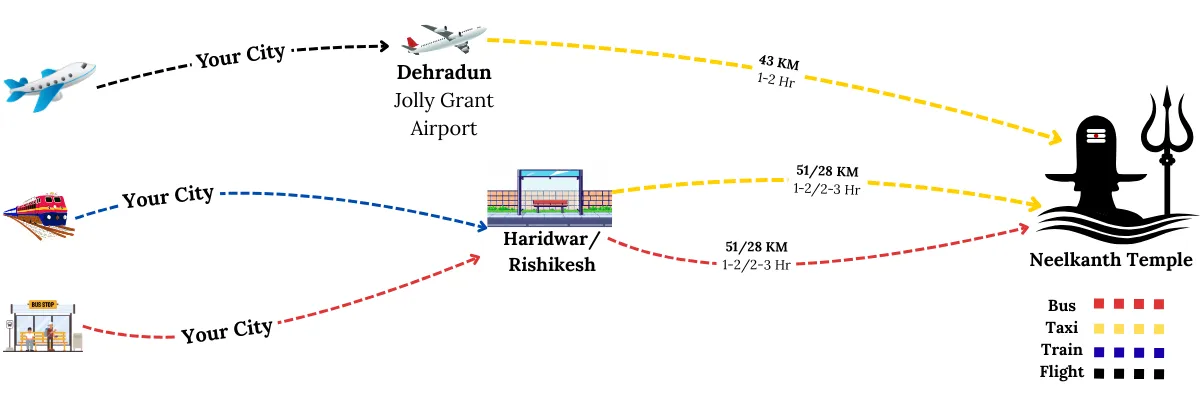
From Rishikesh
The Neelkanth Mahadev Temple is easily accessible from Rishikesh by road via taxi, shared taxi, or local bus. Alternatively, to make your journey more adventurous, the trekking route is also available from Ram Jhula and Swarg Ashram in Rishikesh.
Rishikesh Distance: Rishikesh to Neelkanth Mahadev distance is about 32 km by road via the Barrage, or 22 km via the Ram Jhula side.
Travel Time: 1 to 2 hours, depending on road conditions or traffic.
Travel Option: Car/Taxi, or local Buses are easily available for Neelkanth Mahadev Mandir from the Rishikesh bus stand.
By Trek: For a more adventurous approach, you can also reach by the 12 to 14 km Neelkanth temple trek, which starts from Swarg Ashram or Ram Jhula in Rishikesh. See the trek routes below.
Shared Jeep and Taxi Fares from Rishikesh
Approximate fares, based on several recent sources (October 2026). Agree the price with the driver before you start.
Mode | From | Time | Approx. fare |
Shared jeep | Ram Jhula / Swargashram taxi stand | About 1 hour | ₹150 to ₹250 per person |
Private taxi (one way) | Rishikesh | 1 to 2 hours | ₹1,200 to ₹1,500 |
Private taxi (return, with waiting) | Rishikesh | 1 to 2 hours each way | ₹2,200 to ₹3,000 |
On foot | Ram Jhula / Swargashram | 4 to 5 hours up | Free |
Shared jeeps leave when they are full, so the last ones back to Rishikesh can be early in the evening.
From Haridwar
Haridwar is another major transport hub of Uttarakhand. To reach the Neelkanth Mahadev Temple from Haridwar, you must cover a distance of about 51 km by road. Firstly, reach Rishikesh and then proceed to the temple. Here is a breakdown of distance, travel time, and travel options.
Haridwar Distance: Haridwar to Neelkanth Mahadev distance is approximately 51 km by road.
Travel Time: 2 to 2.5 hours
Travel Option: Taxi, cab, or bus to Rishikesh or directly to Neelkanth Mahadev temple.
Travel Tip: Start your trip early to avoid city traffic.
Neelkanth Mahadev Trek Routes
There are three common ways to walk to Neelkanth Mahadev Temple. The Ram Jhula route is the most popular; the Garudachatti route is shorter but steeper.
| Route | Distance (one way) | Time | Difficulty |
| Ram Jhula / Swargashram forest route | 12 to 14 km | 4 to 5 hours up | Easy to moderate |
| Garudachatti route | About 9 km | 4 to 4.5 hours up | Moderate, steeper |
| Drive up, trek down | 12 to 14 km downhill | About 3 to 4 hours | Easy |
Trek tips: start early, ideally before 7 AM; carry at least 2 litres of water; the trail runs through forest near the Rajaji area, so do not trek alone or after dark; in the monsoon the path is slippery and there may be leeches.
Neelkanth Mahadev Distance Guide
Here is the key distance of Neelkanth Mahadev Temple from major cities.
- Rishikesh to Neelkanth distance: 32 km
- Ram Jhula to Neelkanth distance: 22 km
- Haridwar to Neelkanth distance: 51 km
- Dehradun to Neelkanth distance: 66 km
- Delhi to Neelkanth distance: 284 km
- Laxman Jhula to Neelkanth distance: about 22 km via the Swargashram road (32 km via the Barrage)
- Neelkanth to Kedarnath distance: 240-250 km
- Triveni Ghat to Neelkanth Mahadev distance: about 32 km via the Barrage road
- Rishikesh bus stand to Neelkanth distance: about 32 km via the Barrage road
- Tapovan to Neelkanth distance: about 22 km by road
- Jolly Grant Airport to Neelkanth distance: about 45 km
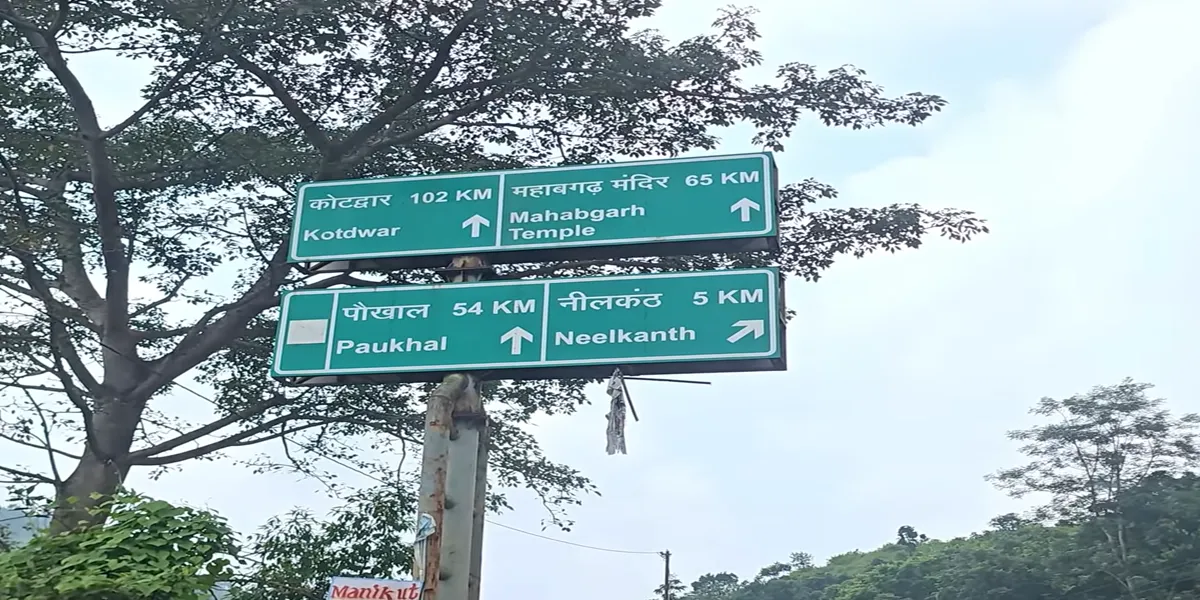
- Kotdwar to Neelkanth distance: about 125 km, 3 to 4 hours by road
Neelkanth Mahadev Temple Timings
Neelkanth Mahadev Temple is generally open from about 5:00 AM to 6:00 PM every day, with a short break around midday for the bhog offering. In winter it usually opens a little later and closes a little earlier. Aarti times vary slightly by season, so treat the times below as a guide.
Event | Usual time |
Temple opens | About 5:00 AM (about 6:00 AM in winter) |
Morning aarti | Early morning, around 5:00 to 6:00 AM |
Darshan | Morning until about 12:00 noon |
Bhog / midday break | About 12:00 to 1:00 PM |
Darshan | About 1:00 PM until closing |
Evening aarti | Around sunset, about 5:30 to 6:30 PM |
Temple closes | About 6:00 to 6:30 PM (about 5:00 PM in winter) |
Shravan and Mahashivratri | Hours are extended to handle the crowds; announced locally |
Entry fee | None |
Timings compiled from several published sources and last reviewed on 10 October 2026. They can change on festival days, so check locally before you go.
Tips for visitors: Neelkanth Temple timings vary by season or during the festival days. It is recommended to visit early in the morning for darshan to avoid a large crowd. Parking is available near the temple, but during peak hours, parking fills up quickly, so reaching early is recommended. There is no entry fee. During Shravan and on Mahashivratri the hours are often extended and queues can last several hours.
Neelkanth Mahadev Uttarakhand Weather
Here is a breakdown of the Neelkanth Mahadev temperature and weather by season. For the live forecast, check Rishikesh weather today.
Month | Average day (°C) | Average night (°C) |
January | 17 | 5 |
February | 22 | 8 |
March | 29 | 14 |
April | 35 | 18 |
May | 39 | 23 |
June | 38 | 25 |
July | 33 | 25 |
August | 32 | 24 |
September | 32 | 23 |
October | 30 | 15 |
November | 25 | 9 |
December | 20 | 6 |
Average temperatures for Rishikesh (climate data via Wikipedia, source Weather2Travel). Neelkanth, at about 926 m, is usually 3 to 4°C cooler.
Summer Season (April-June)
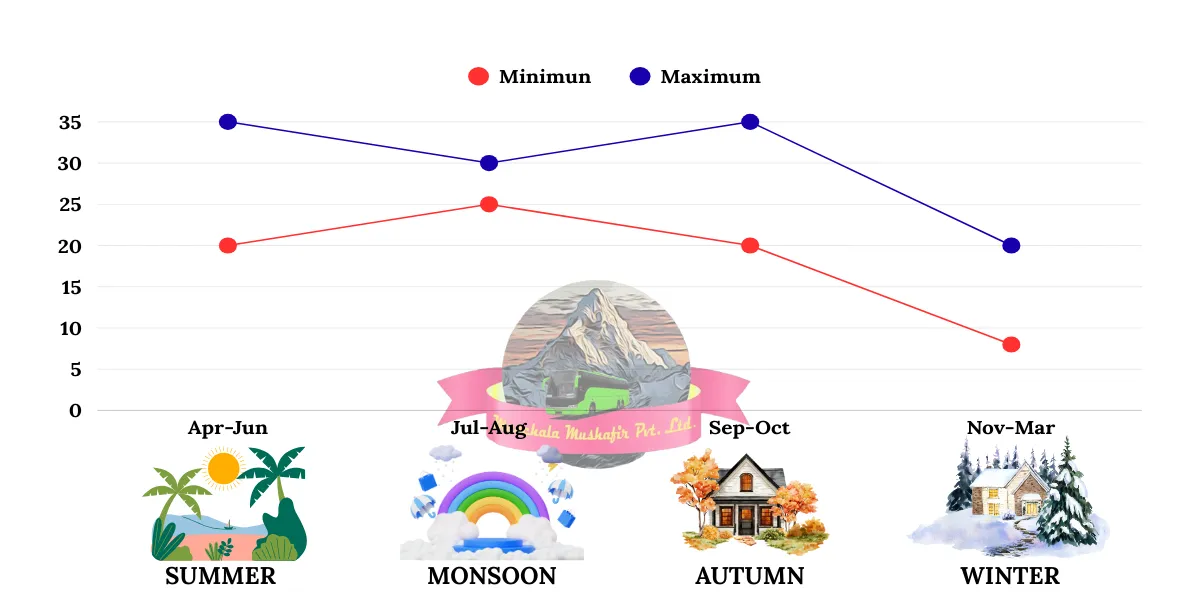
Summer (April to June) is hot, with daytime temperatures of about 20°C to 35°C. May and June are the busiest months, with holiday crowds, so start early in the morning to avoid the queues and the midday heat.
Pro tips: Start early in the morning to avoid the midday heat and the crowds.
Monsoon season (July-August)
Monsoon rainfall occurs, causing landslides and making trails slippery. The weather is pleasant with high humidity, and the temperature ranges between 25°C and 30°C, experiencing lush greenery with vibrant scenery. It is considered a significant time period, as this is the Shravan month, and Rishikesh hosts the Kanwar Yatra (Kanwar Mela) and the Sawan Shivratri.
Pro tips: During the monsoon season, the rush stays high during Sawan, so check the weather and book your stay in advance.
Autumn Season (Sep-Oct)
The post-monsoon period experiences pleasant weather with mild temperatures of about 18°C to 30°C (approximate). This period offers fresh scenery with lush and vibrant landscapes and crisp, clear skies, making it an ideal time for sightseeing and temple visits.
Winter season (Nov-Mar)
Winters are cool, with cold mornings and nights and temperatures ranging from 8°C to 20°C; snowfall at this altitude is very rare. The calm weather makes it a good time for sightseeing. Mahashivratri (6 March 2027) falls at the end of winter and draws very large crowds.
Our New Year camping package in Rishikesh includes darshan at Neelkanth Mahadev on 1 January.
Best Time To Visit Neelkanth Uttarakhand
The Neelkanth Mahadev temple is an all-year-round accessible pilgrimage site; you can visit anytime of the year. The best time to visit depends on an individual’s preference and travel style; while February to April and September to November are the most comfortable months, and the Shravan months (July-August, monsoon) are for a spiritual experience. Here is a brief on the best time to visit based on weather and festivals.
Spring and Autumn (February to April, September to November): pleasant weather, clear skies and smaller crowds than May and June, which are hot and busy with summer holiday visitors.
Monsoon/Shravan Months (July-August): This time, the Neelkanth Temple Uttarakhand hosts the annual Kanwar Yatra, which attracts huge numbers of devotees. The Crowd level is high at this time, which affects the experience.
Winter Months: from November to March, are an excellent time for a peaceful travel experience with cold weather. Festivals, like Mahashivaratri, are celebrated at this time, and the atmosphere is filled with devotees and divine energy.
Pro Tip for Visitors: If you travel for a spiritual purpose, visit during the Mahashivratri and Shravan periods, and if you want a peaceful and comfortable experience, visit in spring or autumn.

Festivals and Crowds at Neelkanth
- Shravan and the Kanwar Yatra (July to August): the busiest time of the year. Expect very long queues, road diversions around Rishikesh and vehicles being stopped before the temple on peak days.
- Mahashivratri: Saturday, 6 March 2027. Queues can run for several hours, so start in the early morning.
- Normal days: reach before 8 AM to avoid queues; weekends and holidays are busier than weekdays.
Hotels Near Neelkanth Mahadev Temple Rishikesh
There are several hotels and resorts near the Neelkanth Mahadev Temple, offering various amenities at various price ranges. Rishikesh, the Ram Jhula Area, and the Neelkanth Temple Road are major areas to stay near the Neelkanth Mahadev Temple.
Places To Stay Near Neelkanth Mahadev Temple
Rishikesh: There are so many hotels in Rishikesh, from budget to luxury options. The railway station and Rishikesh Tapovan area offer numerous options, including budget hotels, guesthouses, and resorts.
Neelkanth Temple Road: Camp stays and basic hotels are easily available in proximity to the temple.
Suggested options are:
Hotel Name | Price Range |
Friendz Adda Resort, Rishikesh | ₹2000 to ₹3000 |
Krishn Kunj Homestay | ₹1200 to ₹1800 |
Neelkanth Bhawan | ₹1000 to 1500 |
The Raja Palace, Laxmanjhula | ₹1000 to ₹1500 |
Places To Visit Near Neelkanth Rishikesh
Since Neelkanth Mahadev Temple is close to Rishikesh, most visitors combine it with a few nearby attractions. For a fuller list, see our guide to places to visit in Rishikesh. A few worth prioritising near the temple route:
- Scenic Waterfalls: Patna Waterfall is near the road to Neelkanth from Laxman Jhula, and Neer Garh Waterfall is near Tapovan, close to Laxman Jhula.
- Parmarth Niketan Ashram: Parmarth Niketan, on the bank of the Ganga at Swargashram, is one of the largest ashrams in Rishikesh and is known for its evening Ganga Aarti. It is on the way if you take the Ram Jhula route to Neelkanth.
- Suspension Bridges: Bridges such as Ram Jhula and Lakshman Jhula, located over the Ganges River, provide panoramic views of the Himalayas.
- Rajaji National Park: Rajaji Wildlife Sanctuary near Rishikesh is a popular site for unique flora and fauna, ideal for jungle safaris and nature walks.
- Triveni Ghat: Triveni Ghat is a holy bath spot in Rishikesh, known for its spiritual ambiance and divine Ganga Aarti.
- Shivpuri Rishikesh: Shivpuri Rishikesh is another scenic site, famous for adventurous sports like camping and river rafting in Rishikesh.
Neelkanth Mahadev Temple + Rishikesh: One-Day Itinerary
If you're staying in Rishikesh, Neelkanth Mahadev Temple is easy to combine with the rest of your sightseeing in a single day. Here's a simple way to plan it:
- Morning: Start early from Rishikesh (by taxi or the Swarg Ashram/Ram Jhula trek route) and head to Neelkanth Mahadev Temple.
- Late Morning: Temple darshan and aarti, plus time to take in the forest and mountain surroundings.
- Afternoon: Head back toward Rishikesh, stopping at Parmarth Niketan Ashram or Triveni Ghat along the way.
- Evening: Catch the Ganga Aarti at Triveni Ghat or explore Ram Jhula and Laxman Jhula before wrapping up the day.
If you'd rather not plan the logistics yourself, you can explore our Places to Visit in Rishikesh guide for more ideas, or get in touch and we'll help you put together a smooth itinerary.
Travel Tips For Visitors
Plan your trip: Plan your trip wisely, including travel time and stay time. Keep a one- or two-day buffer, as a huge crowd during the peak season can cause delays.
Dress Modestly: Neelkanth Mahadev is a holy site, so modest attire covering shoulders and knees is recommended.
Pack Essentials: pack smart and light, and carry all the essentials, from clothing to a medical kit, water bottles and light snacks, small backpacks, etc.
Respectful Behavior: Be respectful in your behavior, follow the local customs and guidelines of the temple.
Monsoon: go in July and August only if you are visiting for Shravan; expect heavy rain, slippery roads and large crowds.
Book Hotels in Rishikesh: Rishikesh has a wider range of accommodation options at a better price than Neelkanth temple road, so choose stay in Rishikesh and book in advance.
Start your trip early from Rishikesh: To avoid city traffic and reach before sunset, start your journey early from Rishikesh.
Temple Time: Visit during early morning or late afternoon to avoid waiting in long darshan queues.
Final Thoughts
FAQs
What is the Neelkanth Temple famous for?
Neelkanth Mahadev is a sacred temple of Lord Shiva near Rishikesh, believed to be the place where Shiva drank the poison from the Samudra Manthan, which turned his throat blue. It is also known for its forest setting among the Vishnukoot, Brahmakoot and Manikoot hills.
Is Neelkanth Mahadev Temple a Jyotirlinga?
No, Neelkanth Mahadev temple is not one of the 12 Jyotirlingas of Lord Shiva, but it is an important pilgrimage site.
How far is Neelkanth from Rishikesh?
Neelkanth Mahadev Temple is about 32 km from Rishikesh by road via the Barrage, or 22 km via the Ram Jhula side, which takes 1 to 2 hours by taxi or bus.
Is there an entry fee at Neelkanth Mahadev Temple?
No, there is no entry fee. Offerings such as flowers and prasad are optional.
How long is the Neelkanth Mahadev trek?
The main trek from Ram Jhula or Swargashram is 12 to 14 km one way and takes 4 to 5 hours uphill. A shorter but steeper route from Garudachatti is about 9 km. Start early, carry water and do not trek alone or after dark.
When is Mahashivratri 2027?
Mahashivratri 2027 falls on Saturday, 6 March 2027. Neelkanth Mahadev gets very large crowds that day, so start early in the morning.
Can senior citizens visit Neelkanth Mahadev Temple?
Yes. Vehicles can go close to the temple, followed by a short walk from the parking, so senior citizens can visit without trekking. Avoid Shravan and Mahashivratri, when queues are very long.
Why is Shiva called Neelkanth?
Shiva is called Neelkanth because, in the legend of the Samudra Manthan, he drank the Halahal poison to save the world, and it turned his throat blue.
What is the dress code for Neelkanth Mahadev Rishikesh?
Neelkanth Mahadev Temple is a holy site, so wear modest and comfortable clothes that cover your shoulders and knees.
How far is Neelkanth Mahadev Temple from Haridwar?
Neelkanth Mahadev Temple is about 51 km from Haridwar by road, usually via Rishikesh, which takes about 2 to 2.5 hours by taxi or private car.
How far is Neelkanth Mahadev Temple from Delhi?
Neelkanth Mahadev Temple is around 284 km from Delhi by road. Most visitors drive to Rishikesh first and then continue to the temple.
How much time is needed to visit Neelkanth Mahadev Temple?
Most visitors spend 1 to 2 hours at the temple for darshan, plus travel time to and from Rishikesh or Haridwar. On festival days the queue alone can take several hours.
What are the places to visit near Neelkanth Mahadev Temple?
Places near Neelkanth Mahadev Temple include Parmarth Niketan, Triveni Ghat, Rajaji National Park, and the Ram Jhula and Laxman Jhula bridges, all in and around Rishikesh.
What are the Neelkanth Mahadev temple timings?
Neelkanth Mahadev Temple is generally open from about 5:00 AM to 6:00 PM every day, with a midday bhog break around 12:00 to 1:00 PM. In winter it usually opens about an hour later and closes about an hour earlier, and hours are extended during Shravan and on Mahashivratri.
How much is the shared jeep or taxi fare to Neelkanth?
A shared jeep from the Ram Jhula or Swargashram taxi stand costs about ₹150 to ₹250 per person, and a private taxi from Rishikesh costs about ₹2,200 to ₹3,000 for a return trip with waiting. Agree the fare before you start.
Planning A Uttarakhand Trip? Let Us Help