Introduction
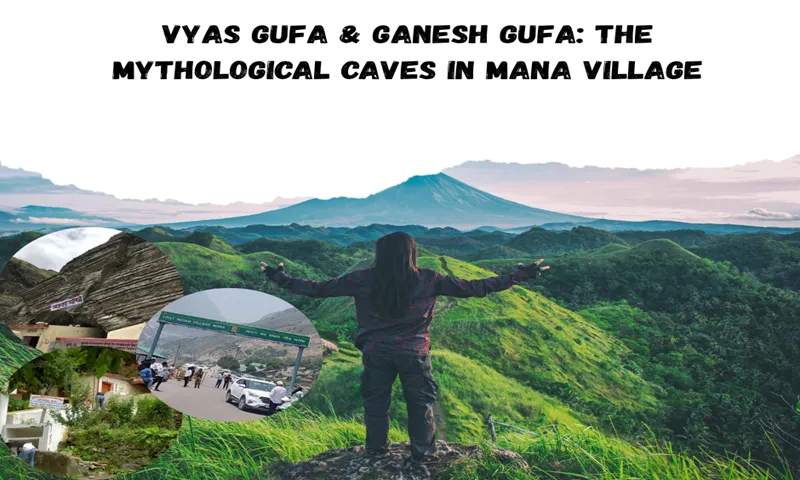
The two mythological caves, Ved Vyas Gufa and Ganesh Gufa, are located in Mana village, the first indian village before the Indo-Tibetan border, near Badrinath in Uttarakhand. These caves are not just natural wonders but sacred sites where the Mahabharata was written. These spiritual spots offer travellers the opportunity to witness the ancient roots of Indian wisdom.
Many pilgrims add Vyas Gufa and Ganesh Gufa in the itinerary of the Badrinath tour package to explore beyond. Visiting these ancient caves felt like witnessing the history of Hinduism. This ancient site offers an incredible experience with a memorable mythology.
Table of Contents
- Introduction
- Where are Vyas Gufa and Ganesh Gufa located?
- Vyas Gufa: Where The Mahabharata Was Composed
- Ganesh Gufa: Where Lord Ganesh Wrote The Epic Mahabharata
- What is the Significance of Vyas Gufa and Ganesha Gufa?
- What is the Connection Between Vyas Gufa and Ganesh Gufa?
- Connection To Mana Village: The First Indian Village
- Other Places To Visit Near Vyas Gufa And Ganesh Gufa
- How To Reach Vyas Gufa And Ganesh Gufa
- Best Time To Visit Vyas Gufa And Ganesh Gufa
- Safety Tips for Visitors
- Conclusion
- FAQs
- Related Guide
Where are Vyas Gufa and Ganesh Gufa located?
| Details | Information |
| Location | In Mana Village near Badrinath in Uttarakhand |
| Altitude | 3,200 meters (10,500 feet) |
| Distance Between Caves | About 100 meters apart |
| Highlights | Saraswati River, Bheem Pul, and First Indian Village |
| Accessibility | Shared jeep/taxi from Badrinath to Mana (3.4 km), then a 220 meters uphill walk to the caves |
Vyas Gufa: Where The Mahabharata Was Composed
According to Hindu legend, Vyas Gufa in Mana Village is a place where Sage Ved Vyasa dictated the epic Mahabharata, along with 18 Puranas and Vedas. Rishi Ved Vyas chose this serene place because of its divine vibrations and environment.
These ancient caves, Vyas Gufa and Ganesh Gufa, are naturally formed and hold great spiritual importance. You can still feel the calmness and the vibration of the scriptures that were created thousands of years ago.
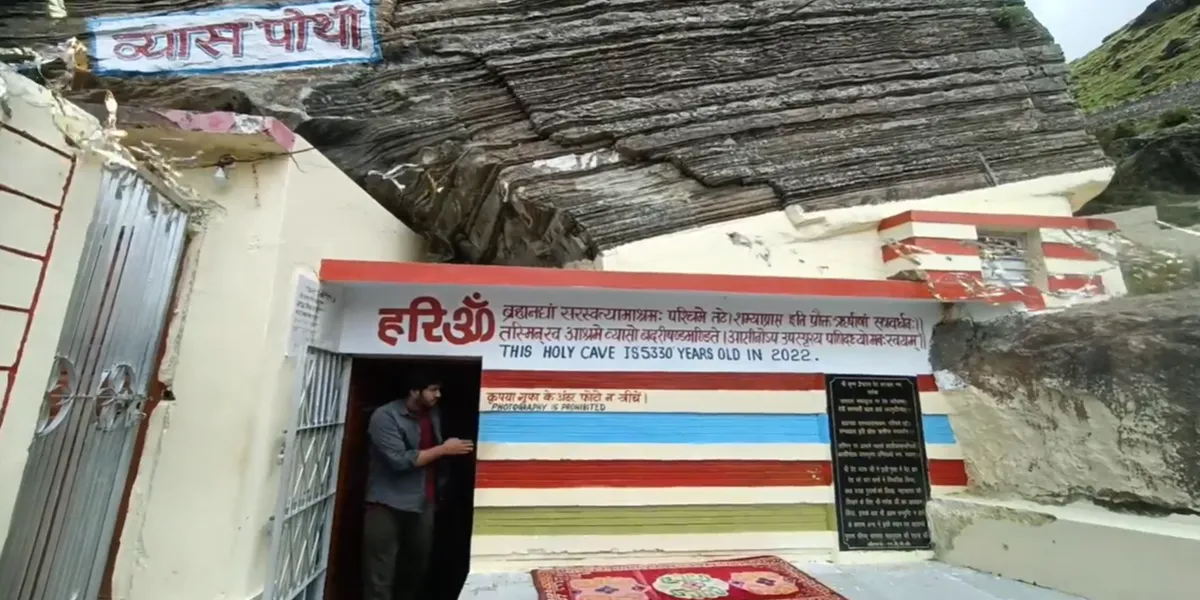
Inside And Outside Look Of The Cave
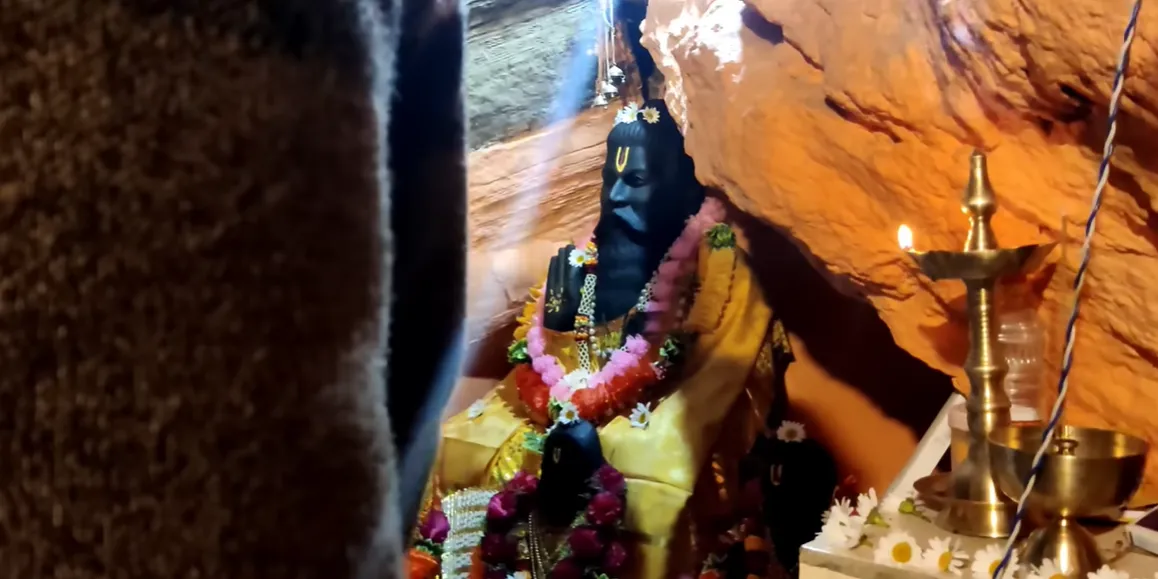
Vyas Gufa Badrinath architecture is primarily a combination of natural cave formation and rock-cut elements. It is decorated with sacred sculptures and inscriptions.
Inside the cave, you will see:
Sage Vyas sanctum
A structure resembling stacked palm-leaf manuscripts
A serene environment with divine vibes, perfect for meditation and self-reflection.
Ganesh Gufa: Where Lord Ganesh Wrote The Epic Mahabharata
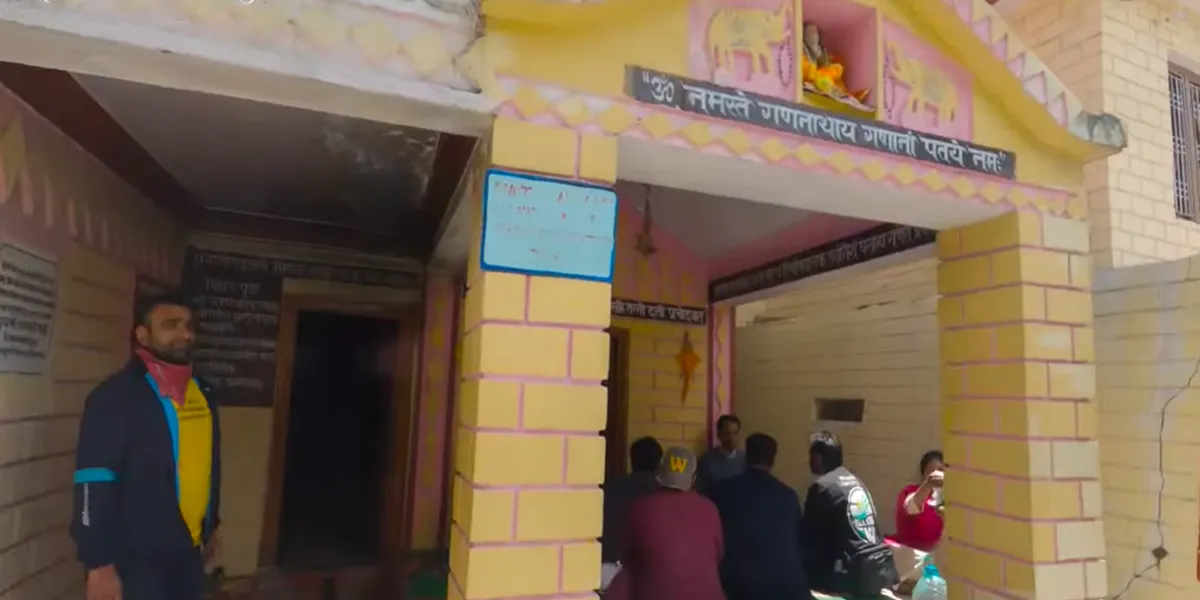
The story of Ganesh Gufa Mana Village is deeply rooted in the Mahabharata; it is the sacred Site where Lord Ganesha scribed the epic Mahabharata, which was dictated by the sage Ved Vyasa at Vyas Gufa.
According to the legend of the Mahabharata, sage Ved Vyasa set out to compose the Mahabharata, a vast and complex text. He needed a capable scribe who could write down the verses as quickly as he dictated them.
He approached Lord Ganesha, the god of wisdom, for this task. Lord Ganesha agreed, but on one condition.
The condition is that Ved Vyas needs to continuously dictate the verses without pausing, and Ved Vyas agrees to the countercondition; the condition is that Lord Ganesha must understand the exact meaning of every verse before writing it down.
Events In the Ganesh Gufa
The process of writing took place in Ganesh Gufa Badrinath, while dictation continued from the Ved Vyas Gufa. The writing of a text proceeded rapidly, but at one point, Lord Ganesha's Pen broke.
To complete the epic, Lord Ganesha broke his own tusk and continued to proceed. The act is a mark of a significant Site for Hindus, and this story signifies that when dedication and great wisdom meet, epics like the Mahabharata are created.
What is the Significance of Vyas Gufa and Ganesha Gufa?
Both Vyas Gufa and Ganesh Gufa holds great spiritual believes and considered the significant Sites for pilgrims visiting Badrinath Temple. Ancient story of Vyas Gufa and Ganesh Gufa describes that, these are the place where Sage Ved Vyas dictated the epic Mahabharata and Lord Ganesha wrote it.
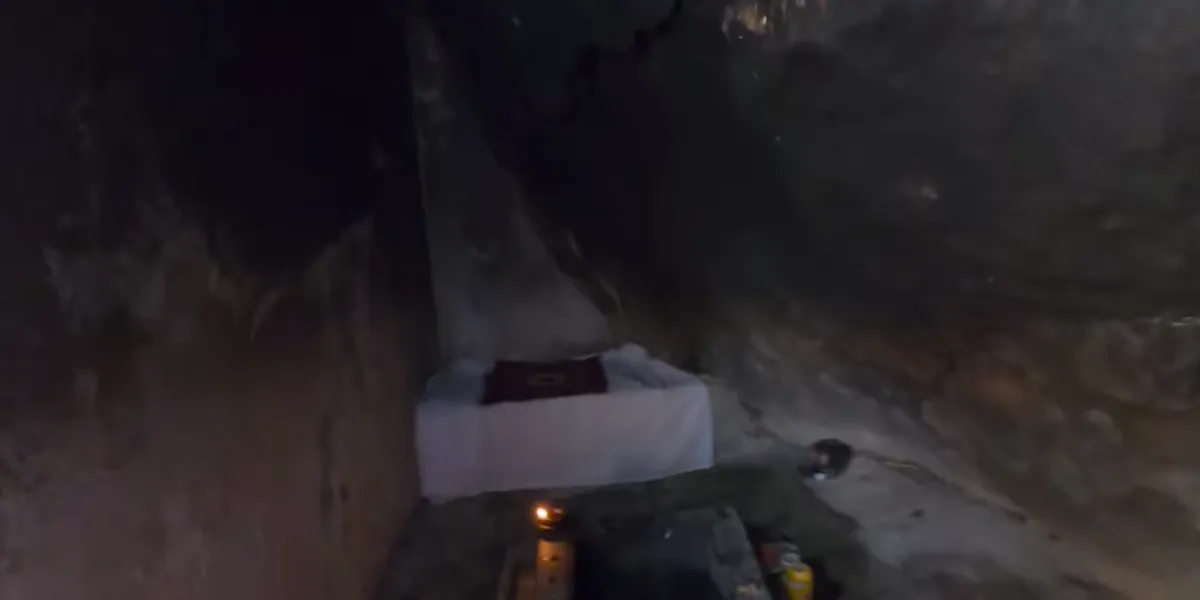
The naturally formed rock formation inside the cave symbolises the wisdom and dedication of Lord Ganesha, and one of the primary significances of the cave is its association with the creation of the Mahabharata, along with 18 Puranas. The small sanctums, idols, Veda Vyasa images, and naturally formed rock carvings mark their significance.
What is the Connection Between Vyas Gufa and Ganesh Gufa?
These two caves, Vyas Gufa and Ganesh Gufa, are connected with the creation of the Mahabharata; one is the place where the sage composed it, and the other is where Lord Ganesh wrote it, making it a Site of spiritual energy.
Both Vyas Gufa and Ganesh Gufa are located adjacent to each other in Mana Village. The distance from Vyas Gufa to Mana village is just 220 meters.
The Ganesh Gufa is located next to the Vyas Gufa, while the distance from Badrinath to Vyas Gufa and Ganesh Gufa is 4.4 km; both are considered part of a single pilgrimage Site.
Connection To Mana Village: The First Indian Village
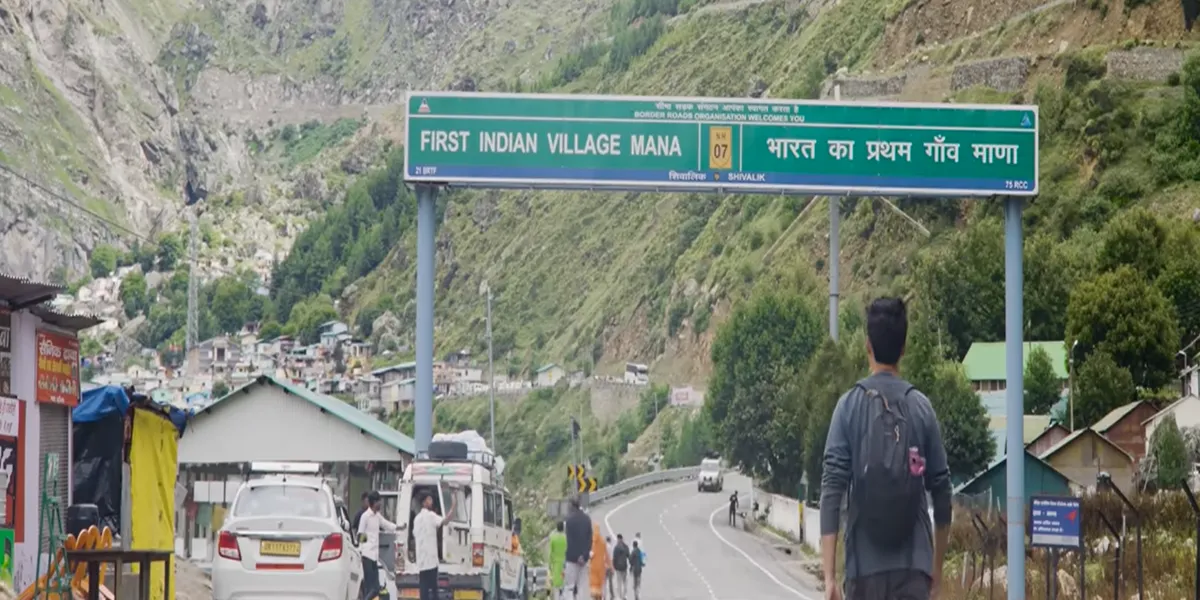
Ved Vyas and Ganesh Gufa are connected as the main attactions of Mana Village. It is a picturesque village located 4.3 km from the Badrinath Temple. The town is situated at an altitude of 3,200 meters (10,500 feet) above sea level and surrounded by the Nar-Narayan mountain ranges.
Source: Mana, Chamoli-Uttarakhand
Travellers visiting Mana Village to experience its unique culture, rich biodiversity, and spiritual importance. And the famous India's first tea shop in Mana village.
Bheem Pul, Saraswati River, the very first indian tea stall, and the famous Ved Vyas Gufa and Ganesh Gufa are the significant highlights of Mana Village near Badrinath.
Also read our blog on "Top 10 Best Places To Visit Near Badrinath"
Other Places To Visit Near Vyas Gufa And Ganesh Gufa
Bheem Pul: A natural stone sacred bridge, associated with great significance, located at a distance of around 1 km from Vyas Cave. According to Hindu legend, the Bheem Pul was built by Bheem (one of the Five Pandavas), as Draupadi (wife of the Pandav brothers) could not cross the Saraswati River on their final journey to heaven. The naturally positioned rock offers scenic views of the Himalayan peaks.
Saraswati River: It is believed that the Mana village is the origin source of the Saraswati River, which flows near the Vyas Gufa and Ganesh Gufa. The natural rock span spanning the river and the surrounding picturesque scenery are the main highlights of the place. The legend of the river states that the river is merging with the Alaknanda in Keshavprayag near the Badrinath temple, making it a significant Site for pilgrims.
Mana Village Viewpoint: When you get to Vyas Gufa and Ganesh Gufa, you will see a glimpse of Mana village along with the Nar-Narayan mountain peaks, providing breathtaking views of the peaks.
Vasudhara Falls: A captivating waterfall of 400 feet, located at a distance of around 7 km from Vyas Cave. Vasudhara is renowned for its stunning natural beauty and significance. It is believed that the water of Vasudhara falls only on virtuous people, which makes it a significant Site for travellers and is known as the mysterious waterfall of India. It is accessible via trek, which starts from the Mana village.
Tap Kund: A natural hot water spring, located just below the Badrinath temple, where pilgrims take a holy dip before entering the temple. It is believed that taking a bath in the Tapt Kund relieves pilgrims from any stress and brings salvation for them.
Badrinath Temple: The abode of Lord Vishnu, part of the Panch Badri and Char Dham pilgrimage circuits. Located in the Chamoli district of Uttarakhand, 4.3 km away from Mana village. The temple sits on the banks of the Alaknanda River at an altitude of 3,133 meters (10,279 feet) above sea level and is surrounded by the Nar-Narayan ranges. Many pilgrims visit Badrinath to seek the divine blessings of Lord Vishnu, as it is associated with the penance of Lord Vishnu.
Source: Badrinath Temple- location, architecture, and shrines
Pandukeshwar: Pandukeshwar, a sacred town located in the Chamoli district of Uttarakhand, is around 13 km away from the Vyas Gufa. It features the ancient temples of Yogdhayan Badri and Vasu Dev and the surrounding Himalayan scenery.
How To Reach Vyas Gufa And Ganesh Gufa
To reach Vyas Gufa and Ganesh Gufa, you must get to Mana Village, as both caves are located in it, near the Badrinath Temple. Mana is the last motorable point in this region, while the nearest airport is Jolly Grant Airport, which is located at a distance of 305 km, and the nearest railway station is Rishikesh, which is 290 km away. Here is a complete guide on how to reach Vyas Cave and Ganesh Cave.
From Mana village, you need to embark on a 220 meters short uphill walk to reach Vyas Gufa Mana. Ganesh Gufa Badrinath is approximately 100 meters away from Vyas Gufa Badrinath.
Accessibility from Haridwar and Rishikesh: Haridwar and Rishikesh are the major transport hubs of Uttarakhand. From there, you can hire a taxi, a cab, or a local bus to reach the Badrinath Temple and take another taxi to reach Mana and then embark on a shuttle walk to get to the caves.
Nearest Airport: The Jolly Grant Airport in Dehradun is the closest airport to these caves, which is around 300 km from Mana Village. Fly to Dehradun airport from your city, and take a bus or taxi to reach Badrinath from Haridwar and Rishikesh.
Nearest Railheads: Haridwar and Rishikesh are the nearest railway stations.
What to expect from this area: Narrow and rocky paths with modest facilities for travellers. Wear light jackets and trekking shoes to protect your feet from rugged terrain.
Best Time To Visit Vyas Gufa And Ganesh Gufa
The best time to visit Vyas Gufa and Ganesh Gufa is to coincide with Mana Village and Badrinath, which are accessible from May to June and September to October, and close during the winter due to harsh weather and heavy snow.
Note: You can also check out our blog on "best time to visit Badrinath"
Here is a brief of the best time to visit so that you can plan your visit accordingly.
Ideal months: May to June and September to October are ideal months to visit, as these months provide favourable weather conditions and excellent accessibility. These months are perfect for sightseeing, cultural exploration, and nature photography.
Summer months (May-June): Plan to visit in the summer, as it provides pleasant weather and mild temperatures after the harsh winter. This is the ideal time for family travellers.
Post-monsoon months (Sep-Oct): Another ideal time to visit after the wet monsoon. The landscapes become lush green and provide clear skies, views, and a serene atmosphere. It is suitable for those who want a quieter experience, like nature lovers and photographers.
Avoid monsoon: During the monsoon season, the entire region experiences heavy rain that leads to landslides and thunderstorms, which affect accessibility. Travelling might be risky at this time.
Winter months (Nov-April): winter receives heavy snow; the entire region is covered with snow. The Badrinath village and Mana Village, including Vyas Cave, Ganesh Cave, and Bheema Pul, become inaccessible during this time.

Safety Tips for Visitors
Pack wisely: Carry essential tems, including a medical kit, light snacks, documents, and reusable water bottles.
Respect the Site: Do not touch the idols, respect the Site, and follow the guidelines.
Warm Clothing: Carry warm clothes, including woollen jackets, gloves, and comfortable shoes.
Start early: Start your trip early if you want to cover all the nearby attrations in Mana village in one day.
Conclusion
Visiting Vyas Gufa and Ganesh Gufa is like witnessing the history and heritage of the Mahabharata, and they are also considered the living storytellers' caves of India's spiritual heritage.
These caves, Vyas Gufa and Ganesh Gufa Badrinath, symbolise the power of devotion, dedication, and wisdom. Nestled at the top of the Himalayas, highlighted by the Saraswati River and Bheem Pul, making it a Site of natural wonders, also providing a serene environment for meditation and self-reflection, and is also perfect for peace seekers and spiritual seekers.
Tips: You can also book Do Dham and Char Dham Yatra package, as they include complete Mana village tour in these packages as sightseeing.
FAQs
Q1. What is the story behind Ganesh Gufa?
The legend of Ganesh Gufa Mana Village said that, when Sage Ved Vyasa decided to compose the Mahabharata, he needed a scribe to write phrases as he spoke. He asked Lord Ganesha (known for his wisdom), and Lord Ganesha agreed and sat down to write the text, making it a significant Site for pilgrims.
Q2. How far are these caves from Badrinath Temple?
Both these caves, Vyas Gufa and Ganesh Gufa, are located about 4.4 km from the Badrinath Temple and are easily accessible by an uphill walk from Mana Village.
Q3. Can we visit both caves, Vyas and Ganesh, on the same day?
Yes, you can visit Vyas Gufa and Ganesh Gufa on the same day, as both are located right next to each other in Mana Village, but it’s a manageable part of the Mana village circuit.
Q4. What is the distance between Badrinath and Vyas Cave?
The distance of Vyas Gufa from the Badrinath temple is approximately 4.4 km, which is accessible by a short motor drive by a shared jeep or taxi, taking 10 to 15 minutes.
Q5. How to reach Vyas Gufa?
You can reach Vyas Gufa by hiring a taxi or a shared jeep to Mana Village from Badrinath, then a short uphill walk of 10 to 12 minutes.
- Distance: 220 meters from Mana Village and 4.4 km from Badrinath
- Travel Time: A 10-12 minutes short walk and 15 minutes drive
- Travel Options: Shared Jeep and Taxi
Q6. What is the story of Vyas Gufa?
Vyas Gufa is associated with a great mythological story linked with Sage Ved Vyasa. Vyas Cave in Mana village is the place where Sage Ved Vyas composed the epic Mahabharata, along with 18 Puranas, and compiled the Vedas.