
Kedarnath Temple history is not only written in ancient scriptures but is also deeply preserved in the beliefs and stories shared by locals and pilgrims. Nestled in the Garhwal Himalayas, Kedarnath Dham is a place where mythology, devotion, and living faith coexist.
Hey! I’m Vaibhav Tripathi, a trekker by profession and a devotee of Lord Shiva by heart. I have visited many sacred places, including Kashi, Triyuginarayan, Trimbakeshwar, Tungnath, and more.
When I visited Kedarnath Dham for the first time in 2018 with a Kedarnath tour package, I spent a long time near the Bheem Shila, the massive rock behind the temple. Locals and fellow pilgrims shared a belief that the size of the Bheem Shila is almost the same as the Kedarnath Temple itself. They also believe it is named after Bhima, one of the Pandavas, who had vowed to protect Lord Shiva’s abode—hence the belief that the Bheem Shila stood guard during the devastating flood.
Hearing these stories and witnessing the temple standing unharmed left a deep impression on me. When I revisited Kedarnath in 2022 and again in 2024, everything remained exactly the same—the temple, the Bheem Shila, and the unwavering faith of devotees.
This curiosity and repeated visits inspired me to explore the ancient history of Kedarnath, the legends of the Kedarnath Shivling, and the mysterious stories that make this sacred place timeless.
About Kedarnath Temple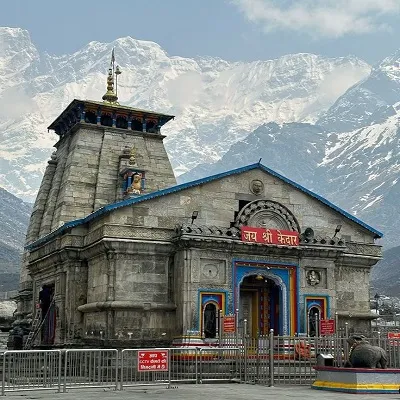
The Kedarnath Temple, dedicated to Lord Shiva, sits at an altitude of 11,755 feet (3,583 meters) above sea level on the banks of the Mandakini River.According to information shared by the Uttarakhand Tourism official website, Kedarnath Temple is one of the most sacred pilgrimage sites of the Char Dham Yatra and holds immense spiritual importance for devotees.
history of Kedarnath temple is a blend of ancient Vedic legends, medieval resilience, and modern resilience. It is a key part of the Panch Kedar shrines and also a significant part of the 12 Jyotirlinga, embodying deep mythological significance as the spot where Lord Shiva appeared in bull form to the Pandavas, who were seeking atonement for killing their kin brothers in the Mahabharata.
It attracts millions of devotees who seek spiritual fulfillment due to the mystery of the Kedarnath Temple history and natural significance. Kedarnath is also considered the most mysterious and powerful shrine due to its connection with the epic Mahabharata, its unique architecture, its extremely high-altitude location, and its self-manifested (Swayambhu) Shivling.
Kedarnath History In Hindu Scriptures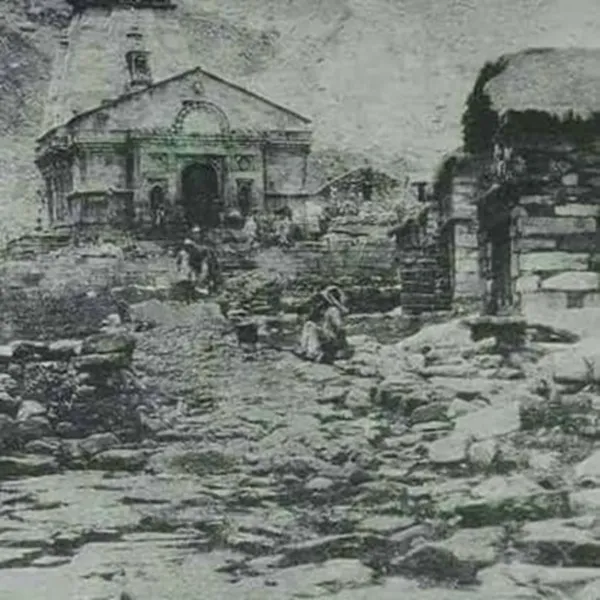
The Kedarnath Dham history in the Hindu Scriptures states that Kedarnath is revered as one of the 12 Jyotirlingas in India and the Panch Kedar Temple.
Kedarnath is referenced in many ancient Hindu scriptures, like the Skanda Purana, the Mahabharata, and the Shiv Purana. The Temple History is explained through two main legends, including the Pandavas and the sage Nar-Narayan.
The Puranas are the primary source to know the Kedarnath Temple history and origin, which mentions the Kedarnath as a sacred pilgrimage (Tirth) site with deep spiritual significance.
1) Skanda Purana Legends: An ancient text named Skanda Purana suggests the name Kedara (Kedarnath), the spot where Lord Shiva, from his matted hair, safeguards humanity. The Text also mentions the Kedarnath history, that the sage Ved Vyasa advised the Pandavas to visit Kedarnath to seek Lord Shiva's forgiveness to atone for the sins of killing their kin.
2) Shiv Purana: This text describes the Kedarnath history and legends of the twin sages Nar and Narayana (twin incarnations of Lord Vishnu), who performed severe penance at Badrikashram Shetra for many years. They worshipped a Shivlingam made with stone daily, and after being pleased by their devotion, Lord Shiva appeared to bless them.
Other Texts: The Vayu Purana accounts the Kedarnath shrine history that Lord Vishnu requested Lord Shiva to shift to Kedarnath from Badrinath, establishing the site as Lord Shiva’s permanent abode. The Kurma Purana emphasizes that the pilgrims who visit Kedarnath absolve all their sins and grant salvation for them, making it a site of “crop of Liberation”.
While ancient Hindu scriptures provide the mythological foundation of Kedarnath Dham, the historical and architectural authenticity of the temple is supported by records maintained by the Archaeological Survey of India (ASI). According to ASI, the present stone structure of Kedarnath Temple dates back to the early medieval period and reflects remarkable stone craftsmanship suitable for extreme Himalayan conditions.
Kedarnath Jyotirlinga History 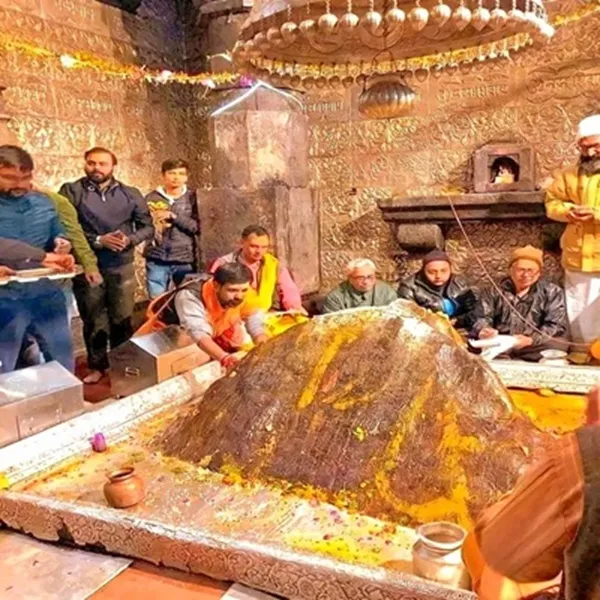
The Kedarnath Jyotirlinga history holds that it is the highest Jyotirlinga among the 12 Jyotirlingas in India, representing Lord Shiva’s Infinite presence. History about Kedarnath Temple Jyotirlinga is associated with the legends of Nar-Narayana Penance. Due to its self-manifested pillar of light as a linga (stone), the site is considered a Jyotirlinga.
According to the Kedarnath Temple history and legend of the Skanda Purana, the twin sages Nar and Narayana performed intense penance in the Himalayas and worshipped Lord Shiva as a shivling made with massive stone for many years. After being pleased by their devotion, Lord Shiva appeared as a pillar of Light and, upon their request, Lord Shiva resided permanently at Kedarnath as the Kedareshwara Jyotirlinga in the Kedar mountain region for the welfare of Humanity.
The Mahabharata's legends state that after the war of the Mahabharata, the Pandavas sought Lord Shiva's forgiveness to atone for the sins of killing their kinsmen. Shiva hides himself to avoid them, but after being pleased by his devotion, Lord Shiva manifests himself as a triangular and conical Jyotirlinga.
Kedarnath Jyotirlinga is different from other Jyotirlingas due to its high-altitude location in the Himalayas (only accessible seasonally from May to October) and unique Shivlinga, featuring conical and pyramidical rock formations.
While other Jyotirlinga representations of Lord Shiva's cosmic energy, Kedarnath is a naturally formed lingam, with a unique bull-shaped form, which connects to the Panch Kedar legends.
Kedarnath Shivling Story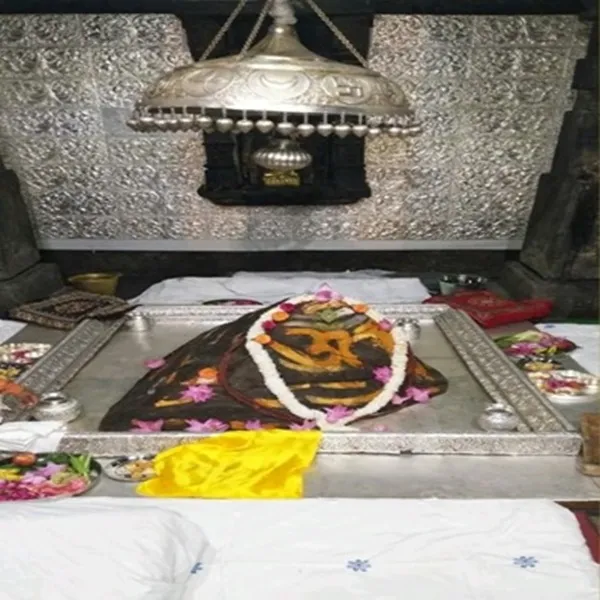
The Kedarnath Shivling story aligned with the legends of the Pandavas, who performed penance to atone for the sins of killing their kinsmen.
Lord Shiva hid in the form of a bull, and Bheem caught the hump of the bull, from where Lord Shiva appeared as a triangular Shivlinga and gave darshan to the Pandavas, also freeing them from their sins.
Why Lord Shiva Hid From The Pandavas?
According to the legend of the Pandavas, which is linked with the foundation of the Kedarnath temple. After the Kurukshetra war, the Pandav brothers were seeking forgiveness from Lord Shiva to atone for the sins of killing Brahmins and Kinsmen (Gotra-Hatya).
But Lord Shiva was very displeased by them and not ready to forgive them easily; that’s why Lord Shiva hid from the Pandavas. Lord Shiva took the form of a bull (Nandi) and disappeared in the Himalayas. The Pandavas chased him, and one of them, named Bhima, recognized him as a bull. Bhima tried to catch the bull, but it dove into the earth and left only its hump.
The rest of Lord Shiva's body appeared at four other locations, forming the Panch Kedar shrines. Being pleased by the Pandavas' devotion and determination, Lord Shiva eventually forgave them, freeing them from their sins and blessed him at Kedarnath.
Formation Of The Kedarnath Shivling Story
The Formation of the Kedarnath Shivlinga Story centers on Lord Shiva eluding the Pandavas after the Mahabharata War. When Lord Shiva transformed himself bull and dived into the earth. But Bhima grabbed his hump, and the hump got established in the form of Shivlinga at Kedarnath. Lately, the bull's body parts reappeared at five different locations, known as the “Panch Kedar,” including—
Hump at Kedarnath Temple (first Kedar)
Arms at Tungnath Temple (second Kedar)
Face at Rudranath Temple (third Kedar)
Navel at Madhyamaheshwar (fourth Kedar)
Hair at Kalpeshwar Temple (fifth and final Kedar)
Form of Kedarnath Shivlinga: The Kedarnath Shivlinga is naturally formed in a triangular shape, which is considered to be similar to the back of the Bull, and holds immense spiritual significance, representing the different forms of Lord Shiva and representing his cosmic energy.
Kedarnath Stone Story
The term “Kedarnath Stone Story” refers to the mysterious accounts of Bhim Shilla (a massive boulder), and it also highlights the miraculous architecture built with mortal stone blocks with iron clamps.
The history holds that the temple was built by the Pandavas and revived by Sage Adi Shankaracharya, using ancient techniques such as dry stone masonry and a strategic foundation to protect from natural disasters.
The ancient history of Kedarnath holds that it was built using massive stone slabs that are interlocked without mortar or cement. This structure allows it to absorb seismic shocks and to withstand natural disasters.
Comparison With Other Himalayan Stone Temples
Unlike most Himalayan temples, the deity is represented by a traditional Shivlinga or murti, but at Kedarnath, the deity is an irregular, pyramid-shaped granite rock. Many high-altitude shrines face east, which aligns with the rising sun, while Kedarnath Temple is oriented in North-South, which protects the site from Northern Glacial forces. Most temples feature simple, natural rock formations, while Kedarnath features stone constructions that stand out as significant within the challenging terrain.
Why Locals Believe That The Divine Energy Placed The Stones?
Local beliefs about the Kedarnath Temple emphasize that divine energy is placed by the stones at Kedarnath, as the temple has survived for centuries, including the glacial age, showcasing the site in its design to handle extreme natural forces.
The flood in 2013 famously demonstrated the temple’s endurance because a massive stone boulder named Bheem Shila rolled down and protected the shrine, leading devotees to call it “Divine Rock.”
Kedarnath Temple Architecture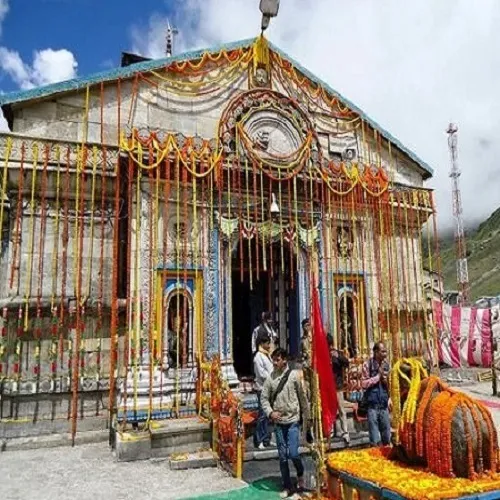
Kedarnath temple’s architecture represents the ancient, unique North Indian Nagara style, featuring interlocking stone slabs without mortar, which showcases its resilience in its high altitude and extreme Himalayan conditions.
The structure of the temple is adorned by the mythological carvings and a large Nandi Statue Outside, making it a durable marvel of indigenous engineering.
Ancient Architecture Techniques
Structure and Material: The temple is built on a raised stone plinth. It uses largely gray stone slabs that perfectly interlock with the help of iron clamps. This structure allows it to absorb seismic shocks and to withstand natural disasters. This ancient technique, known as Dry Masonry, represents the Katyuri-Pandava architectural style.
Orientation and Foundation: The Kedarnath Temple is oriented in North-South, unlike most Himalayan temples that face east. This alignment protects the site from Northern Glacial forces.
Design: The overall temple features two main temples.
Garbhagriha (main sanctum): The inner sanctum is built in a pyramidal structure with a tall shikhara, where the rock form Shivlinga is housed.
Saba Madap: An Assembly hall, decorated with mythological carvings, where priests and pilgrims gather.
They both structure (mandap and sanctum), have a sloping roof, which is designed to shed heavy snowfall and ensure stability in the mountainous region.
A statue of Nandi (Shiva’s vehicle) outside the temple and various statues of deities like Krishna, Pandavas, Draupadi, etc., in the Mandap hall are the main features.
Who Built Kedarnath Temple?
The construction of Kedarnath Temple is deeply rooted in Hindu legend, attributed to the theories of its original construction by the Pandavas in the Dwapar Yug and the present structure credited to the 8th-century Philosopher Adi Shankaracharya, who revived the shrine along with the Char Dham pilgrimage circuits.
Role Of Pandavas:
Legend states that, originally, the Kedarnath temple was built by the Pandavas after the Kurukshetra war, who were seeking to atone for their sins. The hump of a bull appeared at Kedarnath, and the Pandavas built the first shrine there.
Pandavas' Grandson, named King Janmejaya, is also credited with the construction of the temple and opening it for the public.
History About Kedarnath Temple Trek Route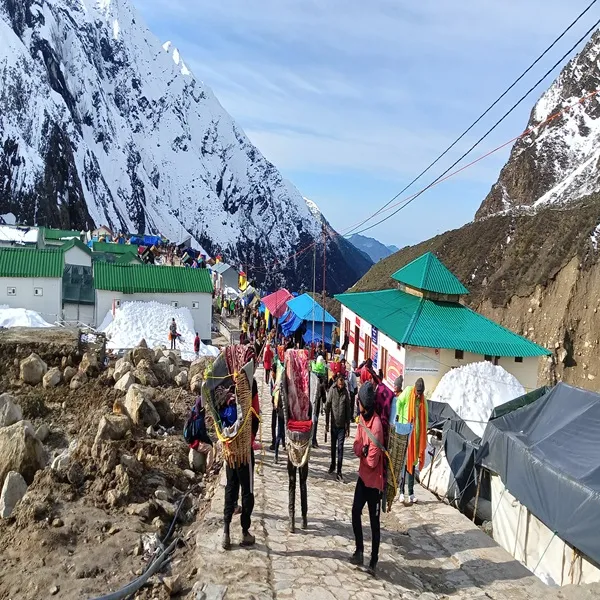
Ancient Kedarnath Trek Route
The ancient pilgrimage route, followed by many sages and pilgrims, to the Kedarnath temple starts from Gaurikund and, covering a distance of around 14 km, passes via the town of Rambara. This route has used for centuries till the incident of the devastating Kedarnath flood 2013.
Traditional Trek Route: It is a well-established and easier route to the temple, which is approximately 14 km long, beginning from Gaurikund, and passes via a developed area with numerous shops and resting points. The major stop points of this route include:
Gaurikund: The last motorable point and starting point of the trek, widely known for its sacred hot water spring, where pilgrims would take baths.
Ramabara: A mid-way village, serving as a major resting point for the pilgrims. This path was destroyed in the Kedarnath flood 2013, especially the area around Rambara.
Modern Trek Route To Kedarnath
After the Kedarnath flood 2013, the trek route was realigned by the Nehru Institute of Mountaineering (NIM). The modern Kedarnath trek route increased the distance to 16 km and also starts from Gaurikund Uttarakhand. This new path is paved and featured via improved facilities along the way.
This route follows the major points:
Gaurikund to Jungle Chatti: 4 km
Jungle Chatti to Bheembali: 3 km
Bheembali to Linchauli: 4 km
Linchauli to Kedarnath base camp: 4 km
Base camp to Kedarnath temple: approx. 1 km
Note: For those seeking an alternative, there is a more challenging but less traveled route, named the Mandakini valley trek route, which starts from Ransi village and requires mountaineering expertise.
Kedarnath Flood 2013 Death: Tragedy That Shook India
Kedarnath Flood Date & Causes
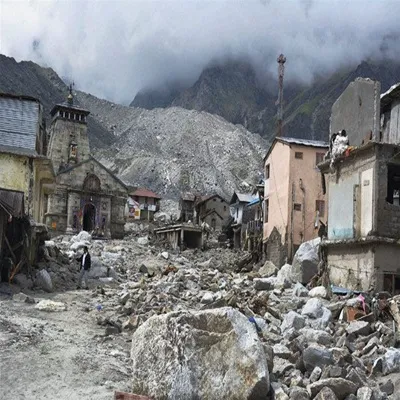
Kedarnath Flood Date:
The devastating Kedarnath flood occurred on 16-17 June 2013. On 16 June at 7:30 p.m., an initial landslide and mudslide occurred near the Kedarnath temple due to heavy rainfall.
After that, a massive volume of water from the Chorabari lake flowed out to the Mandakini River, destroying structures in its Path. On 17th June 2013, around 6:30 a.m. in the morning, a second and more powerful wave of water and silt cascades from the Chorabari Lake and Saraswati River.
Kedarnath Flood Causes:
The Kedarnath flood was caused by a combination of cloudburst, prolonged rainfall, and glacial burst, which is triggered by landslides and unleashes a devastating torrent of water and mud down the Mandakini valley.
This natural event is also worsened by unregulated construction, deforestation, and inadequate infrastructure, which leads to loss of life and immense destruction.
Kedarnath Flood Story: Night Of Destruction
The Kedarnath flood story remains one of the most catastrophic disasters in Uttarakhand, India, triggered by a massive cloudburst, glacial melt, and heavy rainfall.
The main consequences of the Kedarnath flood include severe economic loss, ecological damage, loss of life, and lasting trauma for survivors. It is also leading to calls for better disaster management and sustainable development.
Breakdown of the main causes of the Kedarnath flood 2013:
Loss of Life: Thousands of humans and animals died in this devastating flood, and many were rescued during the operation.
Infrastructure devastation: Over 2,000 bridges, homes, and towns, like Rambara, were destroyed across the affected areas.
Economic and Ecological Loss: This flood affects the whole economy, tourism, and the region. Destruction of forests and land degradation also caused.
Health crisis: Continuous water led to outbreaks of fever and diarrhea in this region.
How Many People Died in the Kedarnath Flood?
The Kedarnath flood 2013 resulted in the deaths of over 6,000 people in flash floods and landslides, and many of the bodies were never recovered due to immense devastation.
Thousands of people were abandoned, a massive operation involving over 100,000 people from the affected valleys, many of whom were declared presumed dead for compensation.
Kedarnath Flood Shiva Statue & Divine Protection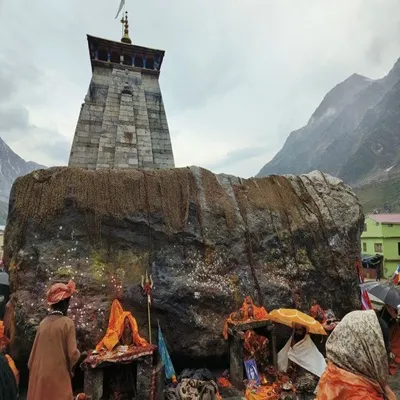
During the 2013 North India floods, Kedarnath temple gained popularity due to the stories of divine protection. Well, the surrounding town and valley were largely destroyed, but the main 8th-century temple was still standing.
Bheem Shilla: The Divine Protection
A massive rock, known as “Bheem Shila,” is credited by the devotees and eyewitnesses for saving the shrine. On the flood day (16 June 2013), a 20-foot-wide and 12-foot-tall massive rock rolled down and settled exactly behind the temple.
This boulder acted as a natural barrier, splitting the raging water into two streams that flowed around the side of the temple instead of crashing into it.
Now, pilgrims worshipped the Bheem Shilla as a sacred object, believed to be sent by Lord Shiva to protect the site.
Post-Flood Reconstruction & Modern Kedarnath
Post-flood reconstruction of Kedarnath involved extensive work on the temple complex, critical infrastructure, and flood defenses. Some reconstruction involves building protection walls, widening pathways, constructing new bridges, residences of priests, and modern infrastructure, including hospitals and communication centers.
Temple corridor development: The Uttarakhand Government takes a step towards temple corridor development, such as widening of the temple complex, creation of stone paved walkways, and Ghats on the Mandakini river valley.
Improved safety and infrastructure: For flood protection, a three-layered wall protection and retaining of the walls along rivers to divert floodwaters and stabilize slopes.
Upcoming plan: construction of new bridges, including Garud Chatti; pilgrim facilities (shelters and Hospitals), and tirth residences. Focusing on keeping the temple area clean and aimed at creating a disaster resilience zone.
Spiritual Importance Of Kedarnath History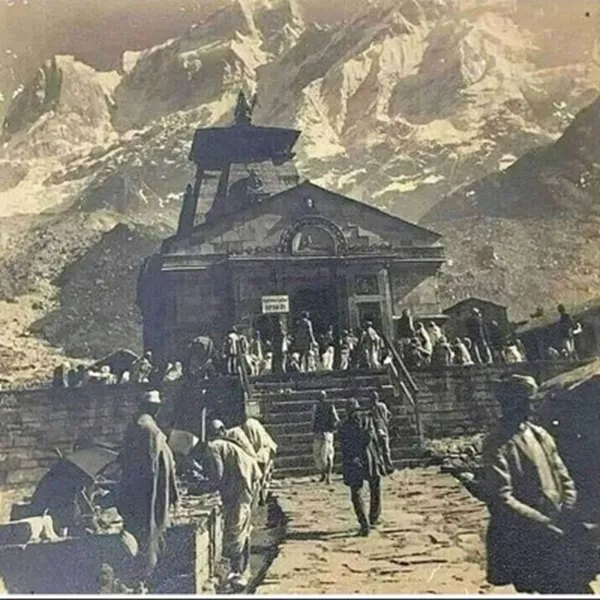
The Kedarnath Temple history and spiritual importance lie in its mythological and spiritual significance; it is believed to cleanse the sins of visitors and bring salvation (Moksha) for them, as the site is a crucial part of the sacred Char Dham Yatra.
The site is also known for its stunning and majestic Himalayan setting, surrounded by snow-capped Himalayan landscapes, where nature meets divinity, making it a revered pilgrimage place of liberation and spiritual upliftment.
It is the first of the Panch Kedar, one of the powerful twelve Jyotirlingas, and an integral part of the Do Dham and Char Dham spiritual circuits, representing the cosmic energy of lord shiva.
Thus, the journey to Kedarnath is considered a transformative pilgrimage, which teaches the lessons of humility, courage, peace, faith, and endurance, renewing its connection to life’s purpose.
Its importance lies in its great devotion to Lord Shiva, holding immense significance for Shaivatess and serving as a site of spiritual enlightenment to Yogis and Sages.
Lesser-Known Facts About Kedarnath Temple
The temple does not just hold significance for spiritual importance, but it is also surrounded by numerous mysteries. Some lesser-known facts about the Kedarnath temple are—
Glacial Survival architecture: The temple survived being buried under a glacier for over 400 years. The yellowish line on the exterior walls is a mark of where the glacier moved over the stone.
2013 Flood Survival: A massive boulder, Bhim Shilla, rolled down and wedged itself behind the temple during the devastating flood in 2013, diverting the floodwater from the main shrine.
Priestly Traditions: The head priest, often called “Rawal,” belongs to the Veershaiva community of Karnataka. Rituals at the shrine are performed in the Kannada language, which has been a tradition for centuries.
Eternal Flame: Despite the temple being closed for six months in winter due to heavy snow, an Akhand Jyoti inside the temple remains lit until the gate reopens in summer.
Winter Pilgrimage: During the winter period, the deity moves to his winter abode in Omkareshwar temple in Ukhimath, where worship continues, maintained by the Rawal head priest.
Final Thoughts On Kedarnath Temple History
The Kedarnath temple history is not just a story and legends about the past; it is a symbol of eternal faith, devotion, and divine resilience. From the origin of the shrine, linked with the Pandavas, and its revival by Adi Shankaracharya.
Today, the Kedarnath history of Kedarnath temple stands as a Powerful symbol of destruction and rebirth. For Devotees, Kedarnath is not just a destination but a sacred experience or a journey of surrender and spiritual awakening.
FAQs Related To Kedarnath Temple History
What is the real story of Kedarnath?
The Kedarnath Temple history defines the real story of Kedarnath as a blend of several myths and unique incidents. Kedarnath is a sacred pilgrimage site dedicated to Lord Shiva, built by the Pandavas, who sought atonement for killing their kin during the Kurukshetra war. A mysterious story about the temple, which survived the devastating Kedarnath flood 2013, solidified its legend.
What is the story of Shivling in Kedarnath?
The story of Kedarnath, a shivalinga rooted in Mahabharata legends. This account describes the origin of the Kedarnath Shivlinga. According to mythology, after the Kurukshetra war, the Pandav brothers sought atonement for the sins of killing their kinsmen. But Lord Shiva was not ready to forgive them easily; he took the form of a bull and hid himself in the Himalayas. The Pandavas found Lord Shiva. Bheema tried to catch the bull, but the bull dived into the earth and left only his hump, which later became a naturally formed shivling worshipped Today.
Was Kedarnath buried for 400 years?
Yes, many geologists and archaeologists claim that the Kedarnath temple was buried under the snow for over 400 years, from 1300 to 1900 AD, and survived due to its strong architecture. The yellowish stone marks are evidence.
What is special about the Kedarnath temple?
The specialty of the Kedarnath temple includes a unique pyramidical, naturally formed Shivlinga; ancient Nagara-style architecture; and its significance as a key part of Char Dham Yatra, believed to bring salvation for pilgrims.
Why is the Kedarnath Temple not damaged?
The factors behind the survival of the Kedarnath temple are the Bheem Shilla builder, strong ancient architecture, and divine intervention. Kedarnath Temple history and legends believe that Lord Shiva sent the Bheem Shila (giant rock) to protect the temple because Bheema (Pandavas' brother) pledged to protect this sacred site forever.
Which body part of Shiva is in Kedarnath?
The part of Lord Shiva's body worshipped in Kedarnath is the hump of a bull (nandi), which he took the form of to hide himself from the Pandavas, which is naturally manifested as a canonical shivlinga after merging into the earth and marks the formation of the first of the Panch Kedar shrines.
Who built the Kedarnath Shivling?
Temple history holds that the Kedarnath shivling believe to be naturally formed, featuring a canonical and triangular shape. While the temple was originally built by the Pandavas and later, in the 8th century, was reconstructed by Adi Shankaracharya, who made it a major pilgrimage site.
What is the significance of Kedarnath Shivlinga?
The Significance of the Kedarnath Shivlinga lies in its self-manifested presence as an irregular and canonical form, different from other temples, like symmetrical shivlings. It is highly believed that he appeared in this form to directly bless his devotees.