About Kalimath Temple
Kalimath Temple in Uttarakhand is located at an altitude of 6,000 feet above sea level in the lap of the Himalayas, on the banks of the Saraswati River in the Rudraprayag district.
The temple is dedicated to Maa Kali, the fierce and powerful form of Maa Durga, and is considered one of the 108 Shakti Peethas in India. Although it is not as popular as other temples included in the Do Dham and Char Dham Yatra circuit of Uttarakhand, Kalimath holds deep cultural and spiritual significance, symbolising power and strength.
Devotees from across the country and abroad, especially those visiting Ukhimath for the Kedarnath trip or the Do Dham Yatra, often include Kalimath Temple in their itinerary to seek Maa Kali’s blessings for strength, protection, and spiritual progress
Kalimath Temple Location
Kalimath Temple is located in the Rudraprayag district of Uttarakhand, close to Guptkashi and Ukhimath, and on the main route to Kedarnath Temple. The shrine is situated at an altitude of 1,800 meters (6,000 feet) above sea level on the banks of the sacred Saraswati River, surrounded by the snow-capped Himalayan peaks near Kedarnath.
Location Details:
State: Uttarakhand, India
District: Rudraprayag
Altitude: 1,800 meters (6,000 feet)
Nearest Railway Station: Haridwar and Rishikesh
Nearest Airport: Jolly Grant Airport, Dehradun
Mythological Significance Of Kalimath Temple
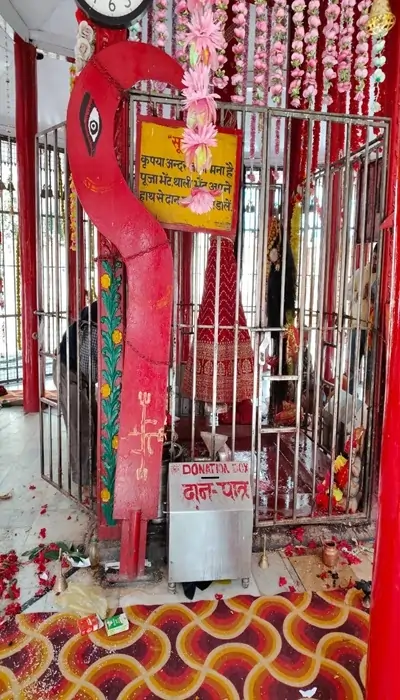
The Kalimath Temple in Uttarakhand holds deep mythological and spiritual significance, especially in relation to Goddess Kali and her role in Hindu cosmology. Located in the serene hills of the Rudraprayag district, this sacred shrine is believed to be the divine abode of the fierce and powerful form of Maa Kali.
Kalimath is associated with the cosmic cycle of creation, preservation, and destruction, where Goddess Kali symbolises transformation and the removal of negative forces. The temple’s history and mythology are rooted in ancient Hindu scriptures and local legends, giving it immense spiritual importance among devotees.
The mythology surrounding Shri Kali Mata Temple at Kalimath continues to attract pilgrims seeking protection, strength, and spiritual awakening. Below are the main mythological beliefs and stories associated with Kalimath Temple in Uttarakhand.
The Story of Goddess Kali and Raktabija
According to Hindu mythology, Raktabija was a powerful demon who had received a boon from Lord Brahma that allowed him to regenerate from every drop of blood that fell from his body. This made him nearly invincible in battle, as each wound created new demons of equal strength.
To defeat Raktabija, Kali adopted a unique strategy. She drank every drop of the demon’s blood before it could touch the ground, preventing him from regenerating. After a fierce battle, Maa Kali ultimately destroyed Raktabija and restored cosmic balance.
It is believed that the sacred land where this divine battle took place is now marked by Kalimath Temple in Uttarakhand, making it a spiritually significant site for devotees. This story symbolises the victory of good over evil and represents Goddess Kali’s power to eliminate negative forces and protect the universe.
Transformation of Maa Kali as the Goddess
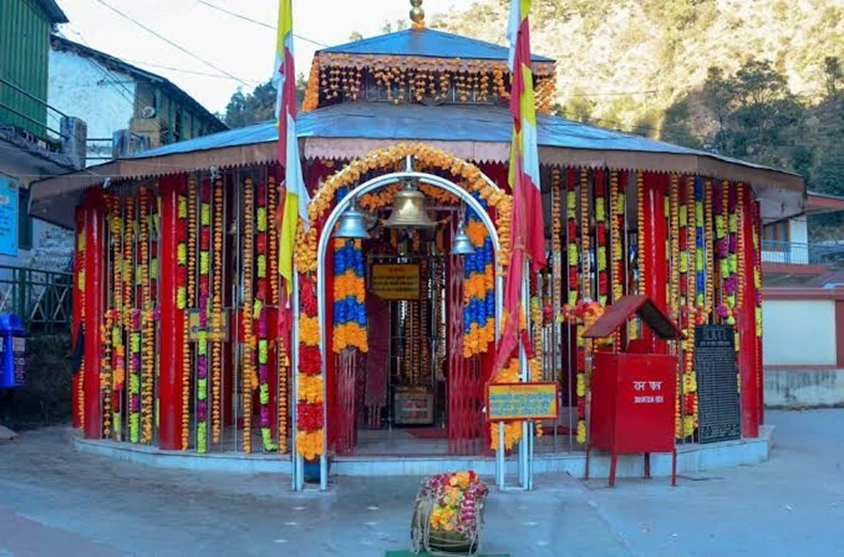
In Hindu mythology, Maa Kali is often depicted as a dark and powerful goddess, with wild hair, a garland of skulls, and a blood-dripping tongue. Although her appearance may seem fierce, she represents the deeper principle of transformation and renewal.
Maa Kali is not merely a destroyer; she is a divine force who dissolves the old to make way for the new. This dual role of destruction and creation reflects the eternal cycle of life and death that forms the foundation of Hindu philosophy.
At Kalimath Temple in Uttarakhand, Goddess Kali is worshipped as a spiritual destroyer — one who removes ego, ignorance, and negative attachments that lead to suffering. Devotees visit this sacred shrine seeking moksha (liberation), inner strength, and freedom from personal hardships.
Pilgrims believe that offering prayers at Kalimath brings divine protection and the blessings needed to overcome life’s challenges. Surrounded by the serene Garhwal hills, the temple’s natural setting is also believed to amplify the transformative energy of Maa Kali, making it a powerful centre for meditation and spiritual purification.
Kalimath: Place Of Divine Intervention
Kalimath Temple in Uttarakhand is not only a place of worship but also a site of deep mythological importance. Located amidst the natural beauty of the Himalayas, the temple is believed to mark the spot of a divine manifestation where the cosmic energy of Goddess Kali was concentrated.
According to local legends, Kalimath is considered one of the Siddh Peeths, meaning a sacred place filled with spiritual power where the presence of the goddess is eternal. The purity and serenity of the surrounding Himalayan landscape are believed to enhance Maa Kali’s divine energy, making the area ideal for worship, meditation, and spiritual practices.
Mythology suggests that Goddess Kali chose this sacred location because of its proximity to other holy sites and its role as a spiritual gateway in the Garhwal region. As a result, Kalimath Temple continues to serve as a powerful spiritual centre where devotees seek protection, inner strength, and solace during difficult times.
The Connection To Lord Shiva
In Hindu mythology, Goddess Kali is closely associated with Lord Shiva, who is often regarded as her consort. The relationship between Kali and Shiva symbolises the balance between destruction and creation, two essential forces that sustain the universe.
One popular legend linked to Kalimath Temple in Uttarakhand describes how Lord Shiva lay down on the ground while Maa Kali performed a fierce dance after defeating the demon Raktabija. In her intense state of divine fury, Kali’s energy became uncontrollable, and she began destroying everything in her path.
To calm her, Lord Shiva positioned himself beneath her. When Kali unknowingly stepped on Shiva, she immediately realised her excess and calmed down, acknowledging his tranquil presence. This powerful episode represents the harmony between destructive energy and divine consciousness.
At Kalimath Temple, this symbolism reinforces the belief that Goddess Kali’s power works in unity with Lord Shiva. Together, they represent the dual forces of masculine and feminine energy, creation and destruction, and passive and active principles — maintaining cosmic balance and spiritual harmony.
Connection With Other Sacred Sites
Kalimath Temple in Uttarakhand is part of a spiritually significant region in the Garhwal Himalayas, known for its network of ancient temples and pilgrimage routes. The shrine is often considered a part of a broader sacred circuit that connects several important places of worship in this region.
The surrounding area is home to many temples dedicated to Lord Shiva and Lord Vishnu, both of whom hold central roles in the mythology and spiritual traditions of Uttarakhand. This interconnected presence of deities enhances the religious importance of Kalimath among pilgrims.
Kalimath shares a strong mythological and geographical connection with prominent holy sites such as Kedarnath, Badrinath, and Omkar Mandhata. Many devotees include Kalimath Temple in their itinerary while visiting these sacred destinations.
It is believed that the divine energy of Goddess Kali at Kalimath harmoniously aligns with the spiritual powers of nearby temples, creating a unified pilgrimage experience for devotees travelling through the Garhwal region.
Kalimath Distance Chart
Kalimath Temple in Uttarakhand is well connected to several important pilgrimage destinations in the Garhwal region. Its location near Kedarnath and Ukhimath makes it a convenient spiritual stop for devotees travelling through Rudraprayag district.
Here are the approximate distances from Kalimath to major nearby locations:
- Kalimath to Kedarnath: ~57 km
- Kalimath to Guptkashi: ~22 km
- Kalimath to Ukhimath: ~17 km
- Kalimath to Triyuginarayan: ~56 km
- Kalimath to Chopta: ~61 km
- Delhi to Kalimath: ~445 km
These distances may vary slightly depending on the route and road conditions.
For a detailed breakdown of routes, travel time, and connectivity, you can refer to our complete Kalimath Distance Chart Guide, where we explain road routes, driving time, and travel tips in detail.

Kalimath to Kedarnath Distance & Travel Time
Delhi to Kalimath Distance & Route Guide
Places To Visit Near Kalimath Temple
Kedarnath Temple (Approx. 54–57 km)
One of the 12 Jyotirlingas, part of the Panch Kedar, Chota Char Dham Yatra, and Do Dham Yatra, Kedarnath Temple is among the most sacred Shiva temples in India. Located about 54 kilometres from Kalimath, it attracts millions of pilgrims every year who seek the blessings of Lord Shiva.
Many travellers visiting Kedarnath also include Kalimath Temple in their itinerary due to its close proximity and spiritual importance.
Triyuginarayan Temple (Approx. 56 km)
Triyuginarayan Temple is believed to be the divine Shiv Parvati marriage place. Located just 56 km from Kalimath Temple, this sacred shrine is famous for its Akhand Dhuni (eternal flame), which has been burning continuously for centuries.
According to holy scriptures, Maa Parvati performed intense penance at Gaurikund to win Lord Shiva as her husband. Their divine marriage took place at Triyuginarayan Temple in the presence of other deities, making it a spiritually significant destination for devotees.
Dhari Devi Temple (Approx. 63 km)
Dhari Devi Temple is another highly revered shrine in Uttarakhand, located around 63 km from Kalimath. As per mythological belief, the upper body part of Maa Kali worshipped at Kalimath is also associated with Dhari Devi Temple.
Situated in the middle of the Alaknanda River, this temple is believed to protect the region and regulate the river’s water levels. The deity is uniquely worshipped in three forms during the day — as a child in the morning, a young woman in the afternoon, and an elderly lady in the evening.
Since it lies on the Char Dham Yatra route, many pilgrims include Dhari Devi Temple while visiting Kalimath.
Valley of Flowers
If you are travelling between June and August, the Valley of Flowers trek is a must-visit destination. Recognised as a UNESCO World Heritage Site, the valley blooms with thousands of colourful wildflowers during the monsoon season.
Nearby, Hemkund Sahib — one of the highest Gurudwaras in the world — is located just a few kilometres from the Valley of Flowers and is a significant pilgrimage site for Sikh devotees.
Auli
Known as a winter wonderland and a paradise for skiing lovers, Auli is one of the most popular hill stations in Uttarakhand. Snow-covered slopes and dense forests create breathtaking Himalayan views.
If you have extra time during your visit to Kalimath Temple, you can extend your journey to Auli. While there, you can also explore the Narsingh Temple located in Joshimath, about 8 km from Auli.
Tungnath Temple & Chopta Tungnath Trek (Approx. 61 km)
Tungnath Temple is considered one of the highest Shiva temples in the world and forms an important part of the Panch Kedar circuit. Located approximately 61 km from Kalimath, it is accessible via the famous Chopta Tungnath Trek.
This destination is ideal for both pilgrimage and adventure seekers, offering spiritual significance along with scenic trekking trails in the Himalayas.
How To Reach Kalimath Temple
Kalimath Temple is located in the Rudraprayag district of Uttarakhand, surrounded by scenic Himalayan landscapes. While Maa Kali is worshipped across India, at Kalimath she is revered as the divine protector of the Char Dham temples.
Reaching Kalimath involves travelling through some of the most beautiful routes in Uttarakhand. Below is a detailed guide on how to reach Kalimath Temple by air, train, and road.
By Air
The nearest airport to Kalimath Temple is Jolly Grant Airport, Dehradun, located approximately 221 km away.
Note: If you are not getting a direct flight to Dehradun airport or travelling from somewhere outside India, then you can also take a flight to IGI, New Delhi.
By Train
- Haridwar
- Rishikesh
- Dehradun
- Roorkee
By Road

Best Time to Visit Kalimath Temple & Seasonal Temperature Guide
The best time to visit Kalimath Temple in Uttarakhand depends on weather conditions, road accessibility, and local festivals. Located at an altitude of 6,000 feet in the Rudraprayag district, Kalimath experiences moderate summers, heavy monsoons, pleasant autumns, and cold winters.
Below is a complete season-wise temperature and travel guide to help you plan your visit.
Summer (March – June) – Ideal Season
Summer is considered the ideal time to visit Kalimath Temple. The weather remains pleasant and comfortable, making it perfect for sightseeing and temple visits.
- Temperature: 10°C to 25°C
- Conditions: Clear skies, excellent road accessibility
- Best for: Pilgrimage, exploration, and photography
Autumn (September – October)
Autumn is another excellent time to visit Kalimath. The temple celebrates Navratri, during which special pujas and religious ceremonies are organised for Goddess Kali.
- Weather: Cool and pleasant
- Temperature: 8°C to 20°C
- Visibility: Clear mountain views after monsoon
- Best for: Festival experience and spiritual gatherings
Monsoon (July – August) – Not Recommended
Monsoon brings heavy rainfall to the region, which may cause landslides and road blockages.
- Risk: Travel disruptions and poor visibility
- Conditions: Cloudy weather and slippery roads
- Temperature: 15°C to 25°C
For safety reasons, this season is generally not recommended for visiting Kalimath Temple.

Amazing Facts About Kalimath Temple

Here are some unique and interesting facts about Kalimath Temple in Uttarakhand that make it spiritually powerful and distinct from other temples in India:
1. Hidden Idol of Maa Kali
Unlike most temples where the deity is worshipped in visible idol form, the idol of Maa Kali at Kalimath Temple remains hidden inside a sacred pit. It is revealed only during special religious occasions and festivals.
2. One of the 108 Shakti Peethas
Kalimath Temple is counted among the 108 Shakti Peethas of India, making it a highly sacred site visited by devotees from across the country.
3. Associated With the Demon Raktabija
The temple is closely linked to the legend of Raktabija, the demon who could regenerate from every drop of blood that touched the ground. Goddess Kali defeated him by drinking his blood before it fell, and it is believed that after this victory, she entered the sacred pit where she is worshipped today.
4. Located on the Banks of the Saraswati River
The temple stands on the banks of the Saraswati River, surrounded by snow-clad Himalayan peaks and dense forests, offering a peaceful and spiritually uplifting atmosphere.
5. Worship of Three Goddesses at One Place
Kalimath is among the rare temples where Maa Kali (strength), Maa Lakshmi (wealth), and Maa Saraswati (wisdom) are worshipped together, making it spiritually unique.
6. Known for Tantra Sadhana
Like many Shakti Peeths, Kalimath is also associated with tantra sadhana, making it an important spiritual centre for meditation and deeper practices.
Kalimath Temple FAQ's
1. What is Kalimath famous for?
Kalimath is a beautiful village located in the lap of the Himalaya on the bank of the Saraswati River in the Rudraprayag district of Uttarakhand. It is known for the Kali Mata Mandir dedicated to lord Kali (the goddess of time, destruction and death). It is one of the 108 shaktipeeths available in India.
2. Is Kalimath a Shakti Peeth?
Yes, Kalimath Temple is one of the 108 Shakti Peethas in India. According to Hindu mythology, the right ankle of Goddess Sati is believed to have fallen here, making it a highly sacred and auspicious pilgrimage site.
3. Which river is near Kalimath Temple?
Kalimath Temple is situated on the banks of the Saraswati River in the Rudraprayag district of Uttarakhand, at an altitude of approximately 6,000 feet above sea level.
4. Is Kali Mata Mandir near Kedarnath?
Yes, Kalimath Temple is located near Kedarnath. It is approximately 57 km from Kedarnath Temple and around 42 km from Gaurikund, the starting point of the Kedarnath trek.
5.How to reach Kalimath from Delhi?
Kalimath Temple is about 445 km from New Delhi. The most convenient way is by road via Haridwar or Rishikesh, followed by a taxi to Kalimath. You can also travel by train to Haridwar or Dehradun and continue by road.