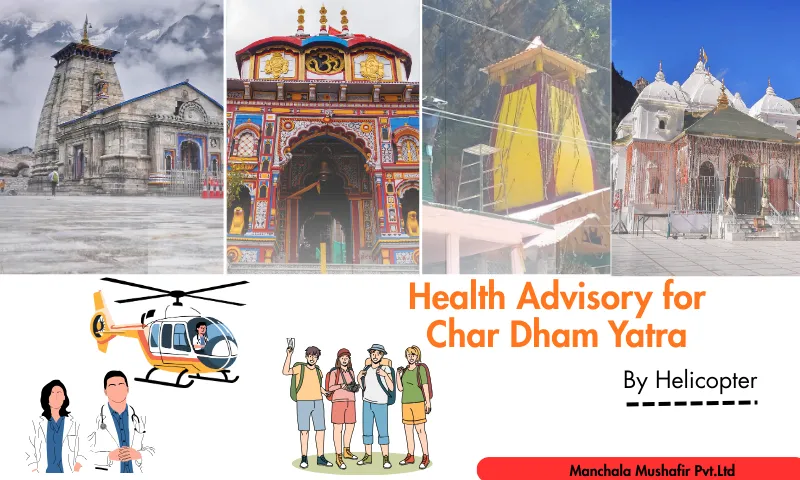
Why You Need A Health Advisory For Chardham Yatra By Helicopter?
- Acute Mountain Sickness (AMS)
- Shortness of breath due to low oxygen levels
- Dehydration and fatigue
- Cardiac and respiratory complications
A health advisory helps pilgrims prepare through medical screening, acclimatisation planning, hydration guidance, and medication management, especially for individuals with heart disease, asthma, high blood pressure, or diabetes.
Health Advisory For Chardham Yatra By Helicopter: Safety Overview
Is Char Dham Yatra By Helicopter Safe?
Altitude & Health Impact
Altitude Levels of Chardham Temples & Health Impact on Pilgrims
All four Char Dham temples are located at high altitudes in the Garhwal Himalayas, ranging from approximately 3,000 to 3,600 meters (9,800–11,800 feet) above sea level. These elevations expose pilgrims to low oxygen levels, cold temperatures, and steep terrain, which can significantly affect the body—especially during rapid helicopter travel.
Approx. altitudes of each temple:
Yamunotri: 10,804 ft (3,293 m)
Gangotri: 10,170 ft (3,100 m)
Kedarnath: 11,755 ft (3,583 m)
Badrinath: 10,279 ft (3,133 m)
At these heights, oxygen levels are noticeably lower than at sea level, increasing the risk of altitude-related health issues.
What Health Problems Can High Altitude Cause During Chardham Helicopter Yatra?
High altitude causes a range of health problems due to lower air pressure and oxygen availability. Common health problems caused by high altitude are:
Acute Mountain Sickness (AMS): It is a common health problem that generally occurs above 8,000 feet (2400 meters).
Common symptoms of altitude mountain sickness.
- Headache
- Nausea or Vomiting
- Dizziness
- Fatigue and weakness
- Facing trouble sleeping
Note:- If ignored, symptoms can worsen and require immediate medical attention.
How To Prevent Altitude Sickness During Chardham Yatra By Helicopter
Preventing altitude sickness during the Char Dham yatra requires a combination of gradual acclimatization, physical preparation, and careful monitoring.
Best Practices to Prevent Altitude Sickness
Gradual Acclimatization: Do not jump directly to high altitudes. Spend a day at lower altitude locations like Haridwar or Rishikesh to allow your body to adapt to high altitudes.
Stay Hydration & Nutrition: Drink plenty of fluids like water, tea, soup, or ORS throughout your journey to prevent dehydration. Consume light meals that are highly carbohydrate-rich and easy to digest.
Preventive Medication: Consult a doctor for taking AMS prevention medication, which helps in faster acclimatization.
Pace Yourself: After helicopter landing, walk slowly and avoid exertion to reduce strain on your heart and lungs.
Listen To Your Body: Do not ignore symptoms such as headache, dizziness, or nausea. Seek medical assistance immediately if symptoms appear.
Dress in Layers: Wear heavy woolens, such as sweaters, fleece jackets, a woollen cap, and socks to protect from the extreme cold environment of the Himalayan region.
Eligibility & Medical Conditions
Who Should Avoid Chardham Yatra By Helicopter Due to Health Risks
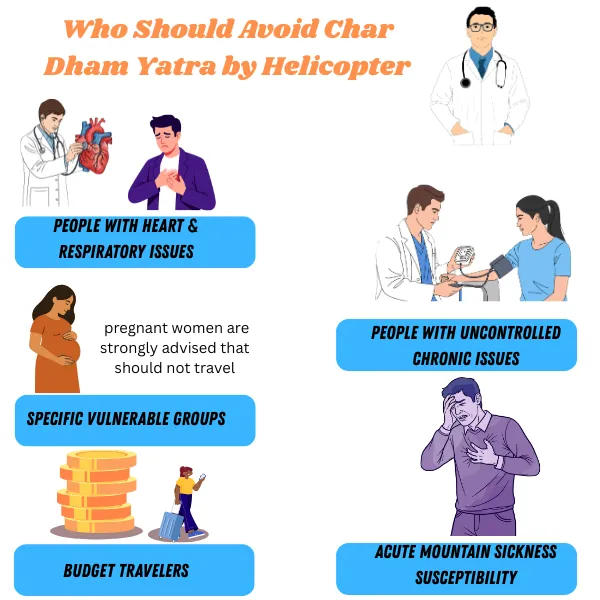
The Chardham Yatra by helicopter involves rapid altitude gain and low-oxygen environments, which may pose serious health risks for certain individuals. Pilgrims with the following medical conditions should avoid the journey or travel only after strict medical clearance:
- Severe heart conditions, including heart failure, recent heart attack, or irregular heartbeat
- Uncontrolled high blood pressure, as altitude can further strain the cardiovascular system
- Serious respiratory disorders, such as severe asthma or chronic lung disease
- Individuals who have undergone recent surgery, as high altitude may delay recovery and increase complications.
- Pregnant women, as high altitude and low oxygen levels may increase health risks for both mother and fetus
Is Char Dham Yatra By Helicopter Safe For Senior Citizens?
Therefore, elderly pilgrims are strongly advised to:
- Consult a doctor before planning the journey
- Undergo a full health check-up at least one month in advance
- Follow the official health advisory for the Chardham Yatra by helicopter
- Carry prescribed medications and avoid overexertion after landing
With proper medical clearance and precautions, many senior citizens can complete the Char Dham Yatra by helicopter safely and comfortably.
Is Char Dham Yatra By Helicopter Safe For Heart Patients?
- Consult a cardiologist before planning the journey
- Undergo a medical fitness assessment
- Follow the official health advisory for the Chardham Yatra by helicopter
- Avoid travel if they have severe, unstable, or recent cardiac conditions
With proper medical clearance and precautions, some medically stable heart patients may be able to undertake the Char Dham Yatra by helicopter safely.
Health Advisory for Chardham Yatra By Helicopter: Medical Check-Up & Documentation
Is A Medical Certificate Required For Chardham Yatra By Helicopter?
Who Must Get A Medical Check-Up?
- Senior Citizens - to assess heart, lung, and general fitness
- Heart & BP Patients - for cardiac risk evaluation
- Diabetics- to monitor blood sugar stability at high altitude
- Individuals with Chronic Respiratory Conditions - such as asthma or COPD
- Pregnant Women - to ensure safety for both mother and fetus
Packing & Medicines
What to Pack for Chardham Yatra By Helicopter (5kg Luggage Limit)
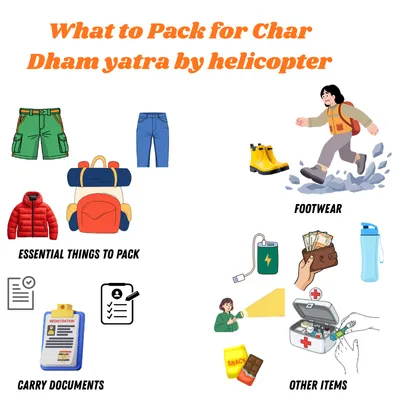
- Thermal innerwear to stay warm in high altitudes
- Fleece jackets for layering
- Windproof jackets to protect against cold winds
- Quick-dry pants and comfortable clothing for trekking
- Waterproof shoes or hiking shoes with a strong grip for slippery paths
- Light socks to keep your feet dry and warm
Important Documents:
- Valid Photo ID (Aadhar, Passport, or Driver’s License)
- Char Dham Yatra registration e-pass or yatra slip
- Helicopter booking tickets
Travel Essentials:
Medicines to Pack
- Diamox (Acetazolamide) – helps prevent altitude sickness
- Consult a doctor before use
Motion Sickness & Digestive Aids
- Motion sickness tablets to prevent nausea during helicopter travel
- Antacids or stomach relief tablets for digestive discomfort
- ORS sachets to prevent dehydration
Pain Relief
- Paracetamol for fever or mild pain
- Pain relief sprays or gels for muscle aches
- Band-aids, antiseptic cream, cotton
- Small first-aid kit for cuts and minor injuries
Emergency & Oxygen Support
Are Oxygen Cylinders Available During The Helicopter Yatra?
What Should Pilgrims Do In Case Of A Medical Emergency During The Yatra?
- Stay Calm: Panic can worsen the situation; take a deep breath and assess the condition.
- Inform the Pilot: Notify the helicopter pilot immediately and request on-ground support.
- Follow Medical Staff Instructions: Follow directions from any medical personnel on board.
- Call Emergency Helplines: Dial 108 or 102 for immediate government medical assistance.
- Request Evacuation: If the condition is critical, ask authorities to arrange a helicopter evacuation.
- Inform Your Tour Operator: They can coordinate with local hospitals or rescue teams.
Important Safety Measures For The Helicopter Yatra
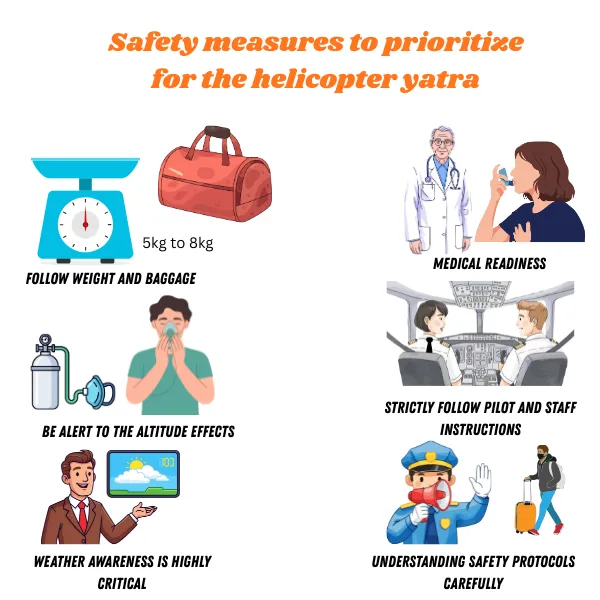
- Use only government-approved or certified helicopter operators.
- This ensures trained pilots, proper maintenance, and adherence to mountain safety standards.
Health Advisory for Chardham Yatra By Helicopter: Pre & Post Health Care Tips
Pre-Yatra Health Preparation Tips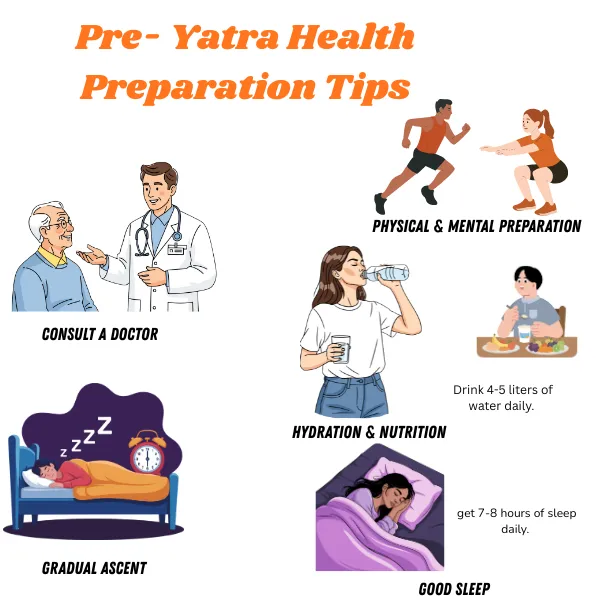
- Consult a Doctor: If you are over 50 or have a pre-existing condition, like blood pressure or diabetes, get a medical check-up to ensure that your body is fit for high altitude travel or not.
- Physical & Mental Preparation: Engage yourself in cardiovascular and strengthening exercise such as swimming, Jogging, and cycling for muscle power and to build stamina.
- Gradual Ascent: It is highly recommended that you spend one day at lower altitudes and give your body time to adjust to high altitudes.
- Hydration & Nutrition: Get a proper diet that is rich in protein and carbohydrates. Drink 4-5 liters of water daily.
- Good Sleep: Get 7-8 hours of sleep daily.
Post-Yatra Health Care Tips
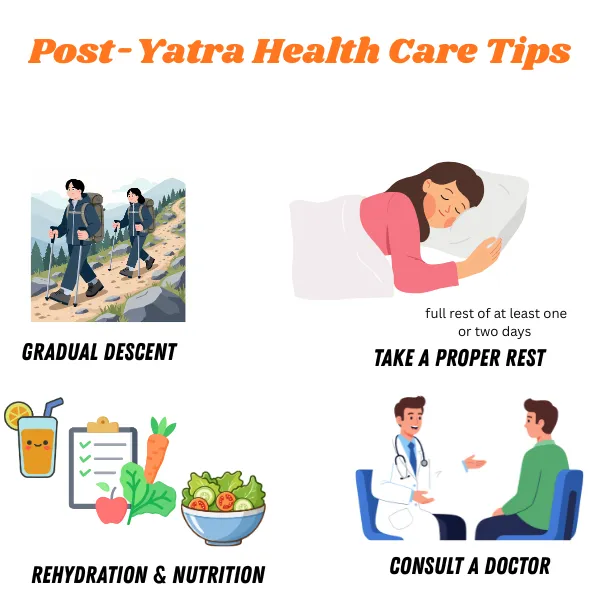
- Gradual Descent: After completing the yatra, give your body time to adjust back to lower altitudes.
- Proper Rest: Take a full rest of at least one or two days if you experience persistent tiredness.
- Rehydration & Nutrition: Continue to drink plenty of fluids like water and tea to prevent dehydration
- Consult a Doctor: If you have chronic conditions like heart disease, it is advisable to get a health check-up to ensure that high altitude hasn’t triggered any further health issues.