Thank you! Our expert will call you shortly.

Valley of Flowers Trek Package 2026

Price : ₹ 9,500 + 5% GST

⭐ 4.8/5 Rated
🏔 MCA Recognised
🙏 85K+ Happy Yatris
🕉 8+ Years Experience
🏆 Trusted Brand
📞 24×7 Support

Valley of Flowers Trek Package

Plan an unforgettable adventure with our Valley of Flowers Trek Package, available at at an affordable cost of ₹9,500 + 5% GST for the complete journey from Rishikesh to Rishikesh. This all-inclusive package covers everything you need for a seamless trekking experience, including comfortable stays, delicious meals, expert trekking guides, safe transportation, and a visit to the worlds heighest Hemkund Sahib Gurudwara.

For those traveling from Delhi, we offer a convenient Volvo AC semi-sleeper bus and Sleeper bus to and from New Delhi at an additional cost of ₹1,600 + 5% GST per person and ₹2,600 + 5% GST per person respectively. This ensures you travel in comfort, starting your adventure with ease.

Whether you're a nature enthusiast, an adventure seeker, or looking for spiritual calmness, this trek offers the perfect blend of all. Explore the Valley of Flowers' vibrant meadows full of colorful flowers with thousands of different varieties, trek to the spiritual Hemkund Sahib, and enjoy the serene beauty of the Himalayas, all with a hassle-free experience.

Join us for this life-changing journey and let us take care of every detail while you enjoy the beauty and peacefulness of one of the most stunning destinations in India!

Calculate Price

  • Day 1: Drive from Rishikesh to Joshimath

    Drive- 248 km | Duration- 7-8 hours | Starting Point – Rishikesh (bus stand)| Stay- Homestay ( Joshimath) | Meals- Dinner only

    Starting point of our Valley of flowers trek is Rishikesh bus stand. You need to report at bus stand before 8:00 am. One of our representatives will brief you about the trip and today's journey. Put your luggage on the carrier and settle down on your seat. We will leave Rishikesh by 8:00 am. On the way to Joshimath we will cover Dev prayag, Rudra Prayag, Shari devi temple, Karna prayag and Nand Prayag. We will reach Joshimath by 6:00 in the evening. Settle down in your rooms. During breakfast, guide will brief you about the trekking with some basic do's and donts.

  • Day 2:Trek from Joshimath to Ghangariya

    Trek- 9km | Duration- 4-5 hours | Altitude Gain- 6150 ft to 10,000 ft | Difficulty- Moderate | Starting- Joshimath (8:00 A.M) | Stay- Camp (Ghangaria) | Meals- Breakfast, Lunch and Dinner

    Today we will start our trek. Trails to Ghanghariya is easy and well marked and winds all along the river and natural waterfalls. It will take us around 4 to 5 hours to cover this 9 kms of trekking distance. Don't forget to carry a water bottle with you and keep yourself hydrated during the trek. You can refill your waterfall from these water streams. Night stay will be at Ghanghariya in camps under the sky. After dinner you can experience stargazing.

  • Day 3: Trek from Ghangaria to Valley of Flowers and Return to Ghangaria

    Total Trek- 10 km | Duration- 7-8 hours | Altitude Gain- 10000 ft to 12000 ft to 10000 ft | Difficulty- Moderate | Starting- Ghangaria (8:00 A.M) | Stay- Camp | Meals- Breakfast, Lunch and Dinner

    Today is the great day as we are going to cover our first dream destination i.e. Valley of flowers. So start early in the morning so that we can spend maximum time in the valley. During the start of the trek the trails will be very descent, but after crossing Pushpawati the ascent gets gradual for next one and a half kilometers. Total 10 kms of today's trekking will be like walking of a wonderland with trails fully covered with grass and wild flowers blooming all around the valley. Camping at the valley is not permitted so we will return back to Ghangria following the same path. Night stay will be in camp at Ghangria.

  • Day 4: Trek from Ghangaria to Hemkund Sahib and return to Ghangaria

    Trek- 10 km | Duration- 8-9 hours | Altitude gain- 10,000 ft to 14,200 ft to 10,000 ft | Difficulty- Moderate | Starting-Ghangaria (6:00 A.M) |Stay- Camp (Ghangaria) | Meals- Breakfast, Lunch and Dinner

    Today we are going to visit one of the heighest Gurudwara in this world and sacred site for Sikh community. It is located at an altitude of 4239 meters (13908 feet) above the sea level with extreme climatic conditon. Lake beside the Gurudwara remain frozen for almost six months in a year. So it's advisable to start at 5:00 AM in the morning so that we can start our descend till 2:00 Pm. Trekking trails to Gurudwara is steep and slipery so ensure wearing boot with good grip and carry raincoat and warm clothes with you.

  • Day 5:Trek from Ghangaria to Joshimath

    Trek- 9 km | Duration- 4 hours | Altitude Loss- 10,000 ft to 6150 ft | Difficulty- Easy | Starting- Ghangaria (8:00 A.M) | Stay- Home Stay (Joshimath) | Meals- Breakfast, Lunch and Dinner

    Today we will return back to Joshimath. The trails are descent and downhill throughout. So it's going to be very easy to trek back. It will take around 4 hours to return back. At Joshimath we will stay in homestay and enjoy the beautiful view all around.

  • Day 6:Drive back from Joshimath to Rishikesh

    Drive: 248 km | Duration: 7-8 hours | Altitude Loss: 6150 ft to 1,120 ft | Starting-Joshimath (8:00 A.M) | No Stay | Meals- Breakfast

    Today is the last day of our trek. After breakfast we will start our journey toward Rishikesh, and it will take around 7 to 8 hours to reach there. After reaching to Rishikesh we will bid goodbye with a hope to meet you again on some other trek with new team.

  • Transportation from Rishikesh to Rishikesh in Dzire/ Ertiga/ Bolero/ Tempo Traveller
  • Sleeping Bag, Sleeping mat and other camping equipments
  • Stay will be triple or quad sharing basis in hotels/homestay/tents
  • Breakfast, Lunch and Dinner
  • Snacks and Tea
  • First aid medical Kit
  • Tour guide
  • Trekking Permits
  • Any personal expenses.
  • Any expenditure arises out of unforeseen natural calamity
  • Anything not mentioned in inclusion.
  • Any mules, horses, or any other medium to carry personal luggage during trekking or a road journey.
  • Any extra food you buy.
  • Any pictures clicked by an outside person.
  • Average temperature: Day (17°C to 7°C) and Night: (-5°C to 3°C)
  • Duration: 6 Days / 5 Night
  • Valley of flowers Height: 12,000 Feet(3657 meters)
  • Hemkund Sahib Height: 15,000 Feet(4572 meters)
  • Total Trekking Distance: 37 kms
  • Best time for Valley of Flowers Trek: July to September
  • Location: Chamoli , Uttarakhand
  • Base camp: Joshimath
  • Valley of Flowers Difficulty Level: Easy To Moderate
  • Nearest Railway Station: Rishikesh
  • Nearest Airport: Jolly Grant, Dehradun
  • Mobile connectivity: Mobile network will be available till Ghangria

Things to pack for the Valley of Flowers trek

Packing is a crucial part of travelling to high-altitude destinations. For the Valley of Flowers trek, you must pack smartly to make your journey more enjoyable and memorable. Pack essentials such as warm clothing, trekking gear, backpacks, and a medical kit. Here is a list of some essentials to pack for the Valley of Flowers trek.

Essential Documents:

  • Personal ID proof: carry a valid ID proof like an Aadhar card and 2-3 passport-size photos for check-in in hotels
  • 2–3 printed copies of the trek permit are needed at the checkpoints and at the entrance of the valley.

Clothing gear:

  • Warm layers, including sweaters, fleece jackets and thermal inner wear.
  • Rain gear, such as a poncho or rain jacket, to prevent heavy rain.
  • Trek pants and quick-dry t-shirts
  • Other: Woollen cap, gloves and 2-3 pairs of socks.
Things to pack for Valley of flowers trek

Health and Fitness

  • A small medical kit along with prescribed medications, painkiller tablets and sprays
  • Toiletries, such as sanitiser, toothbrush and toothpaste.

Nutrition and Hydration:

  • Reusable water bottles and glucose sachets.
  • Pack energy bars and dry fruits to get instant energy during the trek.
    • Other essentials:

      • Daypacks and backpacks of at least 50-60 litres
      • A trekking pole helps to maintain balance.
      • Headlamp or torch
      • A 1000 mAh power bank, as electricity in remote areas is limited.
Content for Item 8

Valley of Flowers Trek Group Price

Group

1-3

4-8

9-15

15+

From Rishikesh

₹ 9,500

₹ 9,300

₹ 9,000

₹ 8,800

From Delhi in Semi-sleeper

₹ 11,100

₹ 10,900

₹ 10,600

₹ 10,400

From Delhi in Sleeper

₹ 12,100

₹ 11,900

₹ 11,600

₹ 11,400

*5% GST Extra of the above price

Batches

1
6
9
15
18
22
2
5
9
14
16
26
3
8
9
19
26
4
15
18
22

About Valley of Flowers

The Valley of Flowers is a stunning national park in the western Himalayas. Located in the Chamoli district of Uttarakhand. It is a popular trekking destination and also a UNESCO World Heritage Site, renowned for its exceptional natural beauty, featuring snow-capped Himalayan peaks, meadows of endemic alpine flowers, and a home to a rare and endangered species of flowers and animals. It attracts trekkers due to its rich Himalayan biodiversity.

This beautiful valley was accidentally found in 1931 by a British mountaineer named Frank S. Smythe on their return journey from Mt. Kamet.

Valley of flowers trek image

Where Is the Valley of Flowers Located In India?

The Valley of Flowers National Park in India is located in the Chamoli district of Uttarakhand at a height of 11,800 feet (3,600 meters) above the sea level.

Valley of Flowers location

  • State: Uttarakhand, India
  • District: Chamoli
  • Nearest Town: Joshimath
  • Nearest Airport: Dehradun
  • Valley of Flowers altitude: 11,800 feet (3,600 meters)
Mesmerising view of valley of flowers during monsoon
Beautiful view of valley during monsoon

What is a UNESCO World Heritage Site?

A UNESCO World Heritage site is an area having “Outstanding Universal Value,” which is protected by the International Convention and managed by the UN’s UNESCO Agency to ensure preservation for future generations.

Sites ranging from India’s Taj Mahal to the Egyptian pyramids are part of the UNESCO World Heritage Site and come under the 1972 World Heritage Convention. These sites are recognised for their cultural, scientific, historical, or other forms of significance.

These sites belong to everyone, symbolising shared human heritage. Sites, such as archaeological sites, monumental buildings, and groups of buildings, are major types of these sites. India has 44 UNESCO World Heritage Sites, and the Valley of Flowers National Park in Uttarakhand is one of them.

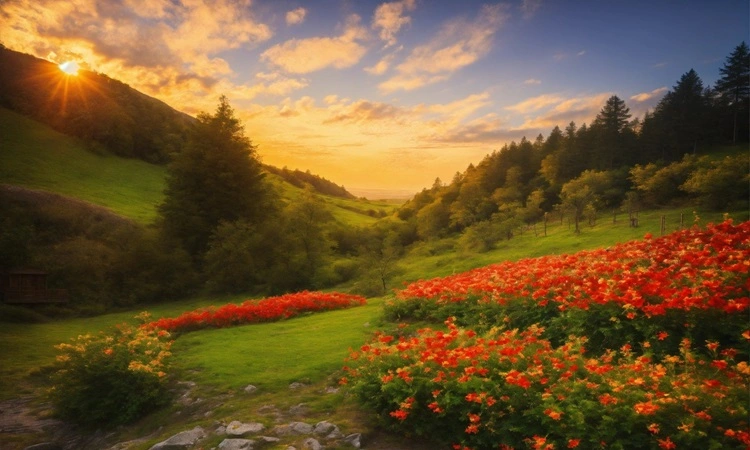
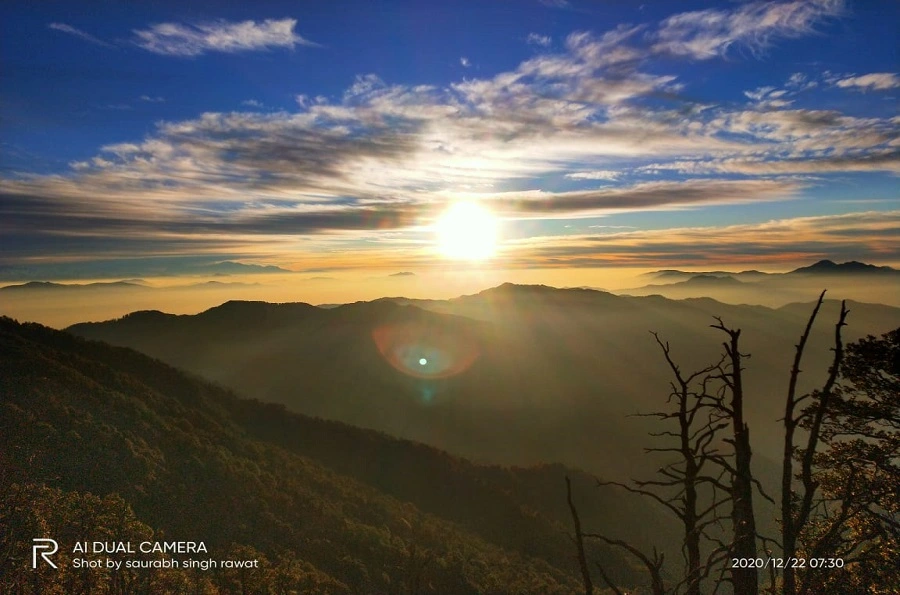
Breath taking view at valley of flowers during sunrise
Colourful Valley of flowers

Process Of UNESCO Site Listing And Conservation

The process of listing UNESCO World Heritage sites involves creating a tentative list of significant sites, preparing a nomination file, and submitting it to an advisory body, such as IUCN and ICOMOS, for review. These Bodies evaluate the site’s value over ten criteria and make recommendations to the annual World Heritage Committee, which makes the final decision.

The UNESCO listing Process Involves:

You can check out the list of all the UNESCO World heritage sites by clicking here.

Cultural And Historical Significance of the Valley of Flowers

The Valley of Flowers holds great cultural and historical significance, deeply rooted in Hindu mythology and its accidental discovery by British mountaineers, which leads to its significance as a UNESCO World Heritage Site.

Cultural Significance

Legends: According to Hindu Mythology, Lord Hanuman found the mythical Sanjeevani herb to revive Lord Lakshman (brother of Lord Rama), who got injured during the Ramayana War, at this sacred place. This legend makes it a significant site for many Hindus, who believe to possesses a spiritual and healing aura.

Pilgrimage site: This region is a major pilgrimage site with a route to the Hemkund Sahib Gurudwara, located beside a glacial lake at a high altitude. Every year, thousands of sikh devotees trek here, which makes it a significant spiritual site.

Historical Significance

Ancient root: The natural landscape and flora of this valley are acknowledged in the Hindu scriptures. For many centuries, before its formal discovery, this area was conceded by the local shepherds and pilgrims.

Official Discovery: In 1931, the British mountaineer Frank S. Smythe and his team slipped into this valley after getting lost on their descent from Mt. Kamet. Enchanted by the vibrant flowers, Smythe spent some time at this site and named it the “Valley of Flowers”, and wrote a book with the same title that mentioned the beauty of this valley.

Later Research: After the discovery, the valley attracted botanists and researchers. In 1939, a botanist, Lady John Margreat Legge, died in this valley while collecting plant samples, and a memorial near the valley stands in her honour.

Recognition and Conservation:

In 1982, the Indian Government declared this valley a National Park to protect its ecosystem from threats like overgrazing.

In 2005, UNESCO recognised the valley as a World Heritage Site as a part of the Nanda Devi and Valley of Flowers National Park, Uttarakhand, known for its unique biodiversity, alpine flora and exceptional natural beauty.

Most Popular Flowers Found In The Valley

The Valley of Flowers is home to over 500 species of alpine flowers. The most popular and rare variety of flowers found in the valley includes—

  • Himalayan Blue Poppy: A rare flower, which is often called the “queen of Himalayan flowers.” These striking blooms are one of the most sought-after sights in the valley.
  • Brahma Kamal: A rare and revered flower, known as the “state flower of Uttarakhand,” found at higher altitudes.
  • Cobra Lily: particularly known for its hood-like Structure that resembles a cobra
  • Himalayan Balsam: it is the most widely spread flower in the valley, creating a vast carpet across the meadows.
  • Marsh Marigold: A vibrant yellow flower that typically blooms near the streams in the early season.
  • Himalayan Bistort: it’s a densely growing perennial flower that produces beautiful red-rose or pink spikes.
  • Anemones: typically found in blue or white tones, which blanket the meadows during the peak blooming months of July and August.

Hemkund Sahib Gurudwara

The Hemkund Sahib Gurudwara is a revered sikh pilgrimage shrine nestled in the lap of the Himalayas. Situated beside a glacial lake (Lokpal Lake) at an altitude of 4,329 meters (14,200 feet), it is considered one of the highest gurudwaras in the world.

It holds great mythological significance, mentioned in Dasam Gura. It is dedicated to Guru Gobind Singh (the tenth guru of the Sikh religion), who meditated at this sacred spot in his earlier life.

It is accessible by a challenging trek from Govindghat. It remains inaccessible for major portion of the year, from October to April, due to heavy snow and is open for a few months from May to October.

The Gurudwaras are located adjacent to the Valley of Flowers and Lakshman Temple, which make this region a perfect blend of intense spirituality, natural beauty, and challenging trekking.

Hemkund Sahib Gurudwara located near valley of flowers trek

Valley of Flowers Trek Route

The Valley of Flowers trek is moderately challenging, starting from Govindghat, follows a scenic route that has Ghagariya serving as a base for the trek, passing via the Alaknanda and Pushpawati river valleys. Here are the route details of the trek.

  • Starting point: Govindghat (last motorable point)
  • Base Camp: Ghagariya
  • Leading Point: Valley of Flowers
  • Additional hike: Hemkund Sahib Gurudwara
  • Distance: 19 km one-way
  • Trek Level: The trek is considered a moderately challenging due to its high altitudes and steep ascents, demanding good physical health.
  • Facilities: The trek route offers numerous small tea stalls and snack shops.
  • Alternative transport service: Mules and porters are available for those who need assistance on the trail.

Valley of Flowers Distance

The Valley of Flowers trek distance from Govindghat is approximately 38 km round trip, spanning around 4-5 days and starting and ending at Govindghat.

Breakdown of distances:

  • Govindghat to Valley of Flowers Distance: approx. 19 km
  • Govindghat to Ghagriya distance: 13 km
  • Ghagariya to Valley of Flowers Distance: approx. 6 km

Distance From Nearby Locations

  • Rishikesh to Valley of Flowers distance:- 266 Kms
  • Auli to Valley of Flowers:- 29.7 Kms
  • Delhi to Valley of Flowers distance:- 523 Kms
  • Joshimath to Valley of Flowers distance:- 19.4 Kms
  • Badrinath Temple to Valley of Flowers:- 23.9Kms
  • Dehradun to Valley of Flowers:- 305 Kms
  • Haridwar to Valley of Flowers:- 290 Kms

Valley of Flowers Trek Opening and Closing Date 2026

The opening and closing dates of the Valley of Flowers are decided by the Uttarakhand Forest Department based on weather conditions. Generally, the trek opens early June, when the snow melts, the weather becomes pleasant, and the valley starts blooming.

The trekking to the Valley generally get closed in late October or early November due to heavy snow and harsh weather, making the trek inaccessible during this period.

Here are the tentative opening and closing dates of the Valley of Flowers for 2026.

  • Tentative Opening Date 2026: In 2026, the Valley of Flowers is expected to be open on 1st June 2026. The opening date coincides with the beginning of the alpine blooming season from early June to early July.
  • Tentative Closing Date 2026: The closing date for 2026 is scheduled on 4 October 2026, depending on the weather. Closing based on early winter snowfall.

Note: The dates are subject to change, as they typically depend on the weather.

Valley of flowers trek opening and closing date

Best Time To Visit the Valley of Flowers, Uttarakhand

Best time to visit Valley of Flowers trek

The best time to visit the Valley of Flowers trek is in July and August. This is the time when the valley gets decorated with vibrant colours, and flowers are in full bloom.

But as it is idle for everyone, so this region observes a huge crowd. So if you are allergic to crowds, you can also prefer visiting here in different months. Let's analyse the pros and cons of all the major seasons one by one.

June - Early July: This is a pleasant time; the snow melts, and flowers start to bloom. Trails are accessible, but some snow patches are there, ideal for trekking and sightseeing.

Peak Bloom Season (July-August): One of the best times to visit the Valley of Flowers, considered peak flowering season with bursting meadows and vibrant colours. But this period experiences heavy rain, which makes the trails slippery.

Autumn Season (Sep to October): It is another ideal time to visit, offering clear skies, crisp air, and a spectacular environment. Valley of Flowers trek best time with peaceful and comfortable weather conditions.

Closing period (November to May): At the end of October or early November, the valley remains closed due to heavy snow, making it inaccessible.

How To Reach the Valley of Flowers

How to reach to the valley of flowers trek

To reach Valley of Flowers, firstly travel to the gateway cities of Uttarakhand, Haridwar, Rishikesh, or Dehradun by air, train, or road, and then drive to Govindghat (the last motorable head), and from there follow a trek journey to Ghagriya and the valley itself. Here is a breakdown of it.

Step 1: Travel To Govindghat (Air/Train/Road)

By Air: The Jolly Grant Airport in Dehradun is the nearest airport, which is approximately 292 km from Govindghat. From there, take a bus towards Joshimath and then hire a taxi to reach Govindghat. For more direct access, hire a direct taxi to Govindghat.

By Train: Haridwar (285 km away) and Rishikesh (261 km away) are the nearest railheads, has great rail connectivity to major cities of India, such as Delhi, Mumbai, etc. From the station, take a taxi, shared jeep, or public bus to reach Govindghat. From there, head on a 19 km trek for the final leg of the journey.

By Road: Govindghat is the last motorable point to the Valley of Flowers, which has great connectivity to the major cities, like Delhi, Dehradun, Haridwar, or Rishikesh. Take a taxi or state-run bus to Josimath and proceed to Govindghat. From there, embark on a trek to the Valley of Flowers.

Final Stretch: Govindghat to Valley of Flowers (19 km Trek)

From Govindghat, firstly trek to Ghagariya (base camp), which is approximately 13 km, and then continue to the entrance of the Valley of the Flowers. The trek is considered easy to moderate with some steep sections.

Valley of flowers trek route

Can we reach the Valley of Flowers without trekking?

Yes, you can reach the Valley of Flowers without trekking. There are two options to avoid trekking: one is to take a helicopter service, and the other is to take a porter service, making it accessible for those who are unable to trek. Let’s discuss each option one by one.

Option 1 Helicopter service: Helicopter service is available from Govindghat to Ghagariya. From Ghagariya, you can hire porter service or trek on foot for the final leg of the journey.

Cost of Helicopter Service: The estimated cost of helicopter service ranges from ₹10,000 to ₹12,000 per person for a round trip, typically depending on the service provider.

Note: Helicopter services are weather-dependent and may not always operate.

Option 2: Pony/Palki Service: For those who seek a budget option, take a mule or pony service from Govindghat to the Valley of Flowers entrance.

Cost of Porter Service: The estimated price per porter ranges from ₹2,000 to ₹4,000 per person.

Note: Mules are not allowed inside the valley; you must explore the valley by walking.

Valley of Flowers Trek Permit

Whether you are an indian or a foreigner, a permit is required for the Valley of Flowers trek. To get the Valley of Flowers trek permit, you can apply online via the official website of Uttarakhand’s Forest Department or the official site of Valley of Flowers National Park and offline via forest department checkpoints in Ghagariya.

Is Registration Required for the Valley of Flowers Trek?

Yes, a mandatory permit is required for Valley of Flowers access, which is obtained by the foreign checkpost near Ghagariya. Registration can be done online via the official sites and offline via the on-site checkpoints.

How To Register Online for the Valley of Flowers Trek

  • Step 1: Visit the official site of valleyofflowers trek
  • Step 2: Select “Apply for permit.”
  • Step 3: Fill in trek details, including the number of visitors and the intended date of Visits.
  • Step 4: After that, the website will show the available dates for the Valley of Flowers trek.
  • Step 5: Complete the process by clicking on the Book Now button
  • Step 6: Complete Mobile verification via OTP.
  • Step 7: Pay applicable charges, based on nationality, like ₹ 200 for Indian visitors and ₹ 800 for foreigners.
  • Final Step: After the successful payment, you can download the e-permit pass. Carry a physical copy of a permit to show it at the checkpoint.

Offline Registration Process for Valley of Flowers Trek Permit

The Uttarakhand government also provides the on-site permit service at forest department checkpoints near Ghagariya. For an offline permit:

  • Visit on-site checkpoints in Ghagariya and obtain a permit from the Authority.
  • Present your ID at the counter
  • Pay the required fee in cash
  • Register your details, such as name, age and details like carrying any plastic bags.
  • Take a Valley of Flowers trek permit and enter the valley.
  • Documents Required:

    For Indians: A valid ID proof, like Aadhar Card, Voter ID or Pan Card and a passport-size photo, if asked for.

    For Foreigners: Foreign visitors will show their Passports.

Entry Fee For Valley of Flowers Trek Permit

Here is the price of Valley of Flowers National Park tickets:

Category Charge
Indian Visitors ₹150 to 200
Foreign Visitors ₹600 to 800

Special Facility: For children under age 14, get free entry, and for senior citizens, receive concessions of almost Rs100 with a Valid ID proof.

Daily Timing: The valley opens at 7:00 a.m. and closes at 6:00 p.m. But all the visitors exit the valley by 5:00 p.m.

What is the difficulty level of the Valley of Flowers trek?

The Valley of Flowers trek is considered moderately difficult, but it might become difficult due to high altitude, long walking days and uneven terrain.

Factors that make the trek moderate include trails (steady climbs) and altitude, which causes fatigue and monsoon conditions (rain), making the trails slippery. The trek demands proper preparation, including stamina, decent fitness and proper gear to handle muddy rain conditions.

Can a beginner do a Valley of Flowers trek?

Yes, a beginner can do a Valley of Flowers trek with proper planning and preparation. Beginners with a decent fitness level can complete it.

Tips For Beginners:

  • Physical preparation: practices cardiovascular exercises and hikes at least 30-40 days before the trek.
  • Proper Gear: wear good waterproof shoes with a supportive grip, a rain jacket and warm layers.
  • Pack light snacks and water bottles: Pack energy bars to get instant energy and water bottles to reduce the risk of dehydration.
  • Acclimatise Properly: To reduce the risk of Altitude sickness, acclimatise properly before heading to high altitudes.
  • Guides & Packages: Choosing a guided tour package is highly recommended for beginners, as it ensures safety and logistical things such as permits, transport and accommodation, and also provides expert assistance.

Is one day enough for a Valley of Flowers trek?

No, one day is not enough for the Valley of Flowers trek, as the complete journey from Govindghat to the Valley of Flowers and back to Govindghat typically takes 2-3 days. Here are the reasons why the Valley of Flowers trek can not be covered in one day.

  • Long Trekking Distance: The long trek distance of about 19 km from Govindghat to the Valley of Flowers require 2-3 days to cover
  • Higher Altitude: The altitude of approximately 11,800 feet demands proper rest and acclimatisation in Ghagariya.
  • Challenging terrain: The path is steep and gradual with rocky and rugged terrain.
  • Unpredictable weather: sudden rain leads to landslides, which make trails slippery and treks difficult, which takes more days to navigate.
  • Vast area of Valley: The vast area of the valley, around 87 sq km, takes several hours to walk through the meadows and explore the valley.

Valley of Flowers Hotels

Yes, there are several accommodation options for the Valley of Flowers trek, mainly in Ghagariya village (base camp). It ranges from budget guesthouses and homestays to campsites. The stays are basic and essential, as the trek requires overnight stays before and after exploring the valley.

Place to stay:

Ghagariya and Govindghat are two major hubs of accommodation for the Valley of Flowers trek.

Types of stay options:

  • Guesthouses & Hotels: numerous private hotels such as Hotel Kuber, Sri Nanda Lokpal Palace, and Hotel Priya are popular options here. There are also abundant options in camp.
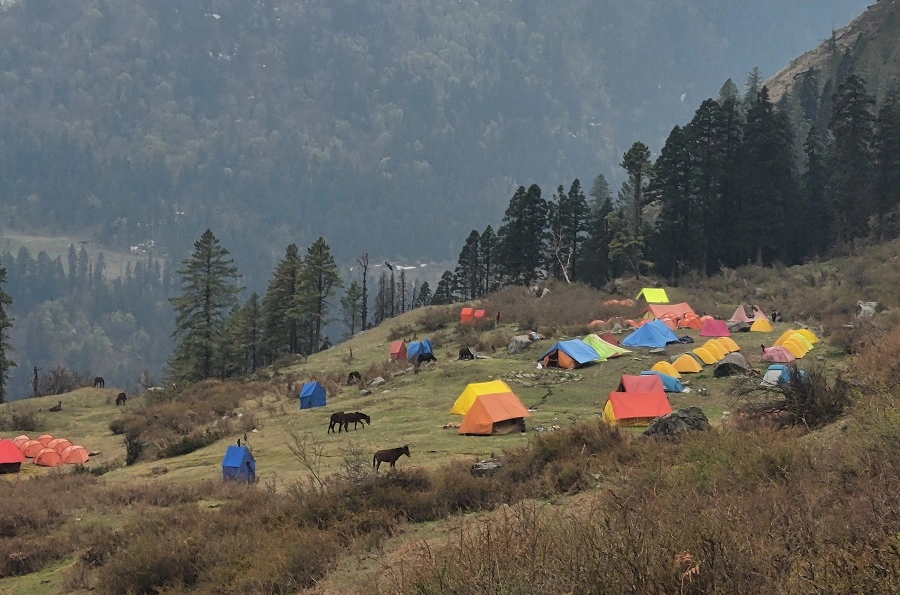
  • Campsites & Tents: Swiss tents or camps are options for budget travellers.
  • GMVN Resthouse: This government-run guesthouse is also available in Govindghat.
  • Note: Camping is strictly prohibited inside the valley.

How to get fit for the Valley of Flowers trek?

To get fit for high-altitude and moderately difficult trek, you should prepare physically and mentally and start with a fitness regime through focus on cardiovascular training and strengthen stamina for at least one or two months before your trip.

Proper planning and preparation are required for a joyful trekking experience.

Fitness tip:

Cardiovascular training: To prepare yourself physically, cardiovascular training is a crucial aspect, as you will be trekking for long distances in thinner air.

Activity: do jogging, cycling, brisk walking or swimming at least 4-5 times a week

Target and progression: aim for a 5 km walk in 30-40 minutes.

Gradually increase the duration and intensity.

How to get fit for Valley of flowers trek

Strength training:

To handle the steep ascents and uneven terrain, strong legs and a core are important. Practice these exercises for strong legs and core:

  • Squats, lungs and sit-ups to build muscle power and improve stability and flexibility.
  • Practice push-ups and crunches to build core strength
  • Balance and Flexibility

    Practice yoga and stretching for at least 30-40 minutes a day. It helps you to improve your balance and reduce the risk of injuries.

    Mental Preparation

    Mental Preparation is also required with the physical preparation. Meditation and mindfulness will be helpful in building a positive and strong mindset.

Important Tips for trek:

  • Acclimatisation: Rest for a day in Govindghat or Joshimath before the trek will help your body to adjust to the high-altitude trek.
  • Essential gear: sturdy and waterproof trekking shoes are required to avoid blisters, and a trekking pole also helps to maintain balance.
  • Hydration and Nutrition: Stay hydrated and carry energy bars for sustenance.
  • Pace yourself: walk at a comfortable pace and avoid rushing.
  • Pack smart: pack lightweight gear and sturdy daypacks and backpacks to carry your essentials
  • Practice hikes: do short hikes, like stair climbing with a light backpack.
  • Consult your doctor: before going for your trip, consult with your doctor and ask them for any suggestions and healthy tips for a safe journey.
Valley of flowers trekking tips

How safe is the Valley of Flowers trek?

The Valley of Flowers trek is generally considered a safe and beginner-friendly trek, with a well-defined path, but moderate fitness and awareness about the monsoon risk and altitude sickness.

Generally, the safety of a trek depends on the season and weather.

Key Safety Metrics:

  • Trek difficulty level: The trek to Valley of Flowers is easy to moderate with well defined stone paved paths. But the ascent to Hemkund Sahib is considered strenuous due to its very High altitude and steep inclines.
  • Altitude sickness: The trek to the Valley of Flowers reaches an altitude of around 11,800 feet (3,600 meters, increasing the risk of altitude sickness. Proper acclimatisation and hydration are necessary to prevent AMS (Altitude mountain sickness).
  • Unpredictable weather: the unpredictable weather of this region, like sudden rain that leads to landslides and road blocks, makes trails slippery and difficult to navigate. Proper gear, like sturdy shoes, is essential.
  • Road journey: the road travel from Haridwar/Rishikesh or Delhi to Govindghat is a significant safety concern, and sudden rain can cause delays, so keeping buffer days in your travel itinerary is recommended.
  • Facilities and support: Ghagariya, the base camp, offers basic amenities such as stay and food options.
  • Guide: Hiring a local tour guide is highly recommended for safety reasons with proper knowledge.

Can I do Valley of Flowers without a guide?

Yes, you can absolutely do the Valley of Flowers trek without a guide, as the trek is moderate with well-marked trails, suitable for both beginners and experienced hikers.

However, hiring a guide is recommended, especially for beginners and first timers, for safety in unpredictable weather and for local insights, but it's not compulsory.

Tips to do a trek without a guide:

  • Stay on the path: the trails to the valley are clear and well defined, so stay on the path.
  • Start early: start your journey early and return to the base camp before sunset
  • Stay updated: be informed about the weather and the trails.
  • Be prepared: start your journey with a flexible mindset and be prepared for any sudden change.
  • Listen to your body: Don’t push your body; always listen to your body.

FAQs

Where is the Valley of Flowers trek located in India?

The Valley of Flowers trek is situated in the Chamoli District of Uttarakhand, at an elevation of approximately 3,658 meters (11,800 feet) above sea level. The valley is nestled in the western Himalayas, within Nanda Devi National Park.

How long is the trek to the Valley of Flowers?

The trek to the Valley of Flowers is around 38 km round trip, starting from Govindghat. Ghagariya serves as a base for the trek, which is approximately 13 km from Govindghat. From Ghagariya to the Valley of Flowers distance is around 5 km. The trek typically takes almost 5 to 6 days, including road travel and trekking.

When does the Valley of Flowers trek open?

The opening of the Valley of Flowers depends on the weather conditions. Generally, the trek is open when the snow melts, and the weather becomes pleasant in June and remains open until October. For the year 2026, it is expected to be open on 1st June 2026; it’s a tentative date officially announced by Uttarakhand’s Forest Department, most probably announced in May.

What is the best time to visit the Valley of Flowers?

The best time to visit the Valley of Flowers is the monsoon season (July-August), which is also considered the peak bloom season, and the Autumn Season (September to October), as during this period the valley is vibrant with blooming flowers and lush greenery. Monsoon is vibrant, but the frequent rainfall makes trails slippery and muddy, so be prepared for wet conditions and delays.

What is the cost of the Valley of Flowers trek?

The cost of the Valley of Flowers trek depends on the pack type or the service that you choose for your travel, like transport, food, accommodation, guides and porter service. Generally, the cost for the Valley of Flowers varies from ₹10,000 to ₹15,000 per person.

Is the Valley of Flowers Trek Difficult?

The Valley of Flowers trek is considered moderately difficult, with an altitude of 11,800 feet and well-marked trails with some steep sections. The trek is suitable for beginners and family travellers with a decent fitness level. Proper preparation, appropriate packing and acclimatisation are required for a comfortable experience.

Conclusion

Valley of Flowers is a stunning Himalayan gem, located in the Chamoli district of Uttarakhand, within the Nanda Devi National Park, famous for its stunning natural beauty, including vast meadows and endemic alpine flowers of over 300 species, making it a perfect destination for nature lovers and peace seekers.

It’s a seasonal trekking destination, open from June to October, and closed from October to May due to harsh weather and snow. The valley is open to exploration for all during the peak bloom season, but with respectful behaviours, following some specific rules, such as no camping inside the valley and timed entry, exit before 5:00 p.m.

WhatsApp

© Copyright 2026. All Right Reserved. Powered By Manchala Mushafir

WhatsApp