
Introduction of Badrinath Temple
Badrinath Temple, dedicated to Lord Vishnu, is located in the Chamoli district of Uttarakhand at an elevation of 10,279 feet (3,133 metres) above sea level. Nestled in the Garhwal Himalayas, the temple holds immense religious significance and forms an important part of the Panch Badri, Sapt Badri, Do Dham yatra, and Char Dham pilgrimage circuits.
Beyond its spiritual importance, Badrinath Temple is known for its unique traditions, ancient legends, and lesser-known beliefs that have been passed down through generations. The shrine is closely associated with Lord Vishnu’s meditation and was re-established as a major Hindu pilgrimage site by Adi Shankaracharya in the 8th century.
If you are curious to explore the interesting facts about Badrinath Temple, along with historical beliefs and unique traditions connected with Badrinath Temple, let us begin with some quick facts about this sacred Himalayan shrine.
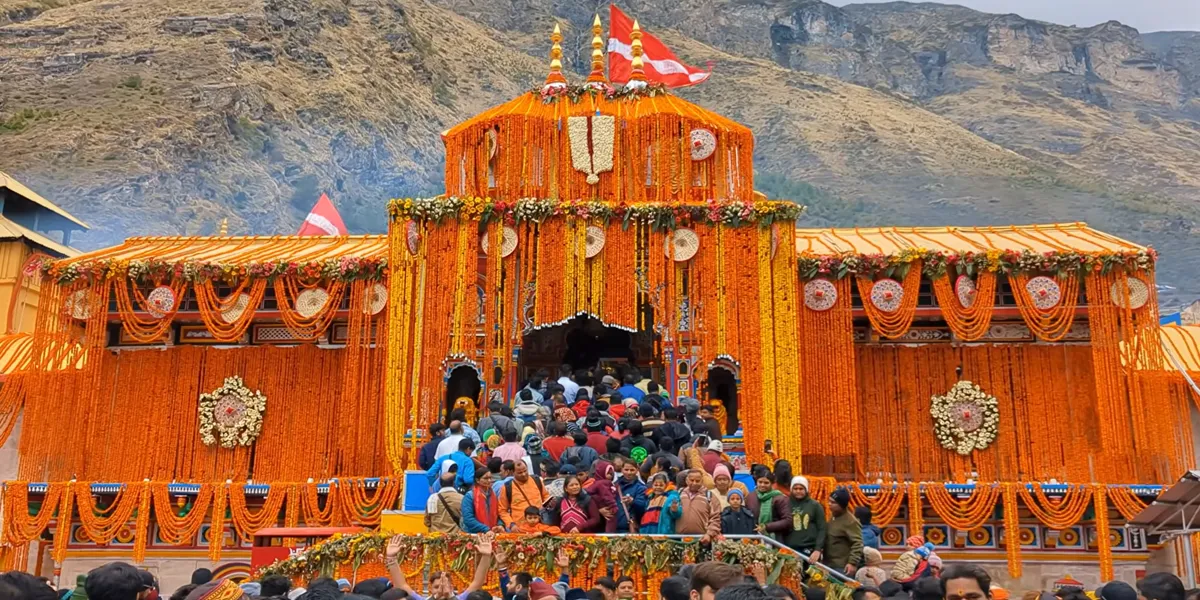
Table of Contents
Quick Facts About Badrinath Temple
Interesting Facts About Badrinath Temple
Here are some amazing facts about Badrinath Temple in Uttarakhand, which is less known among the visitors and pilgrims. Let's take a look at these amazing facts about Badrinath Temple:
- One of the Four Char Dham shrines: In India, basically there are two Char Dham yatra pilgrimage circuits, one is known as Bada Char Dham, which includes Dwarka, Puri, Rameshwaram and Badrinath, while, other is Chota Char Dham pilgrimage, which includes Yamunotri, Gangotri, Kedarnath and Badrinath temples. This is the only temple which is part of both the Char Dham pilgrimage.
- Part of the Chota Char Dham circuits: Badrinath Dham is also part of the Chota Char Dham Pilgrimage circuits, nestled in the lap of the Garhwal Himalayas of Uttarakhand, which coincide with Yamunotri, Gangotri, Kedarnath, and Badrinath. It is also part of the Panch Badri Temples and Sapt Badri circuits (temples dedicated to lord vishnu).
- Elevation: Badrinath temple is located in the lap of the Himalayas at a striking altitude of 3,313 meters (10,279 feet) above sea level.
Safety Tips: The temple is situated at an high altitude, which can cause high-altitude sickness, it is recommended to carry medicines and elderly pilgrims must consult a doctor before planning the journey. - Built by Pandavas and re-established by Adi Shankaracharya: It is said that this temple was first built by Pandavas, before their final yatra to swarga. Later on, it is believed to have been acquired by Buddhists in the region of Ashoka. But it was again regained by Adi Shankaracharya (Ancient Indian Philosopher) in the 8th century and was reestablished as a Hindu pilgrimage.
- Dedicated to Lord Vishnu: The temple is dedicated to Badrinarayan, the form of Lord Vishnu. Lord Vishnu meditated here to bring peace to the world, and Maa Laxmi, his consort, stood here in the form of the Badri tree to protect him from the adverse climatic conditions of this region. That's why this region got its name as Badrinath.
- Tapt Kund: One of the shrine's primary features, it is located near the temple and is a natural wonder. The natural hot water spring with water temperature more than 45°C in the chilling climatic condition of Badrinath. Devotees visiting to this temple prefer to take a dip before going for a darshan at the temple.
Travel tips for visitors: Just like this natural hot spring there are many other places to visit near Badrinath, including Mana Village, Bheem Pul, Vasudhara Falls, and more, which holds fantastic facts like Badrinath. - Link with many ancient texts: The Name "Badrinath Temple" is mentioned in texts such as the Bhagwat Purana, Skanda Purana, and Mahabharata, making it a significant Site in Hinduism. It is also found in the Bhagavata Purana and the Nalayira Divya Prabandham(Tamil Literature).
- Flow of the Saraswati river: The Saraswati river, which has multiple mentions in our Vedas and Puranas, flows only in Badrinath; later on, it is believed to flow underground. This river can be seen only in this region.
- The Black Shaligram Idol: The main deity of the shrine is a black stone idol of lord Vishnu in Padmasana (meditation pose), made from Shaligram, which Adi Shankaracharya is said to have found in the Alaknanda River. There are some 14-15 idols of different deities, including Goddess Lakshmi, Narad Rishi, Lord Kuber, Nar-Narayan, etc.
- Head priests of Badrinath temple are from Kerala: Badrinath temple is in Uttarakhand, but do you know that its head priests are from Kerala? They are Namboodiri Brahmin and were appointed by the Kedaranth Badrinath temple committee.
- Opening and Closing Date: Unlike other Char Dham temples, this temple remains closed for almost six months in a year, and reopens in the month of April or May, depending upon the celestial body movement.
Note: You can also check out our blog on "Badrinath Temple Opening and Closing Dates 2026" to plan your journey. - Snow-capped Himalayan Peaks: Badrinath temple is located in the lap of two majestic peaks the named Nar and Narayan. One of the most interesting facts about Badrinath and Kedarnath temples written about these two temples, is that one day these two peaks will collide and the yatra to these temples will be closed forever.
Also read to know more: 10 Interesting Facts About Kedarnath Temple - Narshimha temple in Joshimath: One of the most famous temples in Joshimath is Narsingh temple. As per the head priest and locals, it is said that the hand of the deity is getting thicker with time. The day it will fall, that day the peaks Nar and Narayan will meet, marking the closing of the Badrinath Temple.
- Linked to the Pandavas: The temple is also associated with the Pandavas. According to the Badrinath Temple history, the Pandavas, along with their wife Draupadi, passed via this temple on their final journey to heaven. It is also said that anyone visiting this temple will get rid of the cycle of birth and death and attain salvation. One of the famous sayings about this temple is "जो आए बदरी, वो ना आए ओदरी" which means all those who visit Badrinath temple, never get mother womb again and attain salvation.
- Part 108 Divya Desams: Facts about Badrinath Temple state that it is also one of the 108 Divya Desams and a sacred temple of Lord Vishnu across India.
- Thunderstorms have no sound: As per the locals, it is said that they have never heard a thunderstorm in this region. As per the holy scriptures, it is believed that lord vishnu is meditating here, and nature dares not to disturb him. So no one had ever heard the sound of a thunderstorm in this area.
- Rawal (Head Priest) of Badrinath temple dresses like a woman: As per an old tradition, every year, the head priest of this temple dresses like a woman before the closure of the temple. As no male can touch the idol of goddess Laxmi, he took the form of a lady, a friend of Maa Laxmi, before displacing her from her sanctuary.
- Badrinath is the only temple with five gates. There are no five physical gates available in the Badrinath temple. The concept of panch dwars, which are Singh Dwar, Raksha Dwar, Yog Dwar, Krodh Dwar and Moksha Dwar. These are metaphorical or ceremonial “doors,” which are ritualistic gateways used during specific ceremonies and spiritual processes.
- Winter Shift: After the closure of the temple, the Utsav murti of lord Badrinath is being carried to the Joshimath temple, which is the winter abode of the deity. As per the locals, it is said that the deity also moves with the possession, and the footprint of the deity can be seen on the snow.
- Idols of lord Vishnu always remain warm: As per the locals, the idol in this temple always feels warmer in comparison to the outer temperature, giving goosebumps to the devotees and yet a mystery.
- Extreme Weather conditions: The temple faces extreme weather conditions during the winter, from November to April, with potential snow.
Safety Tips: Avoid visiting during Monsoon and Winter. There is high risk of landslides and road blockage due to heavy rainfall. Also the temple remains closed during winter due to snowfall. Plan during summer or autumn, as these are the best time to visit Badrinath. - Narayan Parvat Glow: It has been observed that the Narayan Parvat located behind the temple glow on certain days for some time. Locals believe that this is due to the divine aura, while scientists say that it is due to the rare earth metals.
- No metals are allowed inside the temple. During the abhiseka of the deity, no metals are allowed; only Tulsi leaves, pure water and a couch are allowed. Not even the metal utensils can be carried.
- Badrinath temple opens with the goddess's permission: One of the most amazing facts about Badrinath temple is that before opening the temple, the priests of the temple check the sacred sesame lamp (til ka diya) lit in front of lord Narsimha. When the flame of the lamp tilts to a certain direction, then only the door of the Badrinath temple gets opened, considered as the permission of Maa Laxmi to open the Badrinath temple.
- Shankh is prohibited inside the temple: Blowing the shankh (Conch) is strictly forbidden in the Badrinath temple due to religious and scientific reasons. Religiously, it’s believed that a demon named Vatapi hid himself in a shank inside the temple; blowing the shank is said to release him, and scientifically, blowing the shankh at high altitude causes ice storms.
Mythological Story Of Badrinath Temple
The mythology of the Badrinath Temple story centres on Lord Vishnu's meditation, while the other is associated with the Pandavas. Let's read facts about the Badrinath temple history and story one by one.
Lord Vishnu Meditation: According to Hindu mythology, Badrinath (formerly known as Badri forest) is the place where Lord Vishnu meditated to grant peace for the world, and Goddess Laxmi transformed herself into a Badri tree to protect Lord Vishnu from the harsh climate; this event gave the place its name.
Pandava's Journey to Heaven: Another legend states that Badrinath served as a key stop on the Pandavas' journey to heaven (Swargrohini Yatra), making it a significant Site.
Facts About Badrinath Temple Architecture
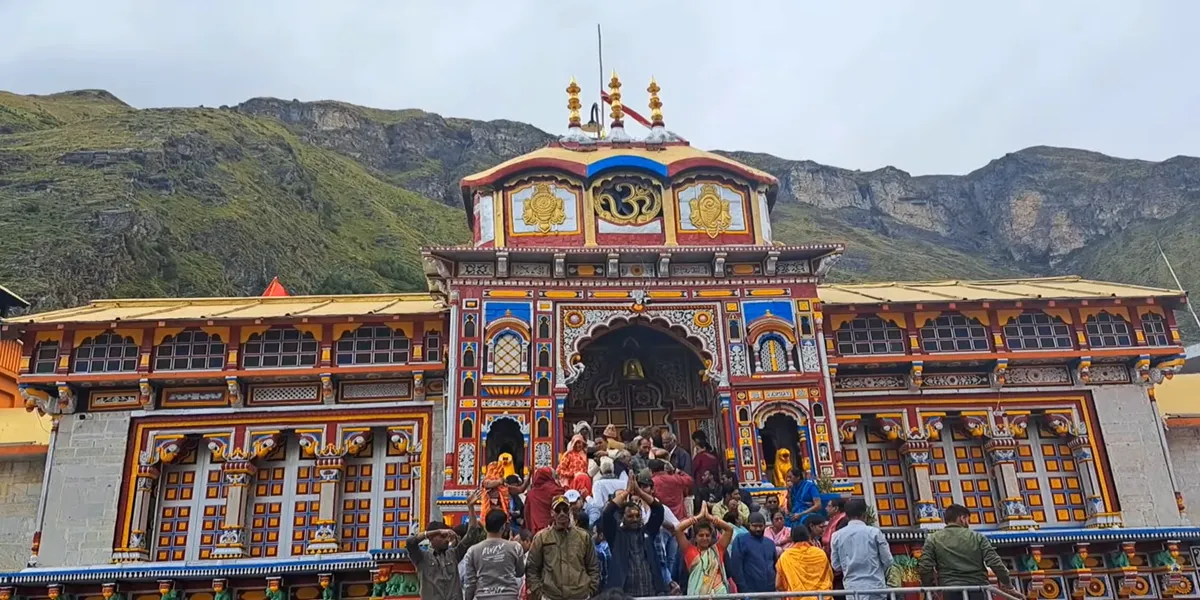
The architecture of Badrinath Temple reflects a simple yet distinctive blend of traditional Garhwali and North Indian temple styles. Built using stone and wood, the structure is designed to withstand the extreme Himalayan climate while maintaining its spiritual and cultural essence. The temple is crowned with a gold-plated shikhara, which stands out against the surrounding snow-clad mountains. Key architectural features of Badrinath Temple include:
- Shikhara: The towering structure above the sanctum, topped with a conical roof, marking the main shrine of the temple.
- Garbhagriha: The inner sanctum where the idol of Lord Badrinarayan is enshrined.
- Sabha Mandap: A hall used for religious gatherings and rituals.
- Darshan Mandap: The designated area where devotees assemble for darshan.
Conclusion
Badrinath Temple stands as one of the most revered and spiritually significant shrines in India, known not only for its religious importance but also for its rich blend of history, traditions, and age-old beliefs. From its sacred association with Lord Vishnu and the Char Dham pilgrimage to its unique rituals, mythological narratives, and striking Himalayan setting, the temple continues to inspire deep faith among devotees.
The interesting facts about Badrinath Temple and local beliefs surrounding the Temple reflect centuries of spiritual practices and cultural continuity that have shaped its identity. Whether viewed through the lens of history, mythology, or tradition, Badrinath remains a timeless symbol of devotion and divine presence in the Garhwal Himalayas.
FAQs Related To Facts About Badrinath Temple
Q1. What makes the Badrinath temple so special?
Badrinath temple is one of the holy places for Hindus, especially for Vaishnavites, dedicated to lord Vishnu. It is part of the Char Dham and Do Dham shrines. Devotees visit Badrinath to offer oblations to ancestors with the help of the priest.
Q2. Why is the shank not blown in the Badrinath temple?
The blowing of the shank is strictly prohibited in the Badrinath temple due to scientific and religious reasons. Scientifically, the sound of waves can destabilise the surrounding ice, leading to ice storms. Religiously, a demon named Vatapi hid himself in a shank in the temple, and blowing it would release him.
Q3. What is the peak behind the Badrinath temple?
The Badrinath temple is situated amidst the Mt. Neelkanth, a pyramid-shaped peak that is part of the Garhwal Himalayas and is also often called the Queen of the hills.
Q4. Who is the priest of the Badrinath temple?
The head priest of Badrinath temple is known as Rawal and belongs to the traditional Namboodiri brahmin community of Kerala.
Q5. Who is the current Rawal of the Badrinath temple?
The current Rawal of Badrinath (chief priest) is Amarnath Namboodiri. He took charge in April 2024. After the resignation of the previous Rawal Ishwar Prasad Namboodiri.
Q6. Why is there no sound in Badrinath?
The key reasons for the lack of sound in Badrinath are the risk of avalanches, the vibration caused a loud sound, which is also a primary reason for conch-blowing restrictions.
Ancient Legends of Lord Vishnu killing a demon, Shankachaud, in the vicinity, so to avoid the reminding of this event to goddess laxmi shank are not blown. To prevent disturbances of sound. These reasons are mainly connected to conch-blown restrictions in Badrinath.
Q7. Where is Badrinath shifted in winter?
The idol of the Badrinath temple is shifted to the Narsingh temple of Joshimath during the winter period due to extreme weather and heavy snowfall.
Related Guide |



.webp?v=15617ff41ba64410feaa36094192201f)