
Char Dham Yatra Health Advisory 2026: Safety Tips For Pilgrims
Category: Travel | Updated On: August 22, 2026 | Published: March 21, 2026
Introduction
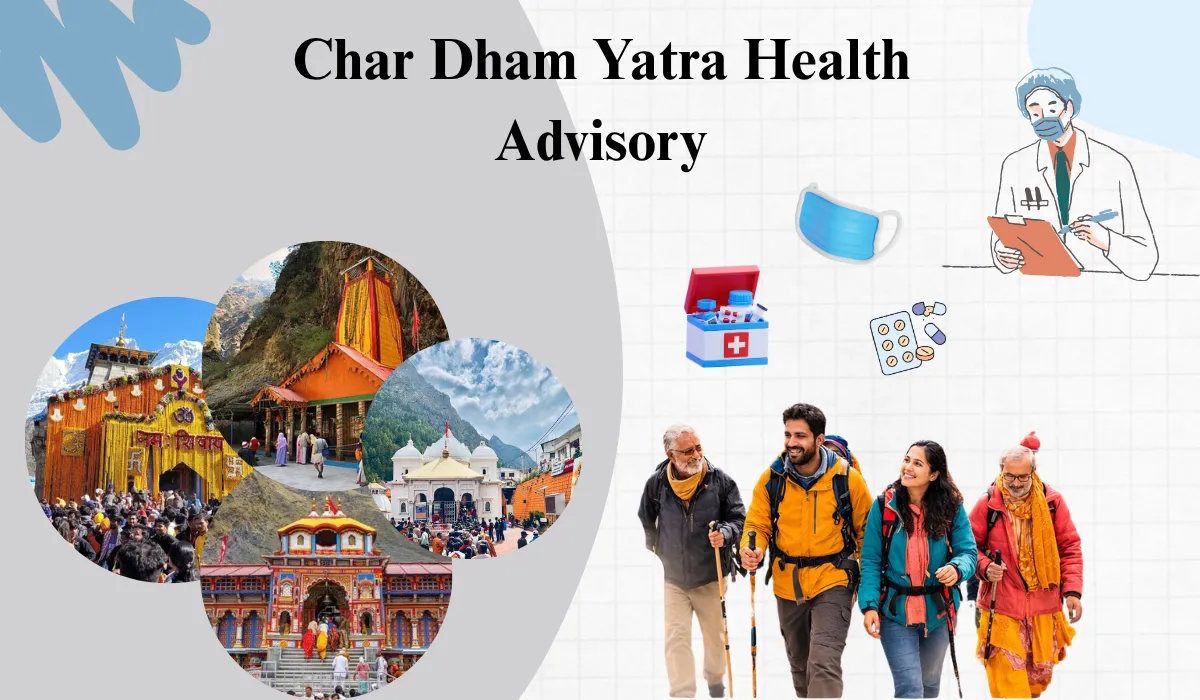
The Char Dham Yatra is a sacred and one of the most significant pilgrimages in India. The journey involves visiting four holy shrines: Yamunotri, Gangotri, Kedarnath, and Badrinath, nestled at high altitudes in the Garhwal Himalayas in Uttarakhand.
Due to its immense spiritual significance and stunning natural beauty, thousands of devotees, including senior citizens, children, and more, undertake this sacred journey to seek divine blessings throughout the year.
The Chardham route map involves trekking in high-altitude mountain regions and long road travel, which means travelers must prepare carefully.
Many travelers ask: "What are the health advisories for the Char Dham Yatra?" So, here is a comprehensive guide to Char Dham Yatra health advisory for a safe and comfortable pilgrimage through the majestic Himalayas.
Quick Checklist for Char Dham Yatra Health Advisory
Here is a quick checklist of the Char Dham Yatra health advisory and tips to ensure a healthier, smoother Yatra.
- Pack basic medications for headache, pain, fever, cough, or cold.
- Check the live weather forecast before starting the journey, as disrupted weather can cause fever, cold, or other health issues.
- Prepare mentally and physically before the yatra, as it involves treks, hikes, and efforts.
- Pack essential items, such as warm clothing, energy bars, and drinks to stay energetic and protected.
Safety Tips: Many pilgrims are unable to complete the treks to reach the shrines. They should prefer booking the Char Dham helicopter packages or pony/palki services.
Table of Contents
- Introduction
- Pre-Yatra Health Advisory
- Health Advisory During Yatra
- Government Safety Guidelines For Char Dham Pilgrims
- Mandatory Medical Certificate
- Altitude & Oxygen Levels at the Four Dhams
- Char Dham Yatra by Helicopter — Health Advisory
- Who can visit the Char Dham Yatra?
- Final Thoughts
- Frequently Asked Questions
Pre-Yatra Health Advisory
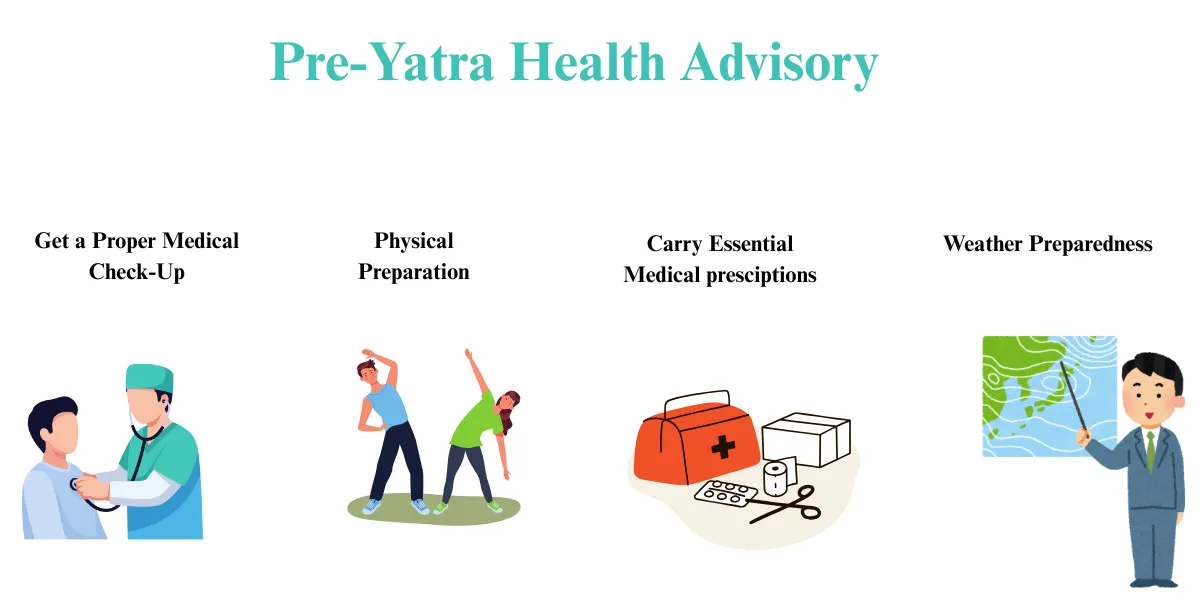
Proper preparation before planning a trip is essential for a safe journey. Pilgrims must begin their preparation at least 4-5 weeks before, as it requires stamina and lung capacity.
Here are some pre-Char Dham Yatra health advisories that every pilgrim should follow before the trip:
Get a Proper Medical Check-Up
Traveling in a high-altitude remote region can increase health issues, so pilgrims should consult a doctor for general health check-ups. A check-up is especially recommended for pilgrims aged 50 and above, or those with health issues such as Asthma, heart problems, or high blood pressure. Pilgrims aged 55 and above must also complete a compulsory physical health screening at designated base-camp checkpoints — see the Mandatory Medical Certificate section below for the full requirement.
Physical Preparation
Due to the demand for long road travel, walking hours, and treks, physical preparation is crucial to build stamina and strengthen the lungs.
How to prepare physically before the yatra?
- Practice breathing exercises for at least 10 minutes a day.
- Do cardiovascular exercise, such as walking and cycling, to build stamina.
Tips for visitors: Pilgrims with pre-existing health issues must carry their medical certificate, prescriptions, and medicines to address any major issues during the yatra.
Essential Pack List
Pack light but smart; carry all the essentials.
- Warm clothes & Rain Gear: To protect from cold weather, pack warm clothes, including fleece jackets and thermal layers.
- Sun Protection: Carry a cap, sunscreen, and sunglasses to protect from sunburn during the peak summer season.
- Comfortable trekking gear: Headlamp, trek pants, and high-ankle trekking boots to keep your feet dry and warm.
For more detailed information, read our blog on “Things to pack for Char Dham Yatra”.
Pro tip: Carry the Char Dham Yatra registration slip. It ensures the safety and security of pilgrims throughout the journey, and it is mandatory for all.
Medicines to Pack
Beyond your regular prescriptions (carried in original packaging with the prescription itself), a few altitude-specific items are worth packing:
- Diamox (Acetazolamide) — helps prevent altitude sickness; consult a doctor before use.
- Motion-sickness tablets — for winding mountain roads or a helicopter transfer.
- ORS sachets — to prevent dehydration.
- Paracetamol and a small first-aid kit — band-aids, antiseptic cream, for minor injuries.
Weather Preparedness
The weather in these regions changes rapidly, just like mood swings, so be aware of the weather conditions. Check the full weather forecast before planning a trip, and also follow local weather precautions for a safe journey. Pack proper rain gear, like a raincoat or Poncho.
Travel tips: Plan your journey at the best time to visit Char Dham and avoid visiting during the monsoon, as it is risky and injurious.
Health Advisory During Yatra
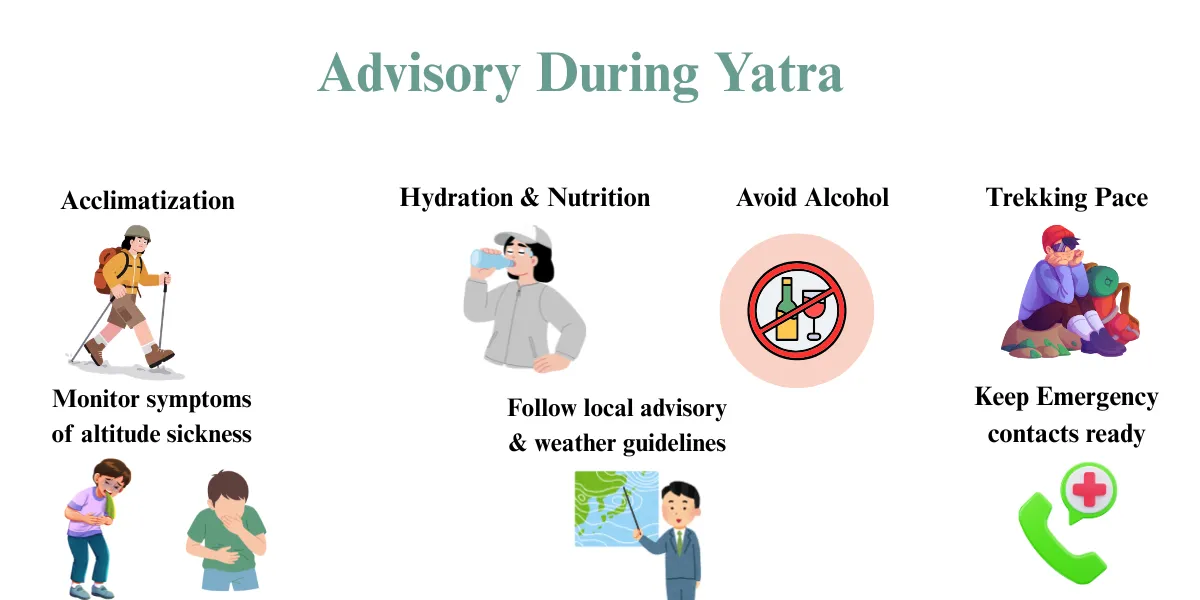
Once travellers start the journey, they should follow the Char Dham Yatra health advisory and precautions to reduce travel fatigue and altitude sickness.
- Acclimatization: Avoid rushing on mountains and give your body time to adjust to high altitudes. Take regular breaks during road travel and treks.
- Hydration & Nutrition: Drink at least 2-3 liters of water a day and eat light, nutrient-rich meals throughout the journey. Avoid oily food.
- Avoid Alcohol: Chardham is a holy site, so avoid consuming alcohol or smoking, and also taking caffeinated drinks and strong pills.
- Monitor symptoms of altitude sickness: Watch for Altitude sickness signs, such as headache, dizziness, nausea, and breathlessness. If symptoms are worsening, then take immediate action.
- Follow local advisory & weather guidelines: Weather in the Himalayas changes rapidly, so pilgrims must follow instructions from local Authorities.
- Keep Emergency contacts ready: Use Uttarakhand Helpline Number 104, or 108/102 for ambulance/medical assistance, in health-related emergencies.
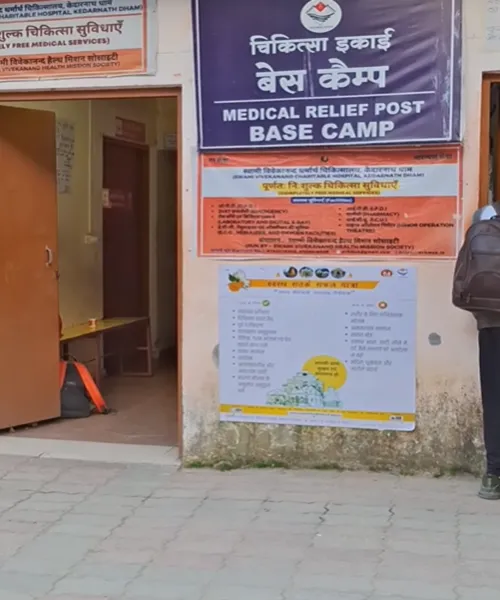
- If a medical emergency happens: stay calm, alert your driver/pilot or the nearest checkpoint staff, follow any on-site medical instructions, call 108/102, and request evacuation if the condition is serious. Oxygen cylinders and screening points are positioned along the route, with oxygen booths at Kedarnath and Badrinath specifically.
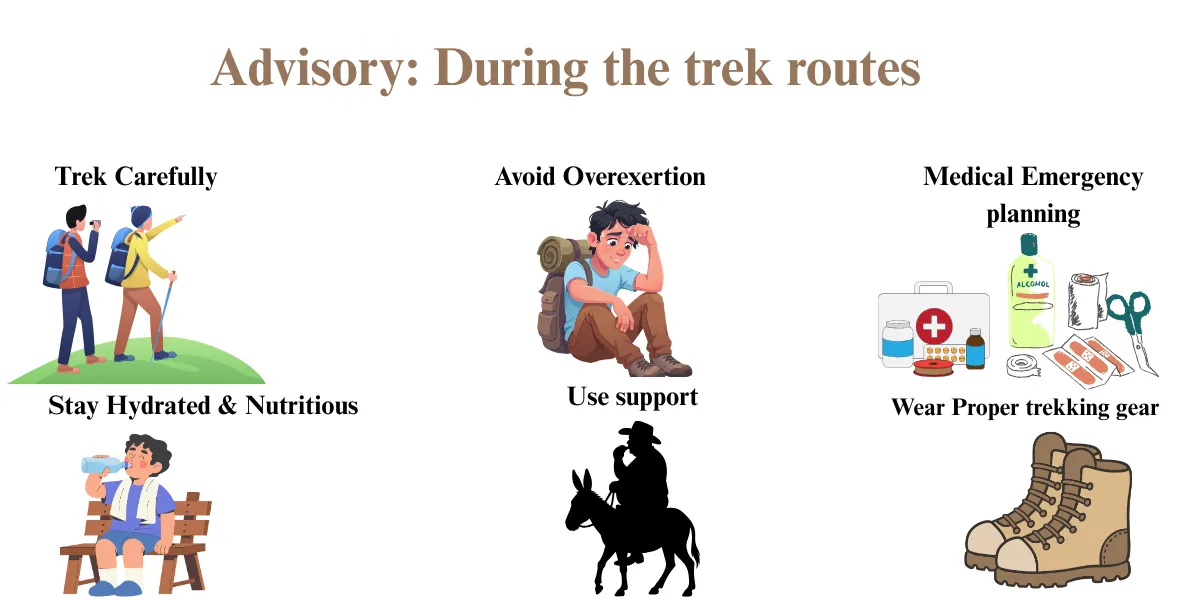
Advisory: During The Trek Routes
- Trek Carefully: The Yamunotri and Kedarnath trek can be physically demanding, so plan your trek with frequent breaks.
- Avoid Overexertion: Do not overexert or rush; take short breaks and walk slowly.
- Use support: If you find difficulties in completing the trek, then use services such as Palki/mule or Porter service.
Check out the Khacchar, pony, and palki rates for Yamunotri and the rates of pony/palki for the Kedarnath Trek.
- Medical Emergency planning: Be aware of the nearest medical centers along the route to get easy access during an emergency.
- Stay Hydrated & Nutritious: Drink enough water and eat energy bars during the trek, as they help to maintain energy on long climbs.
- Wear Proper Trekking Gear: Wear good-quality trekking shoes with grip to protect your feet on rugged terrain.
Government Safety Guidelines For Char Dham Pilgrims
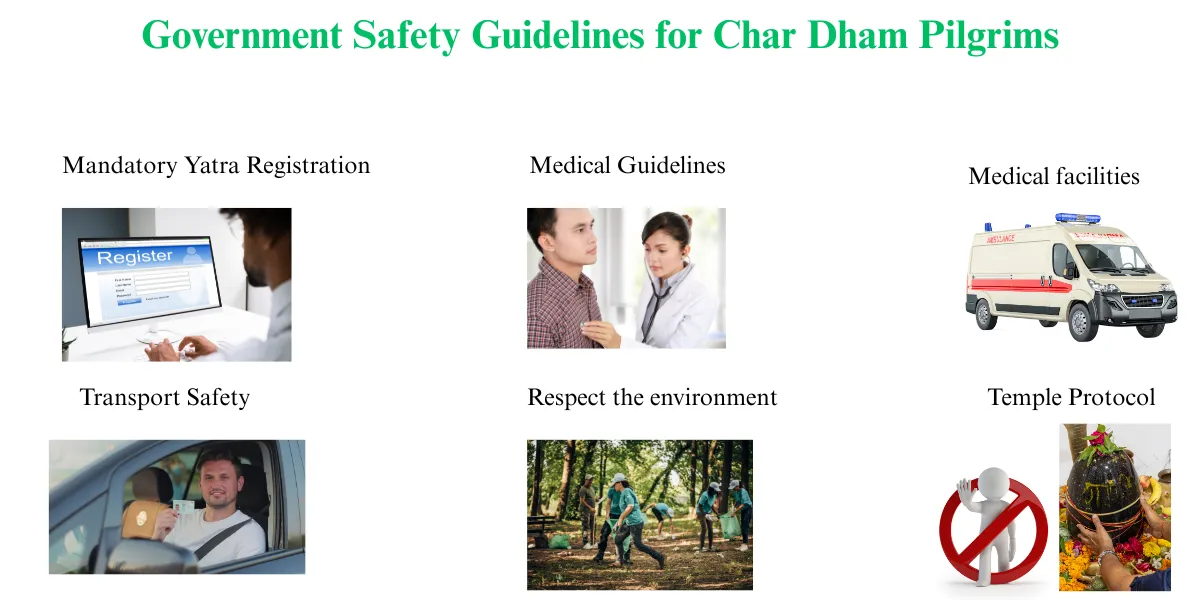
The Uttarakhand Government has established mandatory safety protocols and health advisories to manage high-altitude risks and crowds during peak season.
- Mandatory Yatra Registration: All pilgrims must complete the Char Dham Yatra Registration before starting the trip, as it helps to track pilgrims' activity and provide quick assistance in case of any emergency.
- Medical Screening: Pilgrims aged 55 and above must undergo a compulsory physical health screening at base-camp checkpoints; those aged 50+ or with pre-existing conditions (Asthma, heart disease, high blood pressure) are strongly advised to carry a medical fitness certificate signed by an MBBS doctor. Full details in the Mandatory Medical Certificate section below.
- Medical facilities: Due to low oxygen levels and extremely cold weather, the state deploys ambulances and screening points along the route each yatra season (recent seasons have cited figures around 150+ ambulances and 50 screening points) — check the official Uttarakhand health department advisory for the current season’s confirmed numbers.
- Transport Safety: The government strictly prohibited night driving on the Char Dham route after 8:00 PM and also announced a vehicle permit, a Green Card, to drive a vehicle on the route.
- Respect the environment: Avoid littering, as it’s a fragile Himalayan ecosystem zone, and follow eco-friendly practices throughout the journey.
- Temple Protocol: Follow the basic protocols, such as not taking photos inside the temple, wearing modest clothes, and touching the idols.
By following these guidelines, pilgrims can plan a smoother, safer, and more comfortable journey.
Mandatory Medical Certificate for Char Dham Yatra
A medical fitness certificate is not required for every pilgrim, but the rules tighten sharply with age. Here is the distinction, since sources (and this page, previously) often blur the two thresholds:
- Age 50 and above, or with a pre-existing condition (heart disease, asthma, high blood pressure, diabetes): carrying a medical fitness certificate is strongly advised, though not compulsory at every checkpoint.
- Age 55 and above: a physical health screening is compulsory at designated base-camp checkpoints (Gaurikund for the Kedarnath trek, Janki Chatti for Yamunotri) before proceeding further.
- Who signs it: the certificate must be issued by a qualified MBBS doctor, confirming fitness for high-altitude travel.
- What it should state: fitness for high-altitude pilgrimage, current blood pressure reading, any ongoing medication, and the doctor's registration number.
- Exemption: pilgrims travelling by helicopter for VIP darshan are generally exempt from this screening requirement.
Note: exact age thresholds and screening requirements are set fresh each yatra season by the Uttarakhand government. Confirm the current year's rule on the official Uttarakhand health department advisory or at Char Dham Yatra registration before travelling.
Altitude & Oxygen Levels at the Four Dhams
All four Char Dham shrines sit above 3,000 metres, but the exact altitude — and the effort it takes to acclimatise — varies between them:
| Shrine | Altitude | Relative oxygen level |
|---|---|---|
| Gangotri | ~3,100 m (~10,170 ft) | Roughly 30-35% lower than sea level (about 65% of normal) at this altitude range |
| Badrinath | 3,133 m (10,279 ft) | |
| Yamunotri | 3,293 m (10,804 ft) | |
| Kedarnath | 3,583 m (11,755 ft) |
Kedarnath, being the highest of the four, is where altitude-related symptoms are most commonly reported. All four benefit from the same acclimatisation advice: ascend gradually, spend a day resting at Haridwar or Rishikesh before heading up, and stay hydrated.
Char Dham Yatra by Helicopter — Health Advisory
Flying instead of trekking or driving changes the health-preparation picture in a few specific ways. Here is what applies only to helicopter travel — everything above still applies too.
Is a medical certificate required for helicopter travel?
No — the compulsory physical health screening described in the Mandatory Medical Certificate section applies to road/trek pilgrims at base-camp checkpoints (Gaurikund, Janki Chatti), which helicopter passengers bypass entirely. You do still need to complete a self-reported medical declaration when booking through the official IRCTC HeliYatra portal or an authorised operator — a different, lighter requirement than the doctor-signed certificate.
Baggage limit and what it means for packing
Helicopter services typically allow only 5kg of luggage per person, in soft duffel bags only — hard bags aren't accepted. Pack light layers instead of heavy clothing, and keep any regular prescription medicines in their original packaging with your doctor's prescription, since there's no room to carry a full medical kit.
Rapid ascent and altitude sickness risk
A helicopter reaches altitude in minutes instead of the day or more a road/trek journey takes — this removes the natural gradual acclimatisation a slower ascent provides, so the same AMS symptoms (see the FAQ below) can appear faster and with less warning. Move slowly after landing, avoid overexertion, and ask for oxygen support if you feel unwell.
Oxygen and emergency support on the route
Helicopter operators carry oxygen cylinders on board, and oxygen booths are positioned at the higher-altitude shrines (Kedarnath and Badrinath) for emergencies. If a medical issue occurs mid-yatra: stay calm, inform the pilot, follow any onboard medical staff instructions, call 108 or 102 for government medical assistance, and request evacuation if the condition is serious.
Operator vetting
Book only with operators approved by UKADA (Uttarakhand Civil Aviation Development Authority) and regulated by the DGCA (Directorate General of Civil Aviation) — this ensures trained pilots and maintenance standards suited to high-altitude Himalayan flying.
Who can visit the Char Dham Yatra?
Anyone can embark on the sacred Char Dham Yatra in Uttarakhand, but it is recommended to be extra careful and take precautions regarding health before planning the journey for those:
- Pilgrims with health issues
- Heart or Asthma Patients
- Pilgrims with Disabilities
- Senior citizens and kids
Safety Tips: Consult a doctor before planning the journey, and be prepared with medication and essentials for a safe and smooth yatra.
Who should avoid the yatra, or travel only with medical clearance
Rapid altitude gain and low-oxygen conditions pose a real risk for a few specific conditions — these pilgrims should avoid the journey or travel only after strict medical clearance:
- Severe heart conditions, including heart failure, a recent heart attack, or irregular heartbeat.
- Uncontrolled high blood pressure, as altitude further strains the cardiovascular system.
- Serious respiratory disorders, such as severe asthma or chronic lung disease.
- Recent surgery, as high altitude may delay recovery and increase complications.
- Pregnancy, as high altitude and low oxygen levels may increase risk for both mother and baby.
Altitude awareness for pilgrims
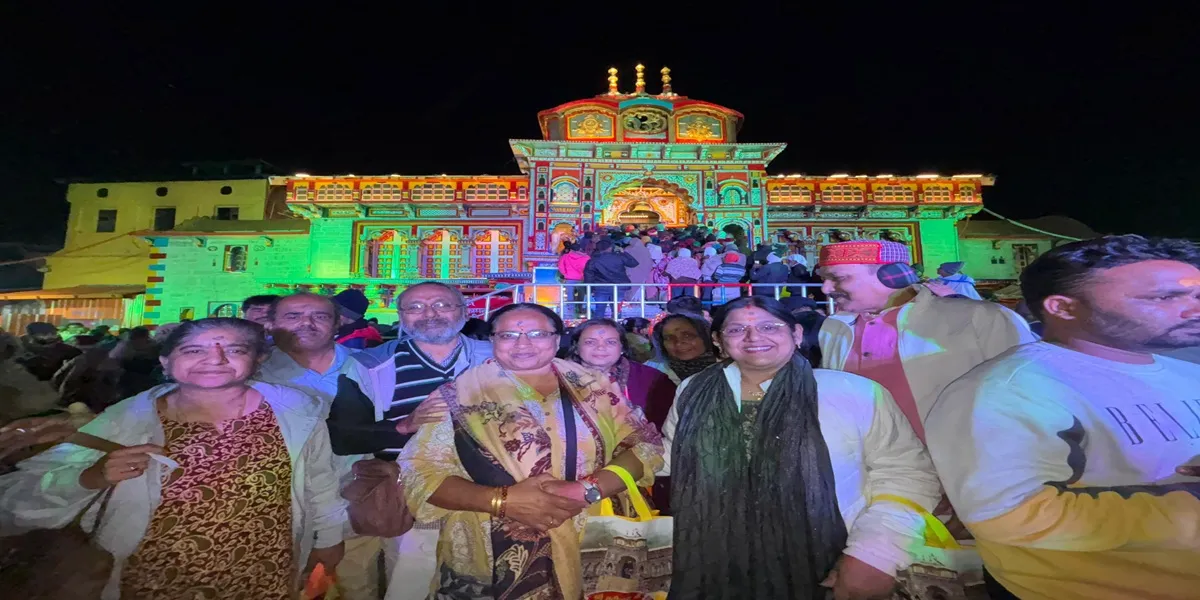
Being aware of altitude conditions is important to plan for a safe spiritual journey; it helps to plan a safe spiritual journey. All the Char Dham temples are located above the height of 3,000 meters, increasing the risk of health issues such as breathlessness, dizziness, and fatigue.
Final Thoughts
The Char Dham yatra is more than just a spiritual pilgrimage; it also offers a unique experience through the breathtaking Himalayan landscapes of Uttarakhand. However, the gaining altitude and challenging terrain require taking necessary precautions before and during the yatra.
By following the safety guidelines issued by the government or local authorities, pilgrims can complete their journey safely and smoothly. This complete guide on Char Dham Yatra Health Advisory will help you plan a better and safer journey.
Frequently Asked Questions
What are the health advisories for Char Dham Yatra?
A health advisory for the Char Dham Yatra was issued by the Uttarakhand Government and local authorities, focusing on managing high-altitude risks and challenges. Essential precautions include medical checkups, acclimatization, etc.
What precautions should be taken during the Char Dham Yatra?
The precautions that should be taken during the Char Dham Yatra include:
- Be aware of altitude sickness
- Carry medications and prescriptions
- Avoid harmful substances
- Eat healthy and light food
- Acclimatize properly
Can pilgrims experience altitude sickness during the Char Dham Yatra?
Yes, the altitude during the Char Dham Yatra reaches up to 3,000 meters, increasing the chances of high-altitude sickness, including headache, dizziness, and fainting. To address these issues, take medicines and rest properly.
Is the Char Dham Yatra safe for heart patients?
Yes, Heart patients can visit Kedarnath, but it is risky due to the high altitude and physical exertion. It is recommended to take helicopter services, VIP darshans, and proper medications. Also, consult your doctor (Cardiologist) before planning the journey.
What is the oxygen level in Kedarnath?
Kedarnath’s oxygen level is roughly 30-35% lower than at sea level (about 65% of normal) at its altitude of 11,755 feet (3,583 m). See the Altitude & Oxygen Levels table below for the other three dhams. It is recommended to stay hydrated throughout the journey, especially for pilgrims with health issues, such as asthma and breathing problems.
Is a medical certificate mandatory for Char Dham Yatra?
It becomes compulsory at age 55, when a physical health screening is required at base-camp checkpoints. Pilgrims aged 50+ or with pre-existing conditions are strongly advised to carry one even if not strictly checked. See the Mandatory Medical Certificate section above for the full breakdown.
What is Acute Mountain Sickness (AMS), and what are the warning signs?
AMS is the medical term for altitude sickness — the body's reaction to reduced oxygen at high elevation. Mild symptoms (headache, nausea, fatigue, dizziness, shortness of breath on exertion) usually ease with rest and hydration. Seek medical help immediately if you notice chest pain, breathlessness even at rest, confusion, loss of coordination, or a persistent cough — these can signal a more serious condition and should not be waited out.
Who is at higher risk of altitude sickness on the Char Dham Yatra?
Besides age and pre-existing heart, lung, or blood pressure conditions, pilgrims with a BMI over 30 and pregnant travellers are considered higher-risk categories for altitude-related complications and should consult a doctor before planning the trip.
Where can I get medical help along the Char Dham route?
The route has a tiered network of medical facilities — relief centres and screening points at frequent intervals, Primary Health Centres (PHCs) and Community Health Centres (CHCs) in larger towns, and district hospitals in Rudraprayag, Uttarkashi, and Chamoli for anything serious. Note the nearest facility to each stage of your route before starting, and keep the Uttarakhand health emergency helpline (104) saved.
Is the Char Dham Yatra safe for asthma or BP patients?
It can be, with preparation: carry your regular medication and prescriptions, get a doctor's clearance before travelling, avoid overexertion, and consider a helicopter package or pony/palki service to reduce physical strain at altitude. Monitor for AMS symptoms throughout and don't push through worsening symptoms.
What is the oxygen level at Yamunotri, Gangotri, and Badrinath?
All three sit in a similar altitude range to Kedarnath (roughly 3,000–3,300 m), so the same estimate applies: oxygen levels are roughly 30-35% lower than at sea level. See the Altitude & Oxygen Levels table above for each shrine's exact altitude.
Is a medical certificate required for Char Dham Yatra by helicopter?
No — helicopter passengers bypass the road base-camp checkpoints where the physical health screening is compulsory. A self-reported medical declaration is still required when booking, which is a lighter requirement than the doctor-signed certificate. See the helicopter health advisory section above.
What is the baggage limit for Char Dham Yatra by helicopter?
Typically 5kg per person, in soft duffel bags only — hard bags aren't accepted. Pack light layers and keep any regular medication in its original, prescribed packaging.
Are oxygen cylinders available during the helicopter yatra?
Yes — helicopter operators carry oxygen cylinders on board, and dedicated oxygen booths are positioned at Kedarnath and Badrinath for emergencies.
What should I do in a medical emergency during helicopter travel?
Stay calm, inform the pilot immediately, follow any onboard medical staff instructions, call 108 or 102 for government medical assistance, and request a helicopter evacuation if the condition is serious.