
Overview Of Best Time To Visit Triyuginaryan
Triyuginarayan Temple is a sacred Hindu pilgrimage site located in the Rudraprayag district of Uttarakhand, along the Kedarnath route. Situated at an altitude of around 1,980 meters (6,497 feet) above sea level, the temple is surrounded by majestic Himalayan peaks and offers a deeply spiritual and peaceful environment.
The temple holds immense religious significance as it is believed to be the wedding place of Lord Shiva and Goddess Parvati. It is also famous for its Akhand Dhuni, a perpetual sacred fire that is believed to have been burning since their divine marriage, making Triyuginarayan an important destination for pilgrims and spiritual seekers.
When it comes to planning a visit, there is no single “best time” that suits everyone. Some travellers prefer pleasant weather and easy accessibility, some want to avoid crowds, while others wish to experience cold weather or snowfall. Since Triyuginarayan Temple experiences distinct seasonal changes throughout the year, choosing the right time depends largely on personal preferences and travel comfort.
In this guide, we will provide a complete overview of Triyuginarayan Temple’s weather, temperature, seasonal crowd levels, and travel conditions. This will help you decide the best time to visit Triyuginarayan Temple based on your travel style, whether you are visiting with family, seeking solitude, or planning a spiritual journey along the Kedarnath route.
Based on weather conditions, accessibility, and crowd levels, this guide helps travellers choose the most suitable season to visit Triyuginarayan Temple according to their preferences.
Triyuginarayan Temple Temperature & Weather (Season-wise)
Triyuginarayan Temple experiences distinct weather conditions throughout the year, ranging from pleasant summers to cold, snowy winters. Due to its Himalayan location, weather plays a key role in deciding the best time to visit Triyuginarayan Temple for a safe and comfortable journey.
The region witnesses mild and clear summers, moderate to heavy rainfall during monsoon, and cold winters with occasional snowfall. Below is a season-wise weather and temperature overview to help travellers choose the most suitable time based on weather conditions, crowd levels, and accessibility.
Summer Season (April to June)
- Clear skies and excellent visibility
- Pleasant daytime temperatures
- Ideal for pilgrimage, sightseeing, and short treks
- Higher crowd levels due to peak pilgrimage season
Monsoon Season (July to August)
- Cloudy weather and reduced visibility
- Slippery and muddy trails
- Fewer pilgrims and quieter surroundings
- Travel not recommended due to safety concerns
Autumn Season (September to October)
- Crisp air with clear mountain views
- Cool mornings and chilly evenings
- Comfortable travel conditions
- Moderate crowd levels
Winter Season (November to March)
- Snow-covered landscapes during peak winter
- Very few travellers and a peaceful atmosphere
- Challenging road conditions
- Suitable for those seeking solitude and snowfall experience
Monthly Weather, Temperature And Crowd – Triyuginarayan Temple
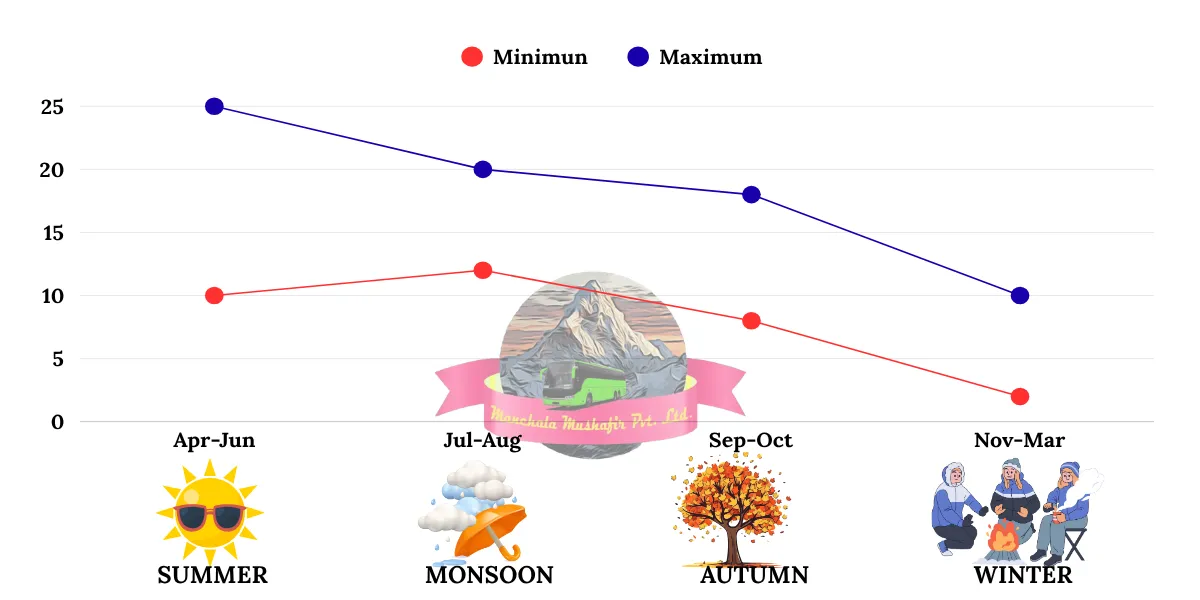
Best Time To Visit Triyuginarayan Temple
- Ideal months: Since the temple is accessible all year round, the best time to visit Triyuginarayan temple is May to June and September to October, as these periods provide pleasant weather, comfortable temperature, and excellent visibility and accessibility, making them ideal times for pilgrimage, sightseeing, and cultural activities.
- Choose May-June If you travel with your family, including children and senior citizens, it is considered the best time to visit Triyuginarayan temple for them because it is the time when the temperature will be moderate with the least rainfall. You will get a clear view and can spot snow-capped mountain ranges from this temple. But as this is an idle time and Char Dham temples open up, you can see a huge crowd.
- Avoid monsoon: July and August experience moderate to heavy rain that causes landslides and makes trails slippery and travel risky. Temple is accessible, but travelling can be a challenge due to muddy and misty paths, so try to avoid it.
Tip: But if you love snowfall and want to experience it live, then winter could be the best time to visit the Triyuginarayan temple for you. As this region receives snowfall in December and January. Although roads remain open but you may see very marginal crowds in this region, making it idle for all those who are looking for a peaceful pilgrimage.
Annual Festivals And Occasions In Triyuginarayan
Triyuginarayan Temple is not only a sacred pilgrimage site but also an important cultural destination where several religious festivals and occasions are celebrated throughout the year. Visiting during these times allows devotees to witness traditional rituals and experience the temple’s spiritual energy at its peak.
- Mahashivratri (February)
- Akhand Dhuni Puja
- Shravan Month (July–August)
- Weddings and Cultural Events
Things To Pack For The Triyuginarayan Temple

Warm clothes: fleece jackets, sweaters, and winter accessories.
Rain gear: umbrella and poncho to protect from sudden rain.
Trekking gear: trekking shoes and a walking stick.
Medical kit: carry a small medical kit along with prescribed medicines and other things, like painkillers, bandages, etc.
Other items: flashlight, power bank, water bottles, and backpacks.
Hydration & Nutrition: dry fruits and Glucose sachets to get instant energy.
How Weather Affects Accessibility
Significantly, the weather affects the accessibility of the Triyuginarayan temple, as monsoons cause landslides and winter experiences snowfall, both making travel risky and making it challenging to navigate trails. Let's discuss briefly how the weather affects accessibility.
Monsoon season (July-August): The Monsoon in Triyunginarayan experiences heavy rain.
Impact: heavy rain leads to landslides and thunderstorms, which make trails slippery and muddy. Cloudy weather also affects the connectivity.
Accessibility: slippery paths make travel risky, as it is challenging to navigate the trail. Travelling is not recommended at this time.
Winter Season (November to March): Winter experiences snowfall, making the roads a bit slippery with extreme cold climatic conditions.
Impact: Although the temple remains open, due to extreme climatic conditions, you may experience the least comfortable conditions in this region. This is an ideal time to visit the Triyuginaryan temple for all those who are looking for a peaceful pilgrimage.
Accessibility: Travelling during this time is a bit risky, and the roads get slippery, making it a bit challenging to get to.
Climate Tips For Pilgrims And Trekkers

Choose the best time to visit Triyuginarayan temple: Plan to visit during the summer (May-June) and the Autumn months (September to November), as these periods offer favourable weather and excellent accessibility.
Stay hydrated: drink plenty of water during your whole trip to reduce the risk of dehydration.
Acclimatise properly: properly acclimatise yourself at lower altitudes.
Check the full weather forecast: Before planning for your trip, check the Triyuginaraan weather forecast and be adaptable to any change.
Final Thoughts
The Weather in Triyunginarayan changes significantly; different weather provides different experiences. Whether you are seeking divine connection, natural beauty, a photogenic landscape or more, Triyuginaran promises an experience that touches your soul.
The best time to visit Triyuginarayan temple is the Summer months (May-June) and the post-monsoon months (Sep-Oct), which provide the most pleasant weather and accessibility that is perfect for spiritual and adventure seekers. So choosing the best time to visit the Triyuginarayan temple with the right season is crucial, as it ensures safety and serenity.
Popular Packages
 |  |  |
Frequently Asked Questions (FAQs)
Q1. Best time to visit Triyuginarayan Temple?
Well, the temple remains open all year round, and the best time to visit Triyuginarayan temple depends on an individual's preference and desired experience. May to June and September to October are ideal for family travellers, as these months provide warm and pleasant weather and accessible trails. Winter, from November to February, is suitable for those who want to experience majestic snow.
Q2. What is the temperature at Triyuginarayan Temple?
The temperature of Triyuginarayan can vary by season. During the summer, the temperature ranges from 10°C to 25°C; during the monsoon and autumn, it ranges between 12°C and 22°C; and in winter, the temperature drops significantly, from 2°C to 10°C, and sometimes drops to sub-zero temperatures at night.
Q3. Does it snow in Triyuginarayan Temple?
Yes, the Winter months(November to March), especially January and February, experience snowfall in Triyunginaryan. During these months, the entire region, including the temple, is covered with snow.
Q4. Is the Triyuginarayan Temple closed in winter?
No, the Triyuginarayan temple is open in winter, but travel can be challenging due to harsh weather and snowfall. The temperature drops significantly, especially at night, and roads get slippery. It is not the best time to visit the Triyuginarayan temple for everyone, but it offers a serene atmosphere suitable for those who want a quieter experience, with live snowfall and a thrilling experience.
Q5. What is the coldest month in Triyuginarayan?
January and February are the coolest months, as they experience extremely harsh weather with sub-zero temperatures and also experience moderate to heavy snow.



.webp?v=15617ff41ba64410feaa36094192201f)