The Char Dham Yatra places include four sacred pilgrimage sites in Uttarakhand—Yamunotri, Gangotri, Kedarnath, and Badrinath—each dedicated to a revered Hindu deity. Together, these holy shrines form one of the most important spiritual journeys in Hinduism, believed to purify the soul and guide devotees toward salvation.
I’m Pratiksha, a spiritual enthusiast who has been visiting the Char Dham since childhood. Through years of personal experience, I have gained deep insights into the history, spiritual significance, and practical aspects of each dham. In this guide, I share my real experiences, key highlights, and essential tips to help you understand the Char Dham Yatra places explained clearly and plan a meaningful, spiritually enriching journey.
What Are The Char Dham Yatra Places?
The Char Dham Yatra consists of four sacred Hindu pilgrimage temples—Yamunotri, Gangotri, Kedarnath, and Badrinath—located in the Garhwal Himalayas of Uttarakhand. Completing this pilgrimage is believed to cleanse past sins, purify the soul, and guide devotees toward moksha, or liberation from the cycle of birth and death.
Many spiritual travelers seek clear Char Dham temples details before beginning their journey. In this section, the Char Dham places are explained briefly to help devotees understand the spiritual importance of each dham before exploring them in detail.
Overview Of Char Dham Temples
The Char Dham Yatra places in India are the most prestigious Hindu pilgrimage circuit, which, in the Garhwal region of Uttarakhand, covers four sacred shrines. Each is dedicated to a different deity and holds immense spiritual significance in Hinduism.
| Temples | Dedicated Deity | Location | Altitude | Accessibility |
| Yamunotri | Goddess Yamuna | Uttarkashi | 3,293 m (10,804 ft)
| Trek 6 km from Janki Chatti |
| Gangotri | Goddess Ganga | Uttarkashi | 3,100 m (10,200 ft) | Fully accessible by road |
| Kedarnath | Lord Shiva | Rudraprayag | 3,583 m (11,755 ft) | Trek 16 km from Gaurikund |
| Badrinath | Lord Vishnu | Chamoli | 3,133 m (10,279 ft) | Fully accessible by road |
History & Spritual Significance
Founded in the 8th century by the philosopher Adi Shankaracharya to revive Hinduism and consolidate the Shaiv and Vaishnav Hindu traditions, which emphasized this pilgrimage as a path to spiritual awakening. This Himalayan pilgrimage circuit is deeply tied to natural elements, including water (rivers) and gradual mountains.
It’s a symbol of a journey from purification to liberation, which also strengthens faith and devotion, often called the “Journey of Salvation”. This pilgrimage usually follows a traditional clockwise sequence, starting from the west (at Yamunotri) and moving to the east (in Badrinath). Discover more about Significance of Char Dham Yatra, in this blog
Yamunotri: Origin Of The Yamuna River
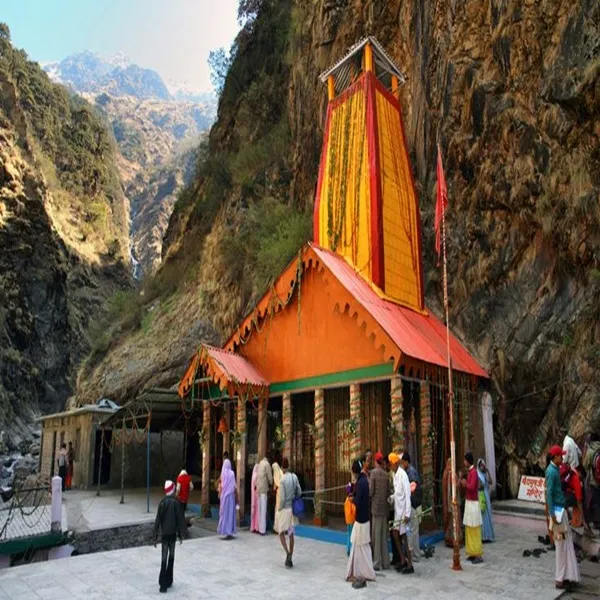
Yamunotri Dham is the sacred abode of the Goddess Yamuna, known as the origin of the Yamuna River (the second sacred river in Hinduism). It is the very first destination to cover in this Yatra, located in the Garhwal region of Uttarkashi, Uttarakhand, at an elevation of 3,293 meters (10,804 feet) above sea level. Holding significance as the site of spiritual cleansing and highlighted by stunning Himalayan scenery.
Location: Uttarkashi District, Uttarakhand
Altitude: 10,804 feet (3293 meters)
Highlights: Surya Kund, Divya Shilla, and a black marble idol of Goddess Yamuna are the main highlights.
Significance: Yamunotri is a highly revered shrine in Hinduism, dedicated to the Goddess Yamuna (daughter of the sun god (Surya) and twin sister of Yama). It’s a key belief that taking a dip in the holy Yamuna River can absolve the sins of devotees and protect them from untimely and painful death.
Accessibility: Yamunotri is not accessible by motorable roads; the final stretch to the temple involves a 6 km trek from Janki Chatti, which can be completed on foot or by hiring ponies or palkis.
Major towns/cities: Yamunotri is well-connected to major cities/towns like Barkot (55 km away), Uttarkashi (100 km away), Haridwar (235 km), and Rishikesh (215 km).
For a deeper understanding of the temple history, mythology, and travel guidance, read our detailed Yamunotri Temple Guide.
Travel Tips For Yamunotri:
- Start Early: Begin your trek early in the morning to avoid harsh sun and the pilgrimage crowd.
- Trek smartly: wear proper gear and acclimatize your body properly at high altitude.
- Stay hydrated & eat light: drink plenty of clean water and pack some energy bars to get instant energy.
- Accommodation: Hotels near Janki Chatti are limited during the peak season, so book in advance to avoid last-minute hassle.
- Trek Alternative: If you are unable to trek or want to avoid it, then hire a pony, mule, or palki service. To know the prices for trek alternatives, check out our blog on– Ghoda, Khachhar (Mules), Pitthu, and Palki Rates for Yamunotri
- Stay Updated: Stay alert about the weather and keep an emergency contact handy.
- Pace Yourself: walk at a slow pace and take short, frequent breaks.
Gangotri: Birthplace Of The River Ganga
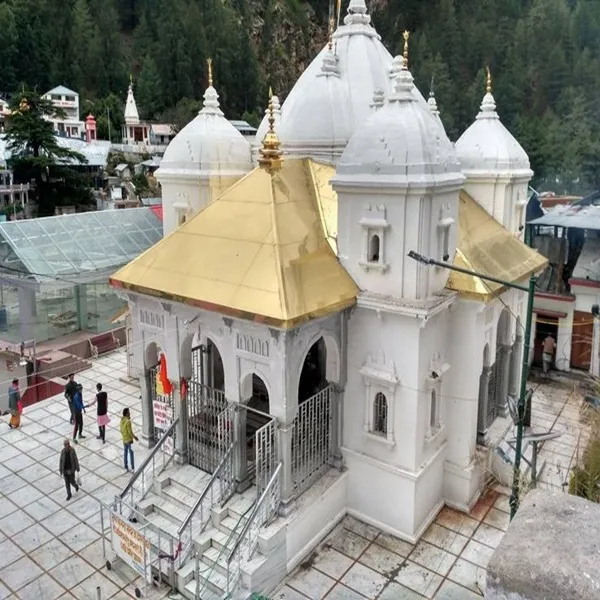
Gangotri Dham is a revered shrine of the Goddess Ganga, marked as the origin of the Ganga River on earth (originating from the Gaumukh glacier). Located in the Uttarkashi district of Uttarakhand at an altitude of 3,100 meters (10,200 feet), it is surrounded by majestic Himalayan peaks. It features the traditional nagara architecture style, built from White granite stone.
Location: Gangotri town of Uttarkashi District, Uttarakhand
Altitude: 10,200 feet (3100 meters)
Highlights: Bhagirath Shilla, Jalmagna Shivlinga, and natural hot springs and historic caves, like Pandav Gufa, are the main highlights.
Significance: Gangotri holds immense spiritual and cultural significance due to several reasons, including the origin of the sacred Ganga river, believed to be a place where King Bhagirath performed penance for the descent of Ganga on earth from heaven to bless his ancestors. It is a high belief that taking a dip in the icy water of the Bhagirathi River, which flows near the temple, washes away the sins of visitors and leads them towards Moksha.
Accessibility: Gangotri temple is easily accessible by motorable roads. Buses and taxis are easily accessible from cities like Haridwar (285 km away) and Rishikesh (259 km).
Accommodation: Stay options in the Gangotri range are available at various prices, including budget-friendly GMVN guesthouses, private hotels, and resorts, but booking ahead is crucial, especially during peak season, for a peaceful experience. For convenience, choose to stay in Gangotri town near the temple.
Travel Tips For Gangotri:
- To prevent altitude sickness: Acclimatize properly, like in Harsil or Uttarkashi, before heading to Gangotri.
- Best time to visit: The temple opens from late April to October, and the best time to visit is from May to June and September to October with pleasant weather.
- Temple Timings: Check the temple timings before visiting. Generally, the temple opens around 6:00 a.m. and closes at 9:00 p.m.
- Permit: Check for any necessary permit if you plan to visit beyond the temple, like the Gaumukh Tapovan trek.
- Local transport: hire a local vehicle, such as shared jeeps and taxis, to explore nearby sites like Harsil Valley and Mukhba village.
Kedarnath: Jyotirlinga Of Lord Shiva
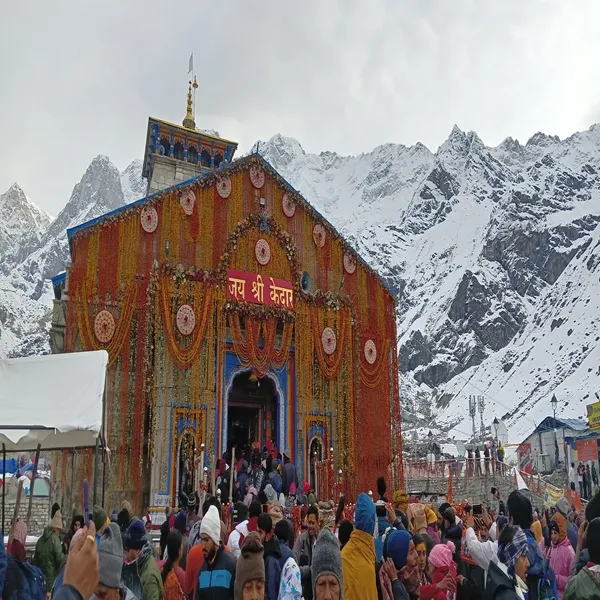
Kedarnath Dham is a revered Shiva shrine, one of the 12 Jyotirlinga and Panch Kedar, nestled in the Garhwal Himalayas of Uttarakhand. Vitally known for its high altitude, serene location, and spiritual significance. The temple is located in the Rudraprayag district of Uttarakhand at an altitude of 3,583 meters (11,755 feet).
Location: Rudraprayag district, Uttarakhand
Altitude: 11,755 feet (3583 meters)
Significance: Kedarnath is a highly revered Shiv shrine, holds great spiritual and mythological Significance, and is linked with Mahabharata legends, which state that the Pandavas built this temple to atone for their sins. It is considered the symbol of endurance and devotion, which remarkably withstood the devastating flashflood of 2013.
Accessibility: The Kedarnath temple is not accessible by road; the motorable journey ends at Gaurikund. From there, you need to embark on a 16 km trek, which you can complete by trekking on foot or by hiring pony/palki services. Helicopter service for Kedarnath is also available during the peak yatra season.
Accommodation: Accommodation in Kedarnath ranges from budget-friendly hotels to luxurious private camps around the temple area. Nearby towns, such as Gaurikund and Sonprayag, offer moderately comfortable stays.
Travel Tips For Kedarnath:
- Prepare yourself physically and mentally: Kedarnath requires stranous trek, so prepare your body and mind a month before your trip.
Note: Check out our blog on “How to prepare for Kedarnath trek”
- Get a good sleep: Take at least 6-8 hours and start your journey with a joyful mindset.
- Start early: Begin your Kedarnath trip early in the morning to avoid mule traffic and rush.
- Hydration & Nutrition: Drink plenty of water and eat light meals during the trek, and pack some energy bars to stay energetic.
- Follow the same pace: stay on marked paths and follow the same pace, don’t overexert yourself.
- Follow temple rules: Photography is strictly prohibited in Kedarnath; abide it and also follow the local dress code.
- Stay alert and safe: Stay updated about weather alerts and be flexible for any sudden change.
Badrinath: Sacred Abode Of Lord Vishnu
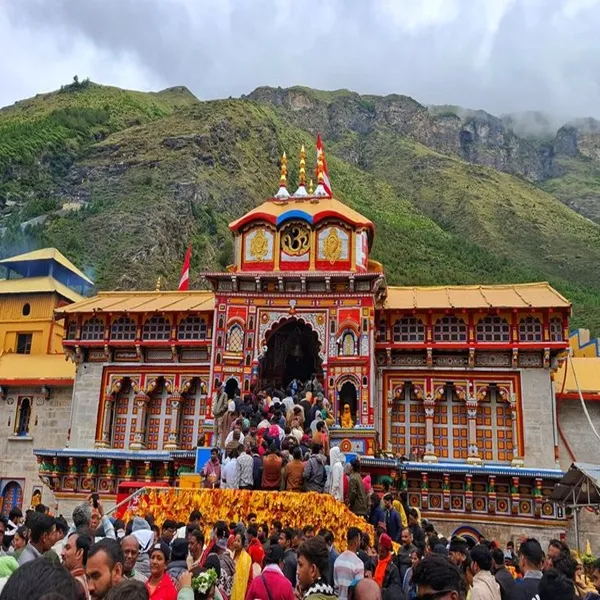
Badrinath Temple is the final stop of this sacred Yatra, dedicated to Lord Vishnu. Located in the Chamoli district of Uttarakhand at an altitude of 3,133 meters (10,279 feet) above sea level. It sits on the banks of the Alaknanda River and is surrounded by the Nar-Narayan ranges. It is a crucial part of Panch Badri and 108 Divya Desam. Featuring traditional Nagara architecture with a colorful facade and sacred Tapt Kund, used for a holy bath before entering the holy shrine.
Location: Chamoli district, Uttarakhand
Altitude: 10,279 feet (3,133 meters)
Highlights: Tapt Kund, Mana Village, Charan Paduka, and Brahma Kapal are nearby attractions.
Significance: The significance of the Badrinath yatra lies in the legends of Lord Vishnu's meditation, who worshipped in a meditative posture. It is believed that Lord Vishnu meditated here for many years for world peace, and Goddess Laxmi took the form of the Badri tree to protect Lord Vishnu from the harsh climate, which gives the place its name.
Accessibility: Badrinath temple has great accessibility through motorable roads, making it easier for many pilgrims than other high-altitude shrines. Regular government buses and taxis are available from Haridwar and Rishikesh for Badrinath or the nearby town of Joshimath.
Accommodation: Badrinath temple offers a wide range of accommodation options, from budget-friendly stays to mid-range hotels and luxury hotels in the main temple area and nearby towns, such as Joshimath and Peepalkoti.
Travel Tips For Badrinath:
- Temple Timings: Check the temple timings before visiting. Generally, the temple is open from 5:00 a.m. to 9:00 p.m. for daily darshan. Visit in the late afternoon or early morning for a peaceful darshan experience.
- Nearby Attractions: Visit Mana village, Vyas Gufa and Ganesh Gufa, Vasudhara Falls, and Brahma Kapal, all of which are located just a short distance from the temple.
Note: Check out our blog on “Top places to visit near Badrinath Temple”.
- Opt for Local transport: To cover nearby attractions, choose local transport, such as a shared jeep or taxi.
- Altitude Acclimatization: Spend a day in Joshimath and give your body time to acclimate properly.
- Stay Tip: Choose to stay in Joshimath or the main Badrinath town.
Important Tips For Char Dham Yatra Places
Mandatory Registration: Char Dham Registration is compulsory, as it ensures pilgrims' safety and security. So do it well in advance.
Book early: Book your transportation and accommodation well in advance, as the facilities are limited during the peak season.
Best time to visit: Visit during the best time, May-June or September-October, offering pleasant weather and stable road conditions. Avoid the monsoon (July-August) due to the risk of landslides and road closures.
Stay Updated: Check the full weather forecast before visiting and be aware of any sudden changes, as the weather is unpredictable in the Himalayas.
Pack Essentials: Carry all the essentials, including warm clothing, trekking shoes, a medical kit, a power bank, essential documents, sturdy backpacks, etc.
Stay hydrated: There is a very high chance of Dehydration at higher altitudes, so drink plenty of water to prevent it.
Respect the holy site: Follow temple etiquette, dress modestly, respect local customs, and the rituals of the shrines.
Carry Cash: Carry enough cash for your trip, as ATMs are scarce in remote region and online payment may not be possible due to poor network availability.
Conclusion
These four sacred shrines of Uttarakhand are more than just pilgrimage sites—they are powerful centers of spiritual awakening, where devotion meets the serenity of the Himalayas. The journey through Yamunotri, Gangotri, Kedarnath, and Badrinath represents faith, endurance, and a deep connection with nature, offering spiritual purification, cultural richness, and inner transformation.
As your Char Dham tourist guide, I, Pratiksha, have shared detailed insights into the four sacred Char Dham temples, along with practical travel tips and spiritual highlights based on real experiences. This guide is intended to help devotees understand the importance of each shrine and prepare for a comfortable, meaningful, and spiritually fulfilling pilgrimage.
Related Guide
FAQs
1. What are the 4 dhams in the Char Dham pilgrimage?
The four sacred Dhams are Yamunotri, Gangotri, Kedarnath, and Badrinath, all in the high Himalayan region of Uttarakhand forms a revered pilgrimage circuit, typically done in a clockwise traditional route.
2. Which place to visit first among the Char Dham Yatra Places?
The pilgrimage follows a traditional Clockwise direction, starting with Yamunotri, then Gangotri, Kedarnath, and finally Badrinath, marking an auspicious route. So Yamunotri is the first dham to visit in Char Dham Yatra Places, a symbol of spiritual purification, and represents the origin of the holy Yamuna River, marking the first stop.
3. How much time is needed at each Char Dham Yatra place?
At least 2-3 days are needed at each Char Dham pilgrimage, but the specific time depends on travel, altitude acclimation, and personal pace. A complete journey to each temple needs 10-12 days by road for a comfortable trip.
4. Are all Char Dham temples accessible by road?
No, all Char Dham temples are not accessible by road. Yamunotri and Kedarnath require a trek from their nearest motorable points, Janki Chatti and Gaurikund. While Gangotri and Badrinath are fully accessible by motorable roads.
5. What are the Char Dham places locations?
Here is the location of the Chardham in India:
- Yamunotri: Uttarkashi district, Uttarakhand
- Gangotri: Uttarkashi district, Uttarakhand
- Kedarnath: Rudraprayag, Uttarakhand
- Badrinath: Chamoli, Uttarakhand
6. In which order should I visit the Char Dham Yatra Places?
The traditional order to visit the Chardhams starts from Yamunotri to Badrinath, turning towards the east from the west, following the path of the great Adi Shankaracharya in the Garhwal Himalayas. It is not mandatory to complete the yatra in this order.
Route– Yamunotri→ Gangotri→ Kedarnath→ Badrinath
Direction– West to East
Planning your Char Dham Yatra?
If you are looking for a well-organized and guided Char Dham pilgrimage with on-ground support, you can explore our Char Dham Yatra packages for a smooth and comfortable journey.







.webp?v=245b8d967251c959c4791e56a6d43cb2)