
Preparing for the Kedarnath Yatra requires proper physical fitness, smart packing, altitude awareness, and planning. Since Kedarnath Temple is located at an altitude of 3,583 meters, the 16 km trek from Gaurikund can be physically demanding, especially for beginners. Without proper preparation, issues like altitude sickness, breathing difficulty, fatigue, and unpredictable weather can make the journey challenging.
Whether you are planning the Kedarnath trek for the first time or travelling with family, preparing your body, choosing the right season, completing mandatory registration, and carrying essential items are crucial for a safe and comfortable yatra.
Hello, I am Naveen Rawat, working with Manchala Mushafir as a trek leader. I have completed my Basic Mountaineering Course (BMC) and Advanced Mountaineering Course (AMC) from NIM (Nehru Institute of Mountaineering), Uttarkashi. With hands-on experience of leading multiple Kedarnath treks, I am sharing practical tips in this guide to help you prepare safely and confidently for your journey.
In this 2026 complete guide, we will explain how to prepare for Kedarnath trip , how to prepare for Kedarnath trek physically, and important precautions every pilgrim should know before starting the yatra.
How to Prepare for Kedarnath Yatra?

Preparing for Kedarnath Yatra is not only about physical fitness; proper planning plays an equally important role. From registration and accommodation booking to choosing the right season, every step requires careful attention.
1) Complete the Registration Process
Before starting your journey, every pilgrim must complete the mandatory registration issued by the Uttarakhand authorities. Make sure you carry a valid ID proof and your Kedarnath yatra registration slip during the trek, as it may be checked at various points.
2) Plan According to the Season
Since Kedarnath Temple remains open only for a limited period each year, selecting the right season for kedarnath yatra is crucial. Weather conditions directly affect trekking safety, crowd levels, and overall comfort, so planning your visit during the most suitable months makes a big difference.
3)Arrange Travel & Stay in Advance
During peak months, accommodation and helicopter services fo kedarnath fill up quickly. Booking in advance helps avoid last-minute inconvenience. Many pilgrims also prefer a structured itinerary that includes transportation, stay, and guided assistance for a smoother experience.
4) Choose the Right Travel Mode
You can reach Kedarnath by trekking, pony, palki, or helicopter. Your choice should depend on age, health condition, and fitness level. Understanding the availability and cost of pony and palki services in advance can help you plan your budget better.
5) Monitor Weather & Start Early
Weather in Kedarnath changes rapidly. Always check updates before starting your trek and begin early morning to avoid crowd and sudden climate changes.
How to Prepare for Kedarnath Trek Physically?
Preparing your body is the most important part of Kedarnath trek planning. Since the trek involves 16 km uphill walking at high altitude, your stamina, leg strength, and breathing capacity must be strong.
4-Week Physical Preparation Plan (Quick Overview)
| Week | Focus Area | What to Do |
| Week 1 | Basic Stamina | Walk 4–5 km daily, light stretching |
| Week 2 | Cardio Strength | Brisk walking or jogging 5–6 km |
| Week 3 | Muscle Strength | Squats, lunges, pushups, plank |
| Week 4 | Endurance | 8–10 km walk + backpack practice |
Detailed Weekly Preparation Plan
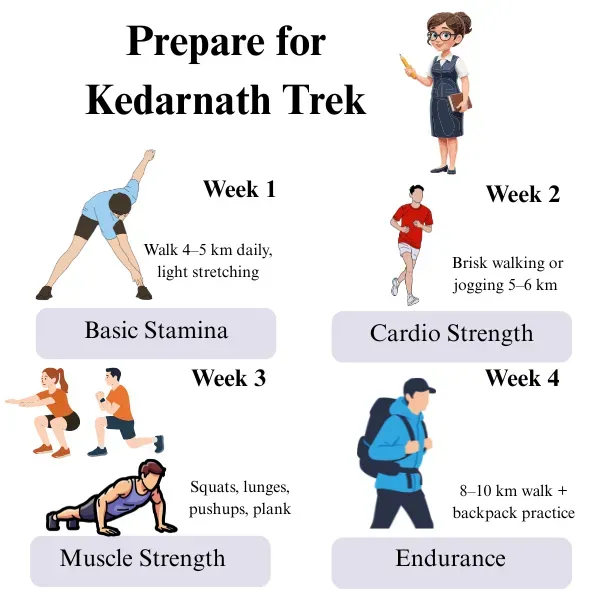
Week 1: Build Basic Stamina:- Start with 4–5 km walking daily. Focus on improving breathing rhythm and posture. Do basic stretching before and after exercise to avoid muscle cramps.
Week 2: Improve Cardio Strength:- Increase your walking speed or include light jogging. Try to cover 5–6 km comfortably. This helps improve lung capacity.
Week 3: Strength Training
Add muscle-building exercises:
- Squats (3 × 12 reps)
- Lunges (3 × 10 reps)
- Pushups (3 × 8 reps)
- Plank (45–60 seconds)
Strong legs and core muscles reduce fatigue during the trek.
Week 4: Endurance Practice
Practice one long walk of 8–10 km once a week. Carry a light backpack (3–4 kg) to simulate trekking conditions. Climbing stairs is also highly effective.
Additional Preparation Tips
- Stay hydrated
- Avoid alcohol & smoking
- Eat protein and carbohydrate-rich food
- Get 7–8 hours of sleep daily
Proper physical preparation significantly reduces the risk of exhaustion and altitude sickness during the Kedarnath trek.
Is Kedarnath Trek Difficult?
The Kedarnath trek is considered a moderate-level high-altitude trek. The temple is located at an altitude of 3,583 meters, and pilgrims must cover a 16 km uphill trek from Gaurikund, which usually takes around 6–8 hours (one way) depending on fitness level. For complete details on the trek route, distance, time, and difficulty, explore our detailed Kedarnath trek guide .
Because of the high altitude and steep elevation gain (approx. 6,000 feet), the trek can feel challenging for beginners if they are not properly prepared.
Here are the main difficulties you should be aware of:-
1) High Altitude & Low Oxygen
2) Long & Steep Climb
3) Unpredictable Weather
4) Limited Facilities
Common Mistakes to Avoid During Kedarnath Trip
Even after planning, many pilgrims make small mistakes that make the Kedarnath journey more difficult than it should be. Avoiding these common errors can help you complete the trek safely and comfortably.
1) Starting the Trek Too Late
Many people begin their trek after 8–9 AM. This increases the risk of crowd congestion and sudden weather changes. Always start early in the morning (4–6 AM).
2) Ignoring Physical Preparation
Underestimating the 16 km uphill trek is one of the biggest mistakes. Without proper stamina and leg strength, fatigue sets in quickly.
3) Carrying Excess Luggage
A heavy backpack can strain your shoulders and knees. Pack only essential items and keep your bag light.
4) Not Acclimatizing Properly
Reaching high altitude quickly without giving your body time to adjust increases the risk of altitude sickness. Walk at a steady pace and take short breaks.
5) Ignoring Weather Forecast
Weather in Kedarnath changes rapidly. Not checking weather updates before starting the trek can lead to unnecessary risk.
6) Skipping Registration or Documents
Some pilgrims forget to carry their registration slip or valid ID proof, which may cause inconvenience at checkpoints.
What to Pack for Kedarnath Trek?
Packing smartly is an important part of preparing for the Kedarnath trip. Since you will be trekking at high altitude with unpredictable weather conditions, carrying the right essentials can make your journey comfortable and safe.
Here are the must-carry items:-
- Warm woollen layers (jacket, sweater, gloves, cap)
- Waterproof jacket or raincoat
- Comfortable trekking shoes with good grip
- Small medical kit with personal medicines
- Valid ID proof and registration slip
- Water bottle and energy bars
- Power bank and basic toiletries
Avoid overpacking, as you will need to carry your own backpack during the 16 km trek.
For a complete and detailed packing checklist, including clothing suggestions and optional items, you can refer to our guide on essential things to carry for Kedarnath Yatra .
Kedarnath Trek Preparation Checklist
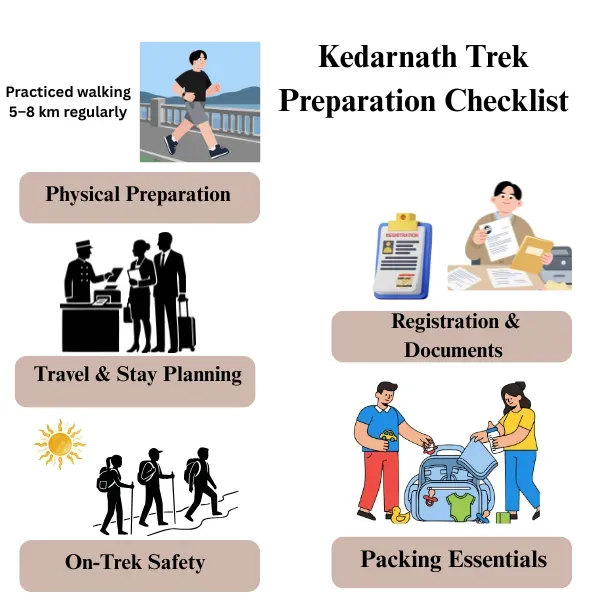
Before starting your Kedarnath journey, make sure you have completed the following essentials. This quick checklist will help you avoid last-minute stress and ensure a smooth trek experience.
1) Physical Preparation
- Practiced walking 5–8 km regularly
- Completed basic strength training
- Built stamina for long uphill walking
2) Registration & Documents
- Completed mandatory registration
- Carrying valid ID proof
- Printed or downloaded registration slip
3) Travel & Stay Planning
- Accommodation booked in advance
- Travel mode selected (trek, pony, palki, or helicopter)
- Weather forecast checked
4) Packing Essentials
- Warm clothes and rain protection
- Proper trekking shoes
- Medical kit and personal medicines
- Power bank and basic toiletries
5) On-Trek Safety
- Starting early in the morning
- Staying hydrated
- Walking at a steady pace
- Avoiding alcohol and smoking
By following this preparation checklist, you can make your Kedarnath trip safer, more comfortable, and spiritually fulfilling.
Conclusion
The Kedarnath Yatra is more than just a pilgrimage — it is a journey of faith, endurance, and self-discovery in the lap of the Himalayas. With proper planning, physical preparation, smart packing, and awareness of weather and altitude conditions, the Kedarnath trek becomes much more manageable and safe.
Whether you are travelling solo, with family, or as part of a structured itinerary, preparing in advance is the key to completing this spiritual journey comfortably. Take your time to plan wisely, follow safety guidelines, and respect the mountain environment.
If you prefer guided assistance for transportation, accommodation, or trek support, you may consider a well-planned Kedarnath tour or including it in your Char Dham Yatra itinerary for a smoother experience.
May your Kedarnath journey be safe, peaceful, and spiritually fulfilling.
Faq- Prepration of Keadrnath
1) How to prepare physically for Kedarnath trek?
To prepare physically for the Kedarnath trek, focus on improving stamina, leg strength, and endurance at least 3–4 weeks before your trip. Practice brisk walking, stair climbing, and light jogging regularly. Include strength exercises like squats and lunges to support uphill trekking. Maintaining a balanced diet rich in protein and carbohydrates, along with proper hydration and sleep, helps your body adapt better to high altitude conditions.
2) Can beginners do the Kedarnath trek?
Yes, beginners with a decent fitness level can complete the Kedarnath trek. However, since the 16 km route involves steep ascents and high altitude, proper preparation is essential. Beginners should start physical training in advance and walk at a steady pace during the trek.
3) Which part of the Kedarnath trek is most difficult?
The stretch between Jungle Chatti and Bheembali is considered one of the most challenging sections due to steep uphill climbs and uneven terrain. The final stretch near Linchauli can also feel difficult because of thinner air and lower oxygen levels.
4) Is the oxygen level low at Kedarnath?
Yes, oxygen levels are lower at Kedarnath because it is located at an altitude of approximately 3,583 meters. Some pilgrims may experience breathlessness or mild altitude symptoms, especially if they ascend too quickly.
5) How to prevent altitude sickness during Kedarnath trek?
To reduce the risk of altitude sickness, walk at a steady pace, stay hydrated, avoid alcohol, and take short breaks during the trek. Proper acclimatization and adequate rest before the journey are important for safe trekking.
6) What should you do before going to Kedarnath?
Before starting your Kedarnath trip, complete mandatory registration, book accommodation in advance, check the weather forecast, and begin basic physical preparation at least a month prior to travel.