
Kedarnath Temple is nestled in the Rudraprayag district of Uttarakhand at an altitude of 3,583 meters (11,755 ft) above sea level in the Garhwal Himalayas. Due to its high-altitude location and extreme weather conditions, choosing the right time to visit Kedarnath is crucial for three major reasons — safety, accessibility, and comfort.
The temple remains open only for six months each year, generally from late April or May until October or early November. The best time to visit Kedarnath is during May–June and September–October, when the weather is pleasant, trekking routes are safe, and darshan is comfortable. During the monsoon months (July–August), heavy rainfall increases the risk of landslides, while winter (November–April) brings heavy snowfall and temple closure.
Understanding the seasonal weather patterns helps pilgrims plan their yatra wisely. In this 2026 guide, we will cover the month-wise temperature, Kedarnath weather conditions, snowfall period, and temple opening & closing timeline to help you choose the most suitable time for your visit.
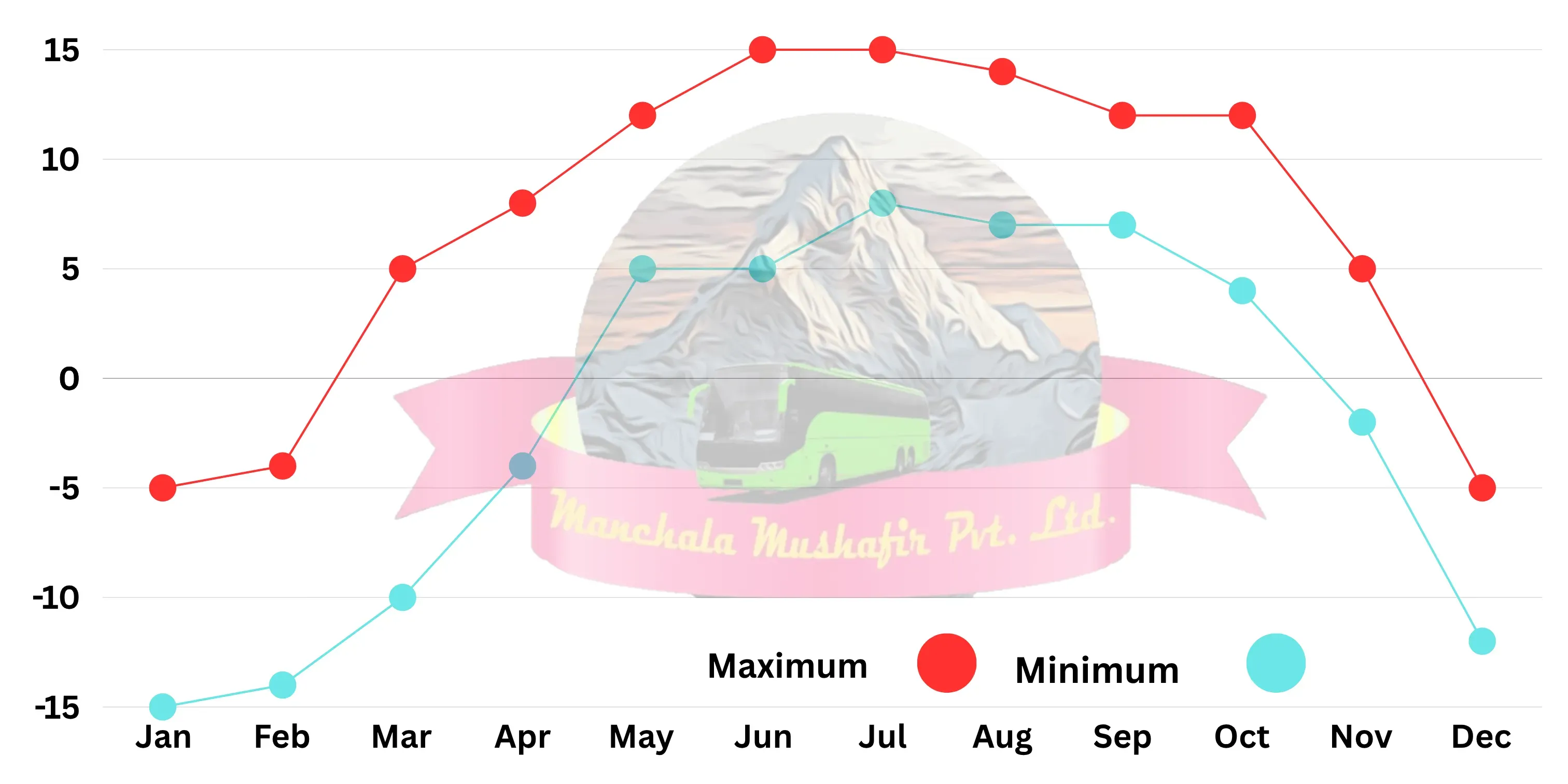
Monthly Overview of Climate And Kedarnath Temperature
Due to its high altitude of 3,583 meters (11,755 ft), Kedarnath Temple experiences significant temperature fluctuations throughout the year. Weather conditions change rapidly across seasons, which directly impacts trekking routes, road accessibility, and overall travel safety.
The summer season (May–June) offers mild and pleasant temperatures, making it the most comfortable time for pilgrimage. The monsoon season (July–August) brings heavy rainfall, increasing the risk of landslides and slippery trekking paths. Post-monsoon autumn (September–October) provides clear skies and stable weather, making it another highly recommended period for travel. Winter (November–April) remains extremely cold with heavy snowfall, leading to temple closure and restricted access.
If you are travelling with elderly parents or children and planning your journey through a Kedarnath Yatra package, it is always advisable to consult travel experts before finalising your dates. Weather conditions at high altitude can change quickly, and proper guidance ensures safer planning and better decision-making.
Before planning your yatra, it is always advisable to check current weather forecasts and trekking conditions, especially during shoulder seasons.
Seasonal Breakdown – Best Time to Visit Kedarnath
Summer Season in Kedarnath (May–June)
Summer is widely considered the best time to visit Kedarnath. During May and June, the weather remains pleasant with temperatures ranging between 5°C to 20°C. Days are sunny with crisp mountain air, while nights remain cool.
Clear skies offer stunning views of the Himalayan peaks, and trekking routes remain safe and accessible.
Kedarnath Weather in May
May marks the beginning of the pilgrimage season. Snow melts from trekking trails, and the temple reopens for devotees. Kedarnath Temple remains fully accessible, and pilgrims experience comfortable weather with minimal rainfall.
Temperature Range: 5°C to 12°C
It is an ideal time for: Families, Senior citizens, First-time visitors
Sightseeing : Vasuki Tal and Chorabari Lake
Kedarnath Weather in June
June continues to offer favourable conditions with slightly warmer daytime temperatures between 5°C to 15°C. Visibility of surrounding Himalayan peaks is excellent. Light pre-monsoon showers may occur towards the end of June, but overall travel remains safe.
✔ Excellent for trekking
✔ Ideal for photography
✔ Peak pilgrimage season
Note: May and June witness heavy crowd movement, so advance bookings for accommodation and yatra arrangements are recommended.
Monsoon Season in Kedarnath (July–August)
During July and August, the region receives moderate to heavy rainfall due to the monsoon. Heavy rain increases the risk of: Landslides, Flash floods, Road blockages, Slippery trekking routes
Temperature Range: 7°C to 15°C
Although hotel prices may drop and crowds are lower, this period is generally considered the least safe time to visit Kedarnath due to unpredictable weather conditions. The trek from Gaurikund can become slippery and challenging during this season.
Post-Monsoon / Autumn Season (September–October)
After the monsoon retreats, September and October bring clear skies, stable weather, and breathtaking views of the Himalayan landscape.
Kedarnath in September
September is considered one of the best months to visit Kedarnath. Rainfall decreases significantly, and the valley appears lush green after the monsoon.
Temperature Range: 7°C to 12°C
✔ Fewer crowds compared to peak summer
✔ Clear mountain visibility
✔ Suitable for families and elderly travellers
Kedarnath in October
October marks the final phase of the yatra season before winter closure. Days remain pleasant, while nights become colder.
Temperature Range: 4°C to 12°C
Clear skies offer spectacular views of snow-capped peaks. In late October, light snowfall may begin at higher altitudes, making it attractive for adventure enthusiasts and photographers. However, travellers should monitor temple closing dates as winter approaches.
Winter Season in Kedarnath (November–April)
Winter brings extreme cold and heavy snowfall to the region. Temperatures often fall below freezing, ranging between -15°C to 5°C. During winter, Kedarnath Temple remains officially closed. The idol is ceremonially shifted to Omkareshwar Temple in Ukhimath, where worship continues. Heavy snow blocks roads and trekking routes, making travel inaccessible for regular pilgrims.
Best Time to Visit Kedarnath – Crowd & Season Guide (2026)
Kedarnath Temple ka best time generally May–June aur September–October mana jata hai, lekin crowd level aur preference par depend karta hai.
| Traveller Type | Best Months | Weather | Crowd Level | Travel Suitability |
| Families & Seniors | May – June | Pleasant & Stable | High | ⭐ Very Suitable |
| First-Time Pilgrims | May – June | Clear Skies | High | ⭐ Ideal Season |
| Less Crowd Preference | September | Cool & Clear | Moderate | ⭐ Highly Recommended |
| Scenic Views + Calm | October | Pleasant & Cold Nights | Low–Moderate | ⭐ Recommended |
| Budget Travel | September | Comfortable | Moderate | ⭐ Good Option |
| Monsoon Period | July – August | Rainy & Risky | Low | Not Safe |
| Winter Period | November – April | Snow & Temple Closed | No Pilgrims | ❌ Closed |
Road And Trek Accessibility To Kedarnath
Reaching Kedarnath Temple depends heavily on seasonal weather conditions. Road connectivity and trekking accessibility remain stable during summer (May–June) and post-monsoon autumn (September–October), while monsoon and winter months often cause disruptions.
Road Access to Kedarnath
The motorable road to Kedarnath ends at Gaurikund, which serves as the last accessible point by vehicle. Gaurikund is well connected to major cities such as:
- Haridwar
- Rishikesh
- Guptkashi
However:
- During monsoon (July–August), heavy rainfall may cause landslides and temporary road closures.
- During winter (November–April), snowfall blocks roads and restricts movement.
Best road accessibility: May–June & September–October
Risky road conditions: July–August
Inaccessible: Peak winter months
Trekking Access to Kedarnath
The Kedarnath trek begins from Gaurikund and covers approximately 16–18 km (one way). The route is steep in certain stretches and requires moderate physical fitness.
Pilgrims can choose from:
- Walking the trek
- Pony / Palki / mule services
- Helicopter services From Phata/Sirsi/Guptkashi (subject to weather clearance)
During monsoon, rain makes the trail slippery and increases the risk of falling rocks. In winter, heavy snow accumulation makes trekking impossible.
Safest trekking period: May–June & September
Slippery & risky: July–August
Closed due to snow: November–April
Important Note on Seasonal Accessibility:-Weather in the Himalayas can change suddenly. Before planning your yatra, always check official updates regarding road conditions, weather forecasts, and temple opening/closing announcements.
Travel Tips for Visitors/Pilgrims
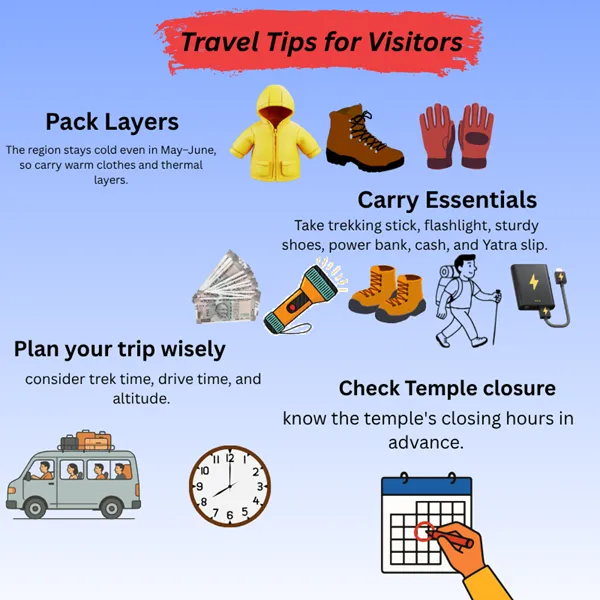
Pack Layers: Most of the time, the region experiences cold weather, so layering is key while you are planning in May-June. Pack warm clothes and thermal layers.
Carry Essentials: also carry essential trekking equipment, like a trekking stick, a flashlight, sturdy trekking shoes, and other things (power bank, cash, Yatra slip, etc.).
Plan your trip wisely: plan your trip wisely, including trekking time, driving time, and acclimatisation.
Check Temple closure: Check the closure time of the temple before visiting.
Check our blog on things to pack for the Kedarnath yatra so that you can keep all the necessary items in your bag without overpacking.
If you are planning to avail Kedarnath helicopter services, then make note that the helicopter can be booked only through heliyatra.irctc.co.in website. No other website, person or company is authorised to book a helicopter.
Don't fall prey to anyone claiming to give you a Kedanath helicopter ticket. You can refer to our blog on the Kedarnath helicopter fraud for more details.
Ghoda Khachhar Palki services at Kedarnath can only be booked from the office counters. During the trip, our guide will assist you in booking any of these services.
If you are looking for a Kedarnath VIP darshan, then you can get it booked well in advance. Otherwise, please inform our guide after reaching our Musafir resort at Guptkashi, so that he can arrange it well in advance for you.
Conclusion
- If you prefer pleasant weather and safe trekking conditions, May and June are ideal — though you should expect higher crowds.
- If you want clear skies with comparatively fewer crowds, September is a great choice.
- If you wish to experience light snowfall and colder mountain vibes, late October can be suitable — but temperatures drop significantly.
- If you are comfortable with crowd movement and want the most stable climate, peak summer works best.
Plan Your Kedarnath & Char Dham Journey
If you are planning a complete pilgrimage in Uttarakhand, you can extend your journey beyond Kedarnath and explore other sacred dhams as well. Many travellers combine their Kedarnath visit with:
- Kedarnath–Badrinath tour package – Perfect for covering two major Himalayan shrines in one trip.
- Badrinath trip package – A comfortable and well-planned journey to seek blessings at Lord Vishnu’s holy temple.
- 4 Dham tour package – A complete spiritual circuit covering Kedarnath, Badrinath, Gangotri, and Yamunotri.
Choosing the right travel plan helps you manage time, weather conditions, accommodation, and temple schedules more efficiently. Plan according to your comfort level, travel duration, and preferred season to make your yatra smooth and spiritually fulfilling.
In short, May–June is best for stable weather, September for fewer crowds, and late October for snowfall views.
Related Guide |
FAQs
Is there snow in Kedarnath in May?
Yes, you can see patches of snow in Early May, but you can’t experience snowfall in May, as it melts in late April or early May.
Is there snow in Kedarnath in June?
No, there is no snow in Kedarnath in June, as it melted in May. You may find some snow patches along the trekking trails, but fresh snow is not expected at this time.
What is the temperature of Kedarnath in May?
Typically, the temperature ranges from 3°C to 15 °C. May in Kedarnath experiences cool and pleasant weather with clear skies and crisp air. These conditions make it a good time for temple visiting and sightseeing.
What is the temperature of Kedarnath in June?
Kedarnath in June is very pleasant with mild temperatures ranging from 6°C to 18°C; it provides favourable conditions for pilgrimage.
Can we visit Kedarnath in December?
You can not visit Kedarnath in December, as the entire region, including the Kedarnath temple, becomes inaccessible due to heavy snow and harsh weather. The Kedarnath temple idol shifts to Ukhimath in the Omkareshwar temple, so you can visit Ukhimath to seek the blessings of the deity during the winter.
Which months are best to visit Kedarnath?
April to June and September to October are the best months to visit Kedarnath, as these months offer pleasant weather with mild temperatures and accessible trails, making it an ideal time for trekking and sightseeing.
Kedarnath in winter—what to expect?
During the winter, Kedarnath experiences extremely harsh weather conditions with heavy snow. The entire region, including the temple, is covered with snow and roads become blocked, making travel impossible. The main temple is closed during the winter period from November to April.
Is September the best time to visit Kedarnath?
Yes, September is the best time to visit Kedarnath, as the rain starts to end and the weather becomes pleasant with clear skies and fewer crowds compared to the summer months. It is recommended to plan in mid-September, as early September still experiences light rain.
What is the best time to visit Kedarnath for snowfall?
The best time to visit Kedarnath to witness snowfall is late October and early November, while the temple is still open. In early May, when the yatra is open, you can also experience some snow patches on trekking trails.