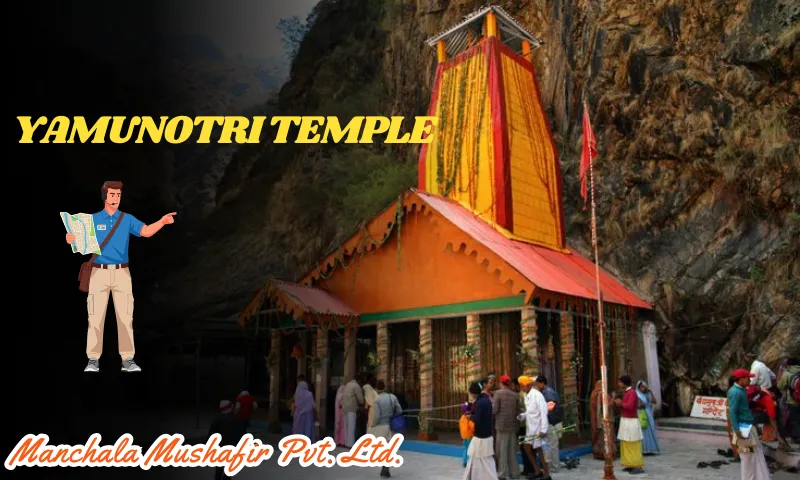
About Yamunotri Temple Uttarakhand
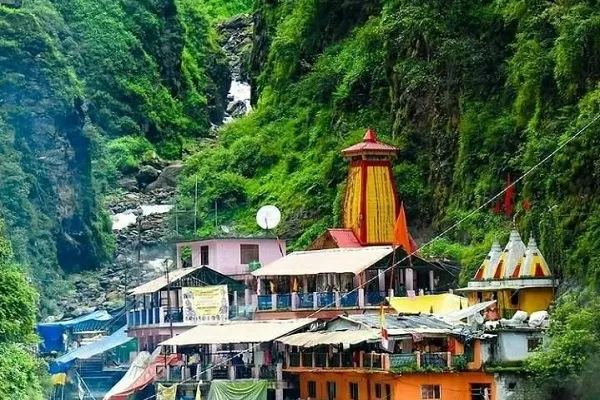
Yamunotri Temple is a sacred Hindu shrine dedicated to the Goddess Yamuna and marks the origin of the holy Yamuna River. Located at an altitude of 3,293 meters (10,804 feet) in the Uttarkashi district of Uttarakhand, the temple is nestled in the lap of the Himalayas near the Yamunotri Glacier.
This ancient yet beautiful temple is surrounded by snow-capped peaks and flowing mountain streams, making it not only spiritually significant but also naturally breathtaking. Its serene setting and divine atmosphere attract thousands of pilgrims every year during the Char Dham Yatra season.
Yamunotri Temple is one of the four sacred shrines of the Char Dham circuit of Uttarakhand, the other three being Kedarnath, Badrinath, and Gangotri. Devotees believe that visiting these temples leads to spiritual purification and divine blessings.
According to legend, the Pandavas visited Yamunotri before ascending to heaven. Since then, the temple has held immense religious importance among Hindu devotees and continues to be a key pilgrimage destination in India.
Yamunotri Temple History and Mythological Story
Goddess Yamuna, also known as Yami in the Vedas, is considered the divine sister of Yama, the deity of death, and the daughter of Surya, the Sun God. In Hindu belief, taking a holy dip in the waters of the Yamuna is said to cleanse sins and protect devotees from untimely or painful death. Because of these sacred associations, Yamuna Devi holds a highly revered position in Hindu mythology.
According to legend, Lord Hanuman extinguished the fire on his tail in the waters of the Yamuna near the Bandarpoonch peak after setting Lanka ablaze. It is believed that the name “Bandarpoonch” (meaning monkey’s tail) originated from this divine event.
Another popular legend is associated with Sage Asit Muni, who lived in Yamunotri and regularly bathed in both the Yamuna and the Ganga rivers. In his old age, when he was unable to travel to Gangotri, it is said that a stream of the Ganga miraculously appeared near Yamunotri to bless him.
Historically, it is believed that the original Yamunotri Temple was built by the Pandavas during their journey in search of Lord Shiva. In the 8th century, the temple was reconstructed by Adi Shankaracharya, who played a major role in reviving Hinduism across the region. Later, in the 19th century, Maharaja Pratap Shah of Tehri Garhwal rebuilt the temple. It was further renovated in the early 20th century by Maharani Gularia of Jaipur. Located in the lap of the Himalayas and within an earthquake-prone zone, the temple has withstood several natural calamities over the centuries, standing today as a symbol of enduring faith and devotion.
For a detailed mythological timeline and historical background, you can read our complete guide on Yamunotri Temple History.
Best Time to Visit Yamunotri Temple
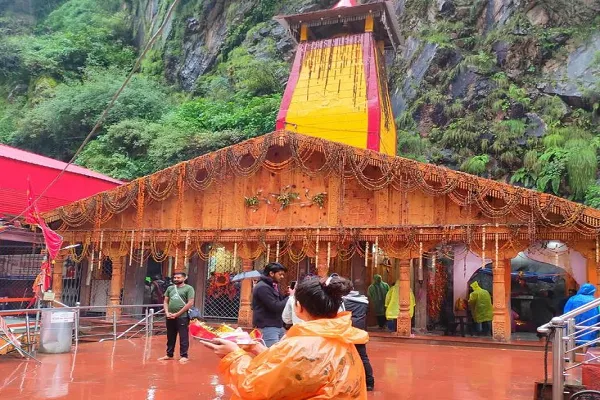
Yamunotri Temple is located in the Himalayas at an altitude of 3,293 meters (10,804 feet) above sea level. Due to heavy snowfall and extreme winter conditions, the temple remains closed for nearly six months every year. The pilgrimage season generally begins in late April or early May and continues until late October or early November.
The best time to visit Yamunotri is during May–June and September–October. The summer months (May and June) offer pleasant weather and clear trekking conditions, although the crowd level remains high as it marks the peak Char Dham Yatra season.
September and October are ideal for those seeking a quieter darshan experience. The weather remains stable after the monsoon, but temperatures start dropping, especially during the night.
The monsoon season (July and August) is generally not recommended due to heavy rainfall, landslides, and slippery trekking routes.
For a detailed month-wise weather guide, you can read our complete article on Best Time to Visit Yamunotri Temple.
Yamunotri Temple Location and Altitude
Location:
Yamunotri Temple is located in the Garhwal Himalayas in the Uttarkashi district of Uttarakhand, near the Indo-Tibetan border. The temple is surrounded by the majestic Bandarpoonch peaks and lies close to the Champasar Glacier, which is considered the actual source of the Yamuna River. Natural hot springs such as Surya Kund and the rugged Himalayan terrain add to its geographical significance.
Altitude:
Yamunotri Temple is situated at an altitude of 10,804 feet (3,293 meters) above sea level.
Yamunotri Temple Opening and Closing Dates (Darshan Season 2025–2026)
Yamunotri Temple opens every year on the auspicious occasion of Akshay Tritiya (April–May) and closes on Bhai Dooj, shortly after Diwali (October–November). The dates are officially announced by the Char Dham Temple Committee based on the Hindu calendar and traditional customs.

Yamunotri Temple Opening & Closing Dates 2026
- Opening Date 2026: 19 April 2026 (Akshay Tritiya)
- Closing Date 2026: 2 November 2026 (Bhai Dooj) – Expected
Yamunotri Temple Opening & Closing Dates 2025
-
Opening Date 2025: 30 April 2025 (Akshay Tritiya)
-
Closing Date 2025: 23 October 2025 (Bhai Dooj)
Yamunotri Temple Timings for Aarti and Darshan
Daily Temple Timings:
| Ritual | Timing |
| Kapat Opening | 5:30 a.m. |
| Morning Darshan | 6:00 a.m. – 12:00 p.m. |
| Morning Aarti | 6:30 a.m. |
| Afternoon Closure | 12:00 p.m. – 2:00 p.m. |
| Evening Darshan | 2:00 p.m. – 8:00 p.m. |
| Evening Aarti | 7:30 p.m. |
Places to Visit Near Yamunotri Temple
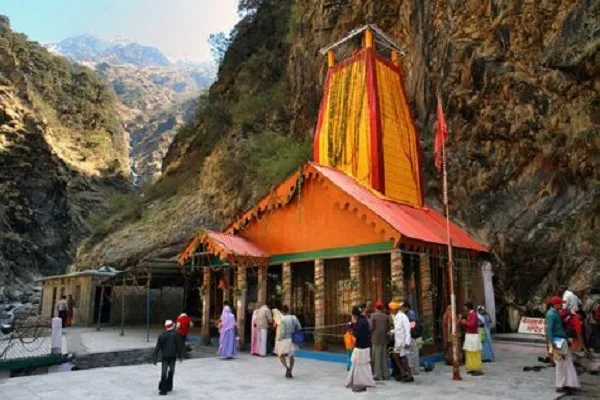
Apart from the sacred Yamunotri Temple, several spiritual and scenic destinations nearby enhance your pilgrimage experience. These places are closely connected to the Char Dham Yatra circuit and add natural as well as religious significance to your journey.
For a detailed itinerary and travel planning guide, you can read our complete article on Places to Visit in Yamunotri in 2026.
Surya Kund
Surya Kund Yamunotri is a natural hot water spring located near Yamunotri Temple. The water temperature reaches around 88°C (190°F). Devotees often cook rice and potatoes in the kund as an offering (Prasad) to Goddess Yamuna. Surrounded by Himalayan peaks, it is one of the most visited attractions near the temple.
Divya Shila
Divya Shila is a sacred rock pillar situated near the temple. Pilgrims traditionally offer prayers at Divya Shila before entering the Yamunotri Temple. It is believed to represent the divine presence of Goddess Yamuna and holds strong spiritual significance in the Char Dham pilgrimage.
Janki Chatti
Janki Chatti is the last motorable point before the Yamunotri trek begins. Located at an altitude of around 2,370 meters, it serves as the base camp for the 5–6 km trek to Yamunotri Temple. The village is also known for its natural hot springs and accommodation facilities for pilgrims.
You can also refer to our Janki Chatti distance chart for route details from major cities or how to reach janki chatti for complete route detail.
Kharsali
Kharsali village, located near Janki Chatti, is known as the winter abode of Goddess Yamuna. During the winter closure of Yamunotri Temple, the idol (Utsav Murti) is shifted to Kharsali. The village is also famous for its ancient Shani Dev Temple and traditional wooden Himalayan architecture.
Saptarishi Kund
Saptarishi Kund is a high-altitude glacial lake located about 7 km from Yamunotri Temple and is considered the actual origin of the Yamuna River. Surrounded by snow-clad peaks, it requires a challenging trek and is ideal for adventure seekers and spiritual travellers alike.
Hanuman Chatti
Hanuman Chatti lies at the confluence of the Yamuna and Hanuman Ganga rivers. It is an important stop for trekkers and pilgrims and also serves as a starting point for treks like Dodi Tal. Basic lodging facilities are available here.
Yamunotri Temple Weather and Temperature
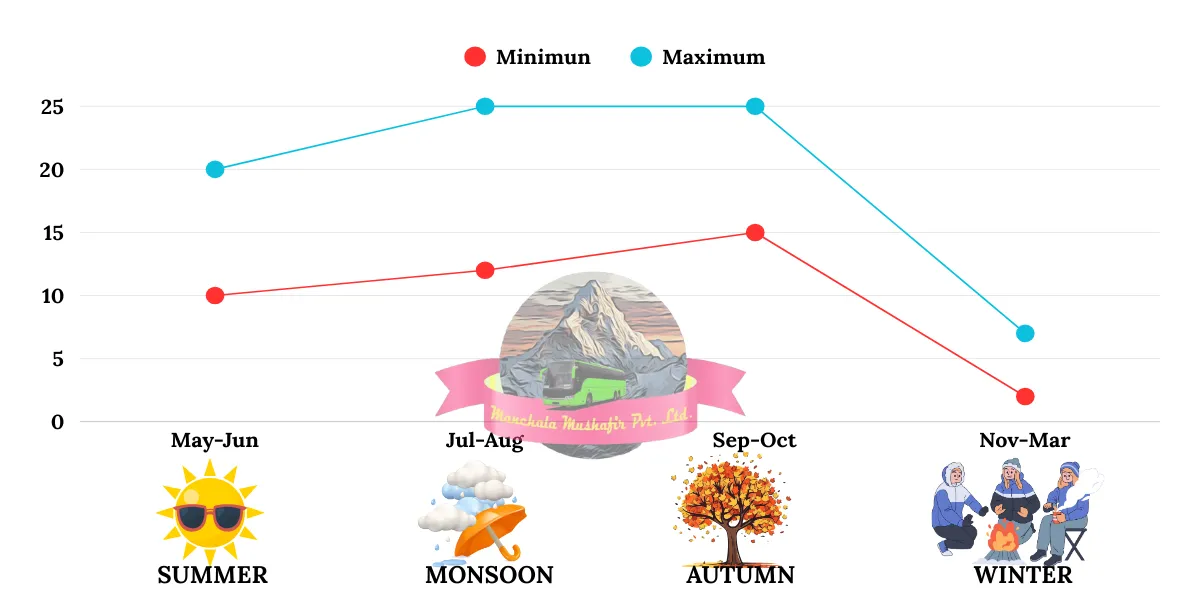
Yamunotri Temple, located amidst the Bandarpoonch peaks of the Himalayas, experiences a wide range of weather conditions throughout the year. From pleasant summers to heavy monsoon rainfall and freezing winters, the climate varies significantly due to its high altitude.
Summer (May–June)
-
Temperature : Ranges from 10°C to 20°C
-
Weather Conditions: Pleasant days with clear skies; nights remain chilly. Snow is mostly cleared from trekking routes.
Status: Ideal and peak pilgrimage season.
Monsoon Months (July-August) :
-
Temperature : 12°C to 25°C
-
Weather Conditions: Heavy rainfall, high humidity, slippery trails, and possible landslides.
Status: Travel not recommended due to safety concerns.
Autumn Season (Sep-Oct) :
-
Temperature : 5°C to 20°C
-
Weather Conditions: Clear skies, excellent mountain visibility, cooler nights.
Status: Suitable for travel with comparatively fewer crowds.
Winter season (Nov-Mar) :
-
Temperature : 2°C to 7°C, sometimes dropping to sub-zero degrees.
-
Weather Conditions: Heavy snowfall and freezing temperatures.
Status: Temple remains closed; region becomes inaccessible.
Yamunotri Temple Trek Guide
The Yamunotri trek is a 6 km uphill journey that begins from Janki Chatti, the last motorable point. The trek is generally considered easy to moderate, with some steep sections. Pilgrims with basic fitness can comfortably complete it in 3–4 hours.
The trekking trail passes through scenic Himalayan landscapes, including river valleys and forested paths. Resting points, small food stalls, and basic medical assistance are available along the route.
Yamunotri Trek Route & Details
-
Trek Route : Janki Chatti—Pool Chatti—Hanuman Chatti—Yamunotri Temple.
-
Starting point : Janki Chatti
-
Leading point : Yamunotri temple
-
Distance : 6 km one way
-
Time taken : 3-4 hours, depending on pace.
-
Facilities on the trail : Resting points, food and basic medical services are available on the trek route.
-
Alternative service : If you want to avoid or are unable to trek, pony and palki services are available for the Yamunotri trek.
Important Tips for trek:
-
Start Early : To avoid mule traffic and crowds, start the trek early.
-
Pack light snack s: Pack energy bars and dry snacks to get instant energy
-
Stay hydrated : Drink plenty of water throughout the trek.
How To Reach Yamunotri Temple
Yamunotri Temple is accessible by air, train, and road. However, there is no direct road access to the temple itself. The last motorable point is Janki Chatti, from where pilgrims must complete a 6 km trek to reach the shrine.
By Air: The Nearest Airport to the Yamunotri temple is Jolly Grant Airport in Dehradun.
Step 1: Firstly, take a flight to Dehradun airport from your city.
Step 2: From the Dehradun airport, take a taxi to Janki Chatti (base for the Yamunotri trek).
Final step: Embark on a 6 km uphill Yamunotri trek.
By Train: Dehradun, Haridwar, and Rishikesh are the nearest railheads to Yamunotri
Step 1: Reach any of these railheads: You can take a train to any of these railway stations from your hometown.
Step 2: From the railway station, hire a taxi or take a bus to reach the Yanumotri temple base camp.
Step 3: From Janki chatti, complete this trek on foot or hire a pony/palki if you need it.
By Road: Similar to railheads, Dehradun, Haridwar and Rishikesh are the major transport hubs, serving as a gateway for the Yamunotri temple.
Step 1: Travel to major hubs via self-drive or bus from your hometown. Buses for this route are readily available from places like Delhi’s ISBT Kashmiri Gate for Haridwar and Rishikesh.
Step 2: Major hub to Janki Chatti: from these major cities, you can easily hire a taxi or bus to Janki Chatti, which are readily available.
Final step: trek to the Yamunotri temple from Janki Chatti.
Travel Tips for Yamunotri Yatra

Packing Essentials:
Carry warm layers including jackets, sweaters, socks, gloves, and a cap. Even during summer, temperatures can drop significantly due to the high altitude.
Trek Preparation:
Wear sturdy trekking shoes with good grip. Carry a flashlight, power bank, water bottle, and a basic medical kit. If you have health concerns, consult a doctor before undertaking the 6 km trek.
Weather Precautions:
Always check the weather forecast and road conditions before starting your journey, especially during the monsoon season.
Registration Requirement:
Registration is mandatory for Yamunotri as it is part of the Char Dham Yatra circuit. It ensures pilgrim safety and crowd management. For a step-by-step guide, refer to our detailed article on Char Dham Yatra Registration.
Carry Sufficient Cash:
ATM availability is limited in the hilly region. It is advisable to carry sufficient cash for food, pony services, and emergency expenses.
Respect the Holy Site
Yamunotri is a sacred pilgrimage destination. Dress modestly, maintain cleanliness, and follow local customs and temple guidelines.
FAQs
-
What is Yamunotri famous for?
Yamunotri is famous as the origin of the sacred Yamuna River and as the abode of Goddess Yamuna. It is one of the four holy shrines of the Char Dham Yatra in Uttarakhand.
The temple holds deep spiritual significance in Hinduism and is associated with Sage Asit Muni, who is believed to have meditated here. Yamunotri is also known for its natural hot springs, especially Surya Kund, and its scenic Himalayan surroundings.
-
How do I travel to Yamunotri?
You can travel to Yamunotri via air, train, or road by first reaching Dehradun, Haridwar, or Rishikesh. From these cities, take a taxi or bus to Janki Chatti, the last motorable point.
From Janki Chatti, you must complete a 6 km trek on foot or hire a pony or palki service to reach Yamunotri Temple.
-
Is Yamunotri accessible by car?
No, Yamunotri Temple is not directly accessible by car. Janki Chatti is the last motorable point, located about 6 km from the temple.
From Janki Chatti, pilgrims must complete the remaining distance on foot or hire pony, palki, or pitthu services.
-
Can I go to Yamunotri without registration?
No, registration is mandatory to visit Yamunotri Temple. It is part of the Char Dham Yatra, and all pilgrims must complete the official registration before traveling.
Registration helps ensure pilgrim safety and assists the authorities in managing crowds during the yatra season. You can complete the process online or refer to our detailed guide on Char Dham Yatra Registration for step-by-step instructions.
-
How long is the trek to the Yamunotri Temple?
The Yamunotri trek is 6 km long (one way) from Janki Chatti to the temple. Most pilgrims take around 3 to 4 hours to complete the uphill trek, depending on pace and crowd conditions.
The route passes through scenic Himalayan terrain, including forested paths and river valleys, with resting points and basic food and medical facilities available along the way.
-
How to prepare for the Yamunotri trek?
To prepare for the Yamunotri trek, start light physical training a few weeks in advance, including walking, stair climbing, and short practice hikes. The trek is 6 km uphill, so basic stamina and leg strength are important.
Carry proper trekking shoes, warm clothing, rain protection, a water bottle, and a small medical kit. Stay hydrated, take breaks when needed, and acclimatise properly before starting the climb.
-
Is the Yamunotri trek difficult?
The Yamunotri trek is considered easy to moderate in difficulty. It is a 6 km uphill trek from Janki Chatti with a few steep sections, but most pilgrims with basic fitness can complete it comfortably.
The trail passes through scenic forested paths and river valleys, offering beautiful Himalayan views. While beginners can attempt it, good health and stamina are recommended.
-
What is the cost of the Yamunotri palki?
The cost of the Yamunotri palki service typically ranges from ₹2,000 to ₹8,000, depending on the pilgrim’s weight and whether you choose a one-way or round-trip service.
Palki services can be hired from authorized booking counters at Janki Chatti, the base point of the trek. Prices may vary slightly each season based on government regulations. For detailed charges and service options, refer to our guide on Yamunotri Ghoda, Palki and Pitthu Services.

.webp?v=15617ff41ba64410feaa36094192201f)