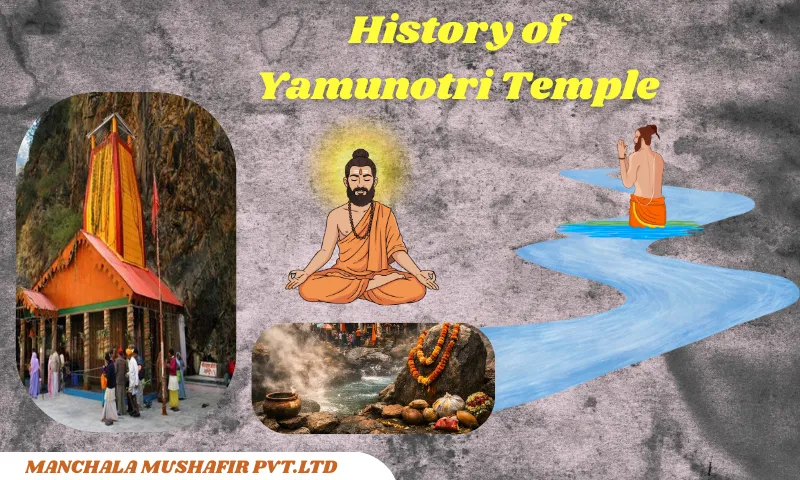
Introduction
Long before the stone walls appeared in the Himalayas, the sages believed that the Yamuna herself had come down to save mankind from premature death. The Yamunotri Temple History is not only inscribed in the scriptures, but in faith, ice, and sacred water.
Yamunotri Temple is dedicated to the Goddess Yamuna and marks the sacred Yamunotri River origin. It is located in Uttarkashi, Uttarakhand, associated with Adi Shankaracharya, the first shrine of the Char Dham Yatra. The temple has been revered since Vedic times for its spiritual and mythological importance. It was built in 1839 by Sudarshan Shah and later rebuilt by Maharani Guleria.
Hello! It's Pratiksha, a spiritual travel writer who has explored multiple Himalayan temples and documented their history, rituals, and local traditions. However, this site offered an experience I had never felt before. It is the westernmost shrine of the Char Dham pilgrimage circuit, serving as a first stop for the yatra, featuring a black stone idol of the Goddess Yamuna.
In this article, I have covered the entire history of Yamunotri Temple, including legends and the spiritual significance of the Yamunotri Dham, to help you experience the divine energy of Yamunotri god.
Yamunotri Location & Geographical Features
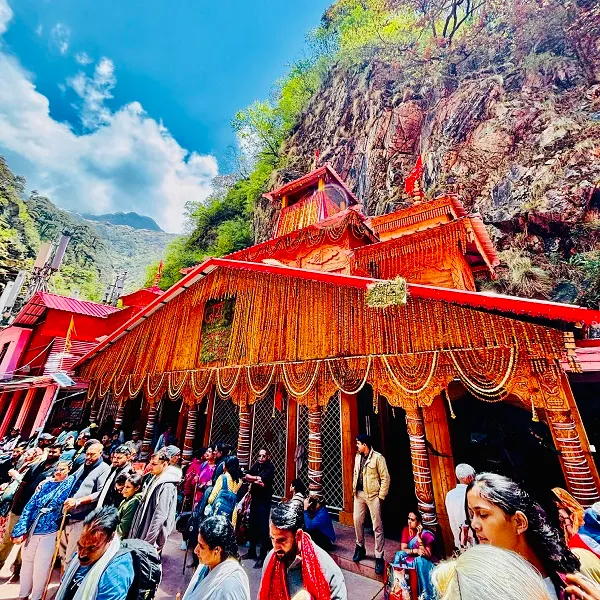
Location: Yamunotri Temple is located in the Uttarkashi district of Uttarakhand, surroundded by the Garhwal Himalayas.
Altitude: 11,804 feet (3,293 meters) above sea level.
Geographical Features:
Yamunotri is the westernmost shrine among the Char Dham circuits. It is renowned as the spiritual source of the Yamuna River, along with sacred locations, such as the Chambasar Glaciers, Saptrishi Kund, and Surya Kund.
- Surrounded by peaks: The temple is located on the flank of the Bandarpoonch peaks, providing spectacular views of the Himalayas.
- Natural Springs: Yamunotri is also widely famous for thermal springs, most notably Surya Kund, located just near the temple.
- Route access: The temple is accessible by a trek from Janki Chatti.
What Is The History Of Yamunotri Temple?
The history of Yamunotri Temple combines ancient mythology and 19th-century construction. While the site is associated with Sage Asit Muni and mentioned in Vedic scriptures, the present temple was built in 1839 by Sudarshan Shah and later reconstructed after natural disasters. It is the first stop of the Char Dham pilgrimage.
Mythological Yamunotri Temple History
The mythological Yamunotri temple history is a rich tapestry of divine lineage, ancient sages, and protective boons that have drawn pilgrims for millennia.
Goddess Yamuna & Her Divine Origin
According to Hindu mythology, Goddess Yamuna is the daughter of the Sun God Surya and the twin sister of Yama, the god of death.
Legends state that the Goddess Yamuna granted her brother a boon that anyone who bathed in the holy water of the Yamuna would be spared from the fear of Yamloka and protected from untimely and painful death.
The belief represents the divine grace of Goddess Yamuna as the embodiment of love, compassion, and devotion.
Legend Of Sage Asit Muni

One of the primary figures associated with Yamunotri is Sage Asit Muni. Long before the temple was built, this region was the hermitage of Saint Asit Muni.
Legends say that sage Asit Muni lived a life of devotion, bathing daily in the holy water of both Ganga and Yamuna.
As he got older and became too feeble to trek to Ganga, a miracle occurred: a stream of Ganga appeared just next to the Yamuna River, allowing him to continue his ritual of taking holy baths. This divine occurrence is linked to the presence of Surya Kund.
Lord Shiva & Yamuna River
According to the legends of Vamana Purana, Lord Shiva is said to have jumped into the Yamuna River to cool his anger and grief. The holy river absorbed his sorrow and pain, which supposedly turned the water dark.
Adi Shankaracharya's Role in the Revival of Yamunotri
Adi Shankaracharya, the great Hindu philosopher, played a key role in the revival of the Yamunotri temple. He organised the shrine as the Chota Char Dham circuit in the 8th century, reviving Hindu traditions in the Himalayan region.
He established this site as a revered pilgrimage shrine to foster spiritual integration during his Digvijaya yatra (travel across India).
Historical Background & Construction Timeline
Early Worship Before Temple Construction
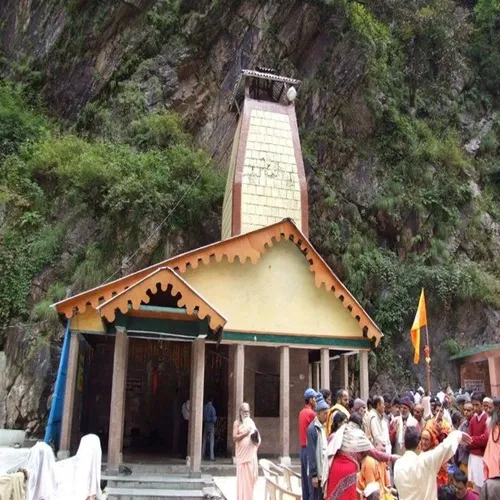
Before the formal construction of the Yamunotri temple, the site was a revered and powerful spiritual centre. Firstly, it was the Ashram of Sage Asit Muni.
In ancient times, worshippers venerated the site as a natural and Shakti Sthala, which focuses on the source of the Yamuna River.
Early worship is centred on the Yamontri origin, which is the Yamunotri glacier, in ancient times known as Kalind Parvat. It was not easy to access; only sages and saints could reach there, and normal people worshipped at nearby accessible spots like Divya Shilla.
Construction Reconstruction History
The present Yamunotri temple has been built and rebuilt many times due to its vulnerability to snow, earthquakes, and floods. Here is a brief overview of the Yamunotri temple construction history, from its original construction to the reconstruction.
Original Construction (1839): The first formal construction of the temple was built by the Tehri Naresh Sudarshan Singh (king of the Tehri Garhwal region) in 1839. Some historical accounts credit Maharaja Pratap Singh for the development of the shrine.
Destruction & Reconstruction (19th century): The temple structure was destroyed by a severe Himalayan earthquake. Lately, the modern temple has been rebuilt by the Maharani Guleria of Jaipur in the late 19th century. She installed the deity with the black marble stone and also contributed to establishing the current architectural layout.
Yamunotri Temple Architecture
The Yamunotri temple is built with a blend of the Nagara style and local Himalayan structures, designed for spiritual purposes and survival in extreme Himalayan conditions.
The temple is primarily built using granite stones, with a sloping roof design and sturdy stone blocks. Divided into three main areas, which are:
Inner Sanctum (Garbhagriha)
The core sanctum houses the black marble stone idol of Goddess Yamuna, depicted standing on a turtle, symbolising stability and cosmic balance. Beside her sits an idol of Goddess Ganga in white stone.
Mandap and Sikhara
Mandap: A high-pillared hall, dedicated to assembling, where pilgrims gather for prayer and Darshan.
Sikhara (Tower): The temple is topped by a distinctive conical-shaped minaret, with vibrant yellow shade and a bright red border, which is a landmark image for the shrine.
Sacred Landmarks
Surya Kund and Divya Shilla, a divine rock, are two sacred landmarks of the Yamunotri temple.
Surya Kund
A natural hot spring, believed to be blessed by Yamuna’s father, Sun God (Surya Devta).
Pilgrims use this boiling spring water to cook potatoes and rice to offer the deity as Prasad.
This highlights the cosmic bond between Goddess Yamuna and her father, Surya Dev.
Divya Shilla
A powerful rock pillar outside the temple, where devotees offer prayers before entering, is believed to represent the source of divine energy and grace. This ritual has been followed since ancient times; worshipping the holy rock removes obstacles and purifies the souls of devotees. For a complete spiritual journey, explore our guide on “Best Places To Visit In Yamunotri 2026” featuring key sacred sites around Yamunotri.
Importance Of Yamunotri Temple In Char Dham Yatra
The Yamunotri temple holds great spiritual significance in Char Dham Yatra, as the first and westernmost shrine in the four sacred pilgrimage circuits.
Yamunotri is the traditional starting point of the Char Dham pilgrimage, which is proceeded in a clockwise direction: Yamunotri, Gangotri, Kedarnath, and Badrinath. This sequence symbolises the different stages of a pilgrim's path. Yamunotri is the lowest in altitude based on treks, providing a physically manageable progression through the challenging Himalayan terrain.
Spiritual Significance:
The significance of the temple is rooted in Hindu mythology and traditions. It is believed that bathing in the sacred icy water of the Yamuna washes away sins, cleanses pilgrims, and frees them from the fear of untimely and painful death.
Yamunotri represents emotional and physical purification; pilgrims visit the temple at the source of the Yamuna River to seek divine blessings for purification and protection from the fear of untimely death and Yama.
Timeline Of Yamunotri Temple History
| Time period | Event | Key Details |
| Ancient Era | Mythological foundation | Associated with Sage Asit Muni, who spent his early life in this region and took daily baths in the holy waters of the Yamuna |
| Vedic Era | Mentioned in ancient scriptures | Yamunotri is mentioned in ancient texts, like the Vedas and the Vaman Purana. |
| Early Char Dham Formation (8th century) | Establishment as a sacred pilgrimage site | Adi Shankaracharya organised the Char Dham pilgrimage in the 8th century. Yamunotri gains importance as the first stop of the yatra. |
| 18th–19th century | Destruction & Reconstruction | The original temple was constructed by the king of Tehri Garhwal, Sudarshan Shah. |
| 20th century | Renovation & Development | The temple was damaged by natural disasters, which was rebuilt by the Maharani Guleria of Jaipur. |
| Modern Era (21st century) | Infrastructure development | The Yamunotri temple is managed by local authorities and has undertaken improvements to the temple structure. |
Interesting Facts About Yamunotri Temple
Some lesser-known facts about the Yamunotri temple:
One of the highest river temples: Yamunotri is the highest river temple of India, situated at an altitude of 11,804 feet (3,293 meters) above sea level.
The unseen source: Though the Yamunotri temple is considered the origin of the Yamuna River, the actual source is the Chambasar Glacier, located at a much higher altitude of 4,221 meters, and due to the difficult terrain, most pilgrims worship at the temple instead.
The holy Red Rock: Divya Shilla, a reddish rock, was worshipped before the temple existed. Even today, pilgrims must worship before entering the main temple.
Volcanic Spring: The hot springs, Surya Kund and Gaurikund, are thermal springs with hot temperatures of water, which are considered a miracle in the Himalayan climate.
The “Raw” offering: Unlike the many temples, pilgrims do not bring cooked prasad; instead of this, they cook potatoes and rice in nearby Surya Kund to offer to the deity.
Winter Worship: During the winter months, the temple was closed due to harsh weather and snow, and the idol of Goddess Yamuna shifted to its winter abode in Kharsali village.
Final Thoughts
The Yamunotri Temple history reflects the evolution of formless nature worship into a sacred Himalayan shrine. Despite many reconstructions and natural challenges, the temple stands as a timeless symbol of faith, purity, and devotion.
Today, the temple gains popularity as the key part of the Char Dham yatra, but it’s more than just a pilgrimage site, representing the belief that true divinity resides in flowing rivers, sacred rocks, and devotion.
FAQs On Yamunotri Temple History
1. Who established the Yamunotri Temple?
The original temple was built by the Tehri King Sudarshan Shah in 1839. Following a Himalayan earthquake, the temple was rebuilt by the Maharani of Jaipur in the late 19th century.
2. How old is the Yamunotri temple?
The present Yamunotri temple is approximately 187 years old, built in the year 1839 by the Tehri king named Sudarshan Shah. While the site is mentioned in ancient Hindu mythology, the present temple structure dates back to the 19th century.
3. What is the story behind the Yamunotri temple?
The mythology of the Yamunotri temple history is centred on Goddess Yamuna, the daughter of the Sun God Surya and the twin sister of Yama. The key mythological belief is that bathing in the Yamuna River cleanses the sins of devotees and protects them from the fear of untimely death.
4. What is special about the Yamunotri temple?
The Yamunotri temple is famous for its stunning natural beauty, featuring Surya Kund, which is used to cook prasad, and a 6km scenic trek, offering majestic views of the Himalayas.
5. What is the significance of the Yamunotri temple?
The Yamunotri temple is a highly revered and significant site, as the seat of Goddess Yamuna, the second most sacred river in Hinduism, and the key starting point of Char Dham Yatra. It holds great significance, as it is believed that bathing in the Yamuna River absolves sins and protects devotees from untimely death.
6. Which god is worshipped in Yamunotri?
Goddess Yamuna is worshipped in the Yamunotri Temple, which is also the daughter of the Sun God, and is often known as the twin sister of Yama (the deity of death).
.webp?v=15617ff41ba64410feaa36094192201f)